Office of Research
-

UCSC team makes final round of QB3 Award for Innovation contest
A UCSC research team is among five finalists competing for online votes to win a $10,000 innovation prize.
-
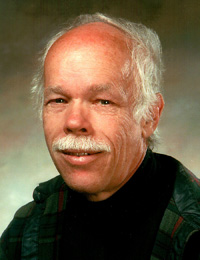
Physicist Bill Atwood awarded Panofsky Prize in Experimental Particle Physics
The American Physical Society has awarded the 2012 Panofsky Prize in Experimental Particle Physics to physicist William Atwood.
-
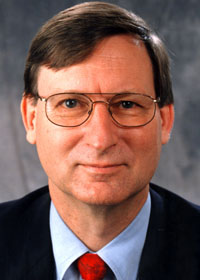
Google chief economist kicks off finance lecture series at UC Santa Cruz
Hal Varian, chief economist at Google and a UC Berkeley emeritus professor, is the inaugural speaker of a quarterly lecture series being launched by a new financial and economic risk-analysis initiative at UC Santa Cruz.
-
UCSC ranked third in research influence in world university survey
In an analysis of the world’s top universities, UCSC ranked third in research influence.
-
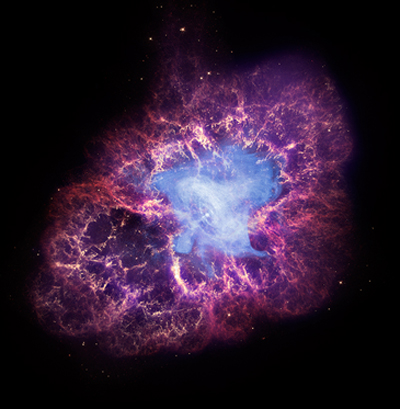
Crab pulsar beams most energetic gamma rays ever detected from a pulsar
Astrophysicists have detected pulsed gamma-ray emission from the Crab pulsar at energies far beyond what current theoretical models of pulsars can explain.
-

Geologist Casey Moore honored by Geological Society of Japan
The Geological Society of Japan has awarded its International Prize to UCSC geologist Casey Moore.
-
UARC scientists win best paper award
UARC scientists Matthew Daigle and Sriram Narasimhan won the Best Theoretical Paper award at the 2011 conference of the Prognostics and Health Management Society.
-
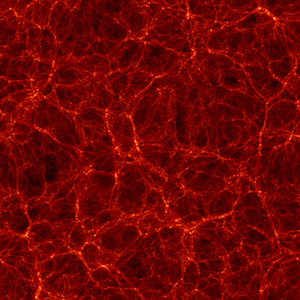
Scientists release most accurate simulation of the universe to date
The Bolshoi supercomputer simulation, the most accurate and detailed large cosmological simulation run to date, gives physicists and astronomers a powerful new tool.
-

Video shows tool use by a fish
The first video of tool use by a fish has been published in the journal Coral Reefs by biologist Giacomo Bernardi.
-
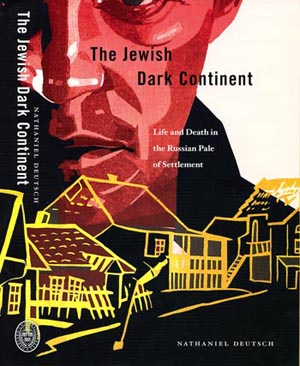
New book sheds light on survival of Jewish culture
This October, UCSC professor of literature and history Nathaniel Deutsch will offer the first complete translation of a little known ethnographic questionnaire–and the story of an ambitious attempt to document a culture during an extraordinarily volatile time in world history.
-
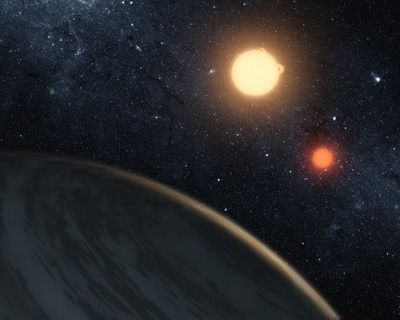
Astronomers confirm first planet orbiting two stars
A world with multiple suns is a common trope in science fiction, and scientific reality has now caught up, with a report from NASA’s Kepler mission of a planet orbiting two stars.
-
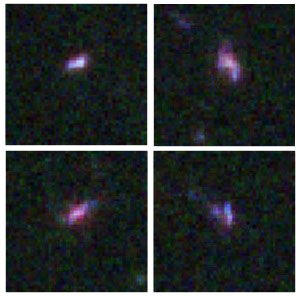
Small distant galaxies host supermassive black holes
Using the Hubble Space Telescope to probe the distant universe, astronomers have found supermassive black holes growing in surprisingly small galaxies, suggesting that central black holes formed at an early stage in galaxy evolution.