Office of Research
-
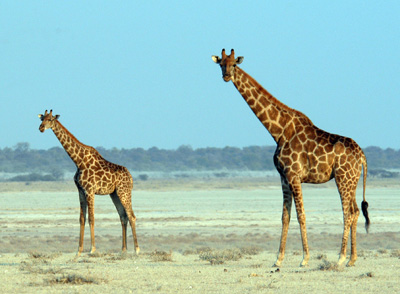
In evolution of body size, 24 million generations from mouse to elephant
The first study to measure how fast large-scale evolution can occur in mammals found that it takes 24 million generations for a mouse-sized animal to evolve to the size of an elephant.
-
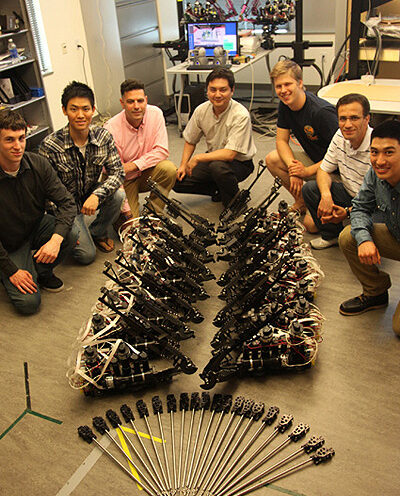
‘Open-source’ robotic surgery platform going to top medical research labs
Robotics experts at UCSC and UW have built seven advanced robotic surgery systems for use by major medical research laboratories.
-
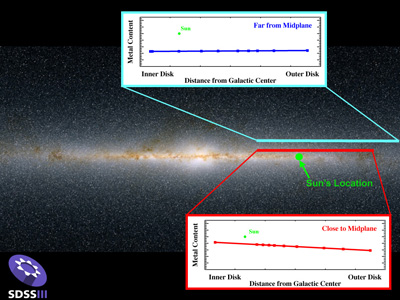
Wandering stars offer clues to history of our galaxy
Some stars have orbits that take them to interesting places, and they have interesting stories to tell about how they were formed.
-

Astronomers’ pristine gas discovery among top scientific breakthroughs of 2011
Lists from Science and Physics World of the top scientific breakthroughs of the year include the discovery of primordial gas clouds by UCSC astronomers.
-

UC Santa Cruz astronomer Jerry Nelson to receive 2012 Franklin Medal
The Franklin Institute in Philadelphia has announced that Jerry Nelson, professor of astronomy and astrophysics, will receive the 2012 Benjamin Franklin Medal in Electrical Engineering.
-

Music professor offers first in-depth look at jazz icon Carla Bley
A new book by UC Santa Cruz music professor Amy Beal marks the first comprehensive look at the music and influence of Carla Bley—an innovative American composer and performer who has surprisingly been overlooked in the field of jazz studies.
-
Astrophysicist Enrico Ramirez-Ruiz named to Silicon Valley’s ’40 Under 40′
Astrophysicist Enrico Ramirez-Ruiz is among 40 “rising stars” in Silicon Valley recognized by the Silicon Valley/San Jose Business Journal.
-
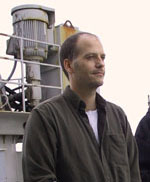
Ocean scientist Tom Guilderson wins E. O. Lawrence Award
The U.S. Department of Energy has awarded the 2011 E. O. Lawrence Award in Biological and Environmental Sciences to ocean scientist Tom Guilderson.
-
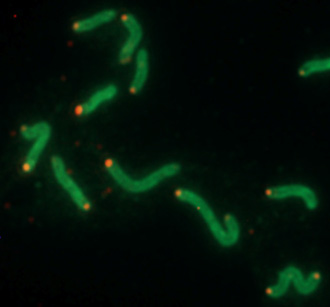
Ulcer-causing bacteria tamed by defect in cell-targeting ability
Without the ability to swim to their targets in the stomach, ulcer-causing bacteria do not cause the inflammation of the stomach lining that leads to ulcers and stomach cancer.
-
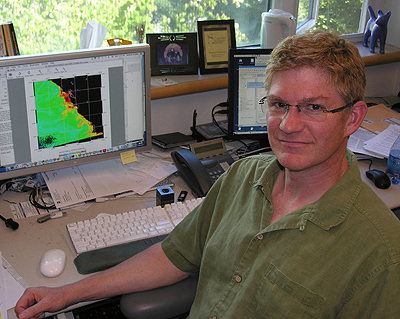
UCSC leads $4 million NOAA project to monitor harmful algal blooms
Scientists are launching a major effort to understand the conditions leading to blooms of toxic algae along the California coast.
-
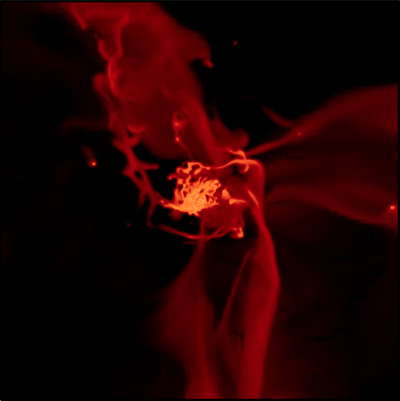
Astronomers find clouds of primordial gas from the early universe
For the first time, astronomers have found pristine clouds of the primordial gas that formed in the first few minutes after the Big Bang.
-

Ancient lunar dynamo may explain magnetized moon rocks
A novel mechanism that could have generated a magnetic field on the moon early in its history may explain the presence of magnetized rocks on the lunar surface.