Science
-

Cannibal galaxies and devastating collisions
Amanda Quirk won the annual Grad Slam competition last week after compressing billions of years of galactic history into a humorous and insightful three-minute presentation. She won $3,000 and a chance to compete in the UC Grad Slam finals in May.
-
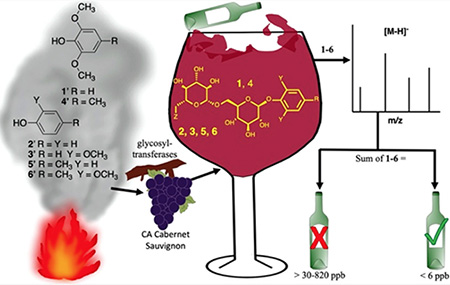
Chemical analysis reveals effects of wildfire smoke on grapes and wines
A new study provides practical guidelines for using biomarkers to identify ‘smoke taint’ in grapes and wines affected by the smoke from wildfires.
-
California Sea Grant funds graduate research fellows at UCSC
California Sea Grant has awarded funding to four UC Santa Cruz graduate students for marine science research projects that address the agency’s priority themes of resilient coastal communities and economies, sustainable fisheries, and healthy coastal ecosystems.
-
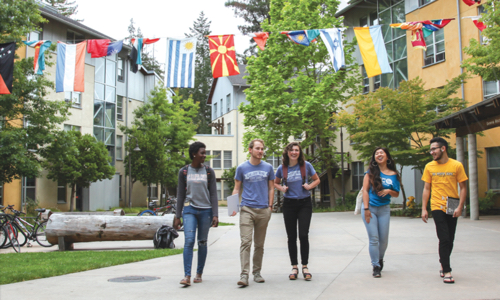
UC Santa Cruz to implement strategic plan for internationalization
UC Santa Cruz is advancing comprehensive internationalization to ensure that the members of the campus community are prepared and encouraged to study, teach, conduct research, and work in a global context, and that institutional policies, programs, and initiatives are aligned to achieve this shared goal.
-

Younger Lagoon study tells a tale of two fishes
Research at UCSC’s Younger Lagoon shows that the state of estuary waters, not competition from another fish species, is the most important predictor of populations of an endangered fish.
-

Elephant seals’ map sense tells them when to head ‘home’
Researchers found that female elephant seals know their distance from the breeding beach and allocate extra time to get back if they have farther to travel.
-

A slow-motion section of the San Andreas Fault may not be so harmless after all
A study of rocks drilled from nearly 2 miles under the surface suggests that the central section of the San Andreas fault has hosted many major earthquakes, including some that could have been fairly recent.
-

Record applications enable UC Santa Cruz to build strong, diverse fall class
With record-breaking applications from undergraduate students, UC Santa Cruz is looking to admit students who will be ready to contribute to and benefit from a high-impact research university.
-
Ocean scientist Claudie Beaulieu wins NSF CAREER Award
Claudie Beaulieu, assistant professor of ocean sciences, has received a Faculty Early Career Development (CAREER) Award from the National Science Foundation (NSF) to support her work using data science to study climate variability and climate change.
-

A surprising heat source is melting the Greenland Ice Sheet from the bottom up
Researchers have observed extremely high rates of melting at the bottom of the Greenland Ice Sheet, caused by huge quantities of meltwater descending from the surface to the base.
-
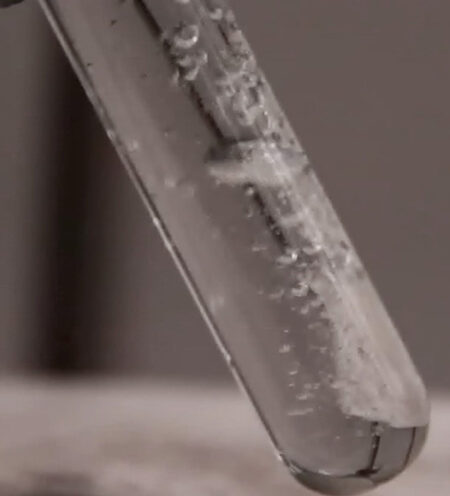
Easy aluminum nanoparticles for rapid, efficient hydrogen generation from water
UCSC chemists developed a simple method to make aluminum nanoparticles that split water and generate hydrogen gas rapidly under ambient conditions.
-
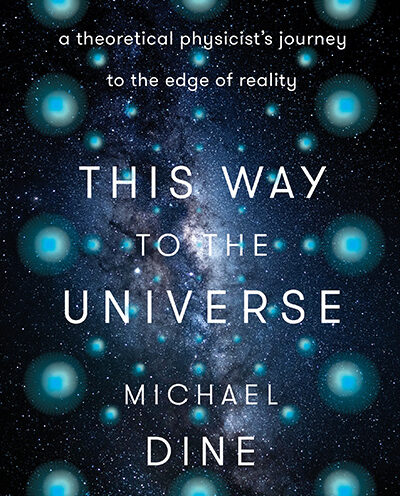
Physicist Michael Dine takes readers on a journey to the edge of reality in new book
‘This Way to the Universe’ explains the outstanding mysteries of the universe and also how remarkably well we understand it on many levels.