Science
-
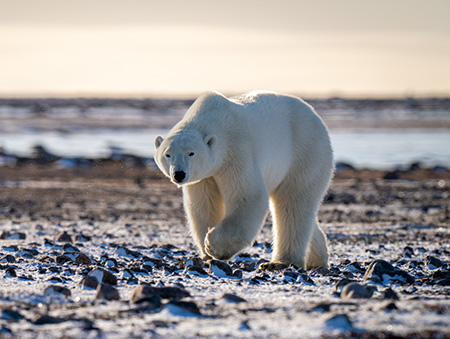
100,000-year-old polar bear genome reveals ancient hybridization with brown bears
Scientists found that all brown bears today have some polar bear ancestry due to genetic admixture that occurred during a warm interglacial period more than 100,000 years ago.
-

Microbiologist Jacqueline Kimmey named Pew Scholar in the Biomedical Sciences
Kimmey’s lab is investigating how susceptibility to infections is influenced by the daily biological cycles known as circadian rhythms.
-
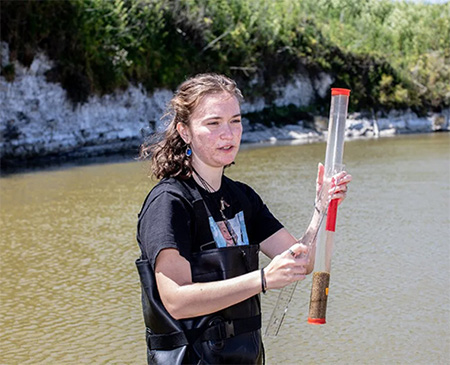
Students dip their toes into coastal science at Younger Lagoon
Ocean Sciences Professor Carl Lamborg uses Younger Lagoon Reserve to teach Field and Lab Methods in Aquatic and Coastal Science.
-

Hunting in darkness, elephant seals use sensitive whiskers to find prey
Researchers used miniature video cameras to study how free-ranging elephant seals use their whiskers to track down prey in the darkness of the deep ocean.
-
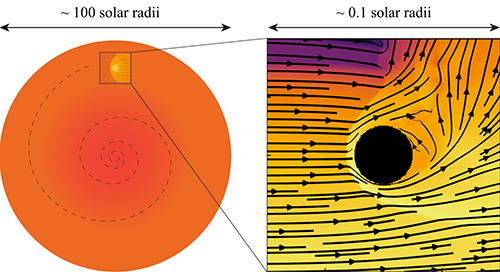
Simulations reveal hydrodynamics of planetary engulfment by expanding star
A new study using hydrodynamical simulations reveals the forces acting on a planet when it is swallowed by an expanding star, as will eventually happen to the inner planets of our solar system when the sun becomes a red giant.
-

Graduate student’s research helps environmental organizations better serve coastal communities of color
Coastal Science and Policy Program graduate student Kalina Browne led development of a new research report on behalf of Green 2.0, a national watchdog organization focused on diversity and equity in the environmental sector.
-
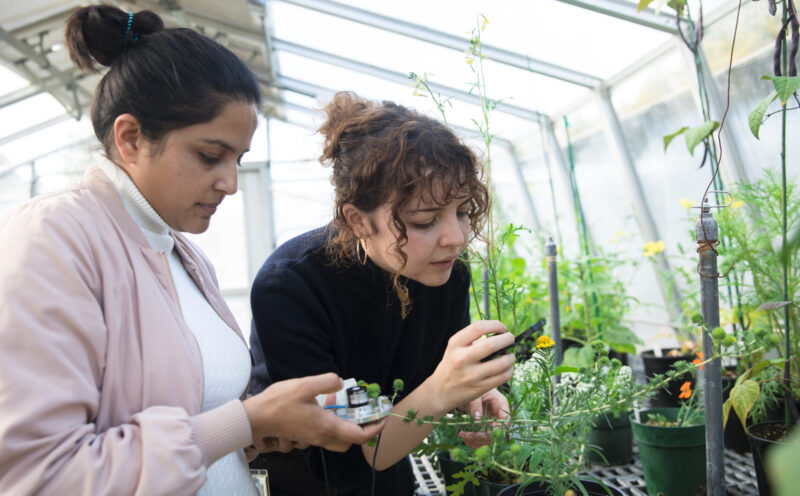
UC Santa Cruz named No. 2 public university for ‘making an impact’
Princeton Review has named UC Santa Cruz the No. 2 public university in the nation for students focused on making an impact on the world. The honor underscores the university’s commitment to encouraging positive social impact and is an increase from last year’s No. 3 spot.
-

Free public beach tours of Younger Lagoon Reserve have resumed
Tours of the reserve, which were suspended due to COVID-19 precautions, are again being offered through UCSC’s Seymour Marine Discovery Center.
-
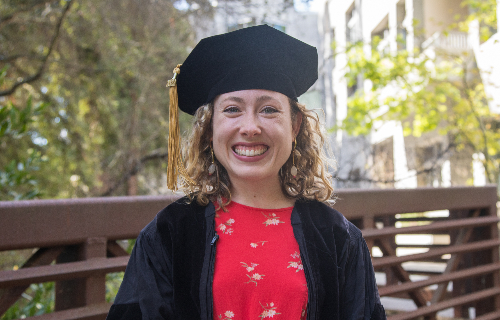
Amanda Quirk
Amanda Quirk’s research on galaxy mergers showed evidence that the Andromeda galaxy had some kind of major galactic collision in the past 4 billion years, and survived—which has implications for our own galaxy, the Milky Way.
-

Benny Mosqueira
Benny Mosqueira felt driven to make something of himself, and he arrived on campus intending to become a medical doctor. Instead, the first-generation college student was captivated by the research opportunities he found at UC Santa Cruz and decided to pursue biomedical research as a career.
-
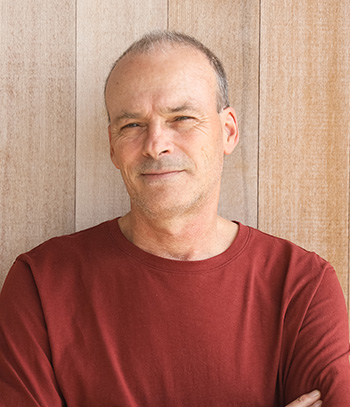
Biologist Bruce Lyon honored by American Ornithological Society
Bruce Lyon, professor of ecology and evolutionary biology, has been chosen to receive the 2022 Elliott Coues Award from the American Ornithological Society.
-

New findings enable monitoring for harmful toxin in freshwater environments
Researchers have identified the genes involved in biosynthesis of guanitoxin, a potent neurotoxin produced by some freshwater harmful algal blooms.