Science
-
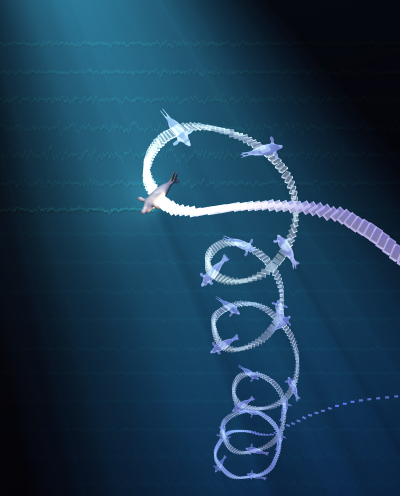
UCSC doctoral graduate wins prestigious Science & SciLifeLab Prize for Young Scientists
Jessica Kendall-Bar, who received her Ph.D. in ecology and evolutionary biology last year from UC Santa Cruz with co-advisors Terrie Williams and Dan Costa, was named a recipient of the prestigious Science & SciLifeLab Prize for Young Scientists for her research on elephant seal sleep habits while they are at sea.
-

UCSC alumnus at the forefront of humanitarian efforts in Ukraine
UC Santa Cruz alumnus Peter Gelpi is at the forefront of efforts to feed Ukrainians displaced by the war against Russia.
-
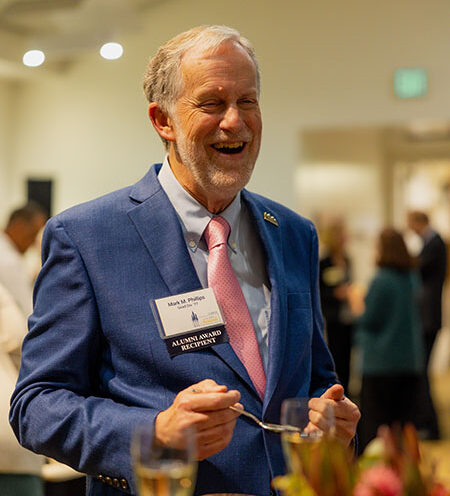
World-renowned supernova expert honored for breakthrough contributions to astronomy
Mark Phillips received the Alumni Achievement Award on Oct. 27, 2023, for his pioneering supernova research that led to the reversal of a major scientific theory on the trajectory of the universe, and for the indelible legacy he has left for aspiring astronomers.
-

Worldwide leaders convene to protect, advance global biodiversity
With a focus on sustaining and strengthening global biodiversity in the face of climate change, UC Santa Cruz hosted the Asia-Pacific Economic Cooperation University Leaders’ Forum, bringing together nearly 100 international leaders in education, industry, and government.
-

A major new site expansion at Lick Observatory is on the horizon
Lick Observatory’s positioning in the Northern Hemisphere enables observation of a substantial portion of the Milky Way galaxy where there are a multitude of stars, billions of potential sites for life. Making Lick Observatory a perfect home for PANOSETI, or “Panoramic SETI or Pulse All-sky Near Infrared Optical SETI.”
-
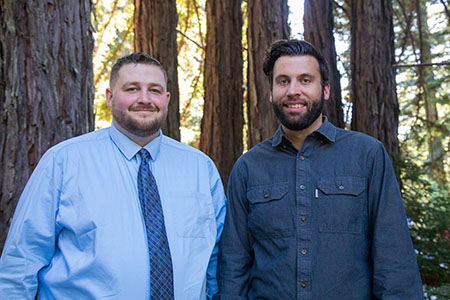
Veteran students excel with Bruce Lane Memorial Scholarship
The Bruce Lane Memorial Scholarship was established to support veteran students at UC Santa Cruz. Devin Burkland and Dan Palance are this year’s recipients.
-
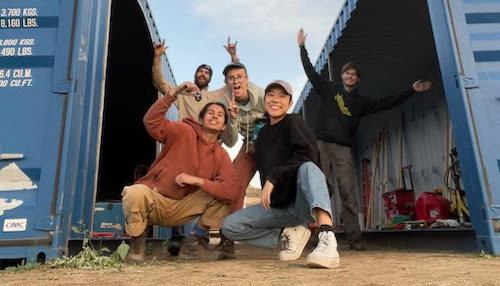
UC Santa Cruz students win three categories at Orange County Sustainability Decathlon
An interdisciplinary team of UC Santa Cruz students, many from the Rachel Carson College Sustainability Minor program, designed and built EcoHus, an innovative, affordable, net-zero house. The EcoHus team was selected to receive a $100,000 grant to participate in the 2023 Orange County Sustainability Decathlon (OCSD) held on Oct. 5-15, where they won first place…
-

Alumna Alexis Jackson takes the lessons from the Pacific Coast near UCSC to the environmental policy tables of California
Alexis Jackson is coming up on an anniversary in her professional life. Jackson, a 2014 Ph.D. graduate of UC Santa Cruz’s Ecology and Evolutionary Biology program, has been with The Nature Conservancy for nearly seven years, and is currently the California Chapter’s Ocean Policy and Plastics Lead based out of San Francisco. Looking back to…
-

Coral reefs identified as national natural infrastructure
The U.S. Coral Reef Task Force (USCRTF) approved a resolution on Oct. 26 that designates coral reefs along U.S. states and territories as national infrastructure. This resolution makes it easier to direct federal funding, particularly infrastructure, hazard mitigation, and disaster recovery monies, to reef conservation and restoration to protect people, property, and livelihoods.
-
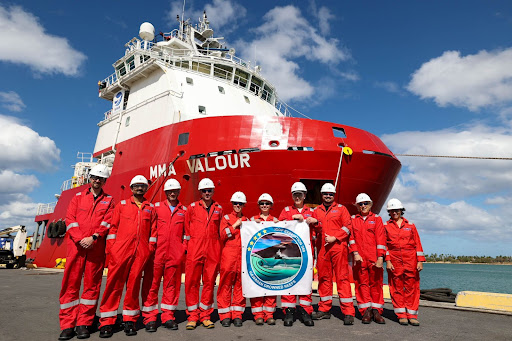
Scientists use Hawaiian fossils to study the past and future of climate change
This month, an international team of researchers returned to shore after a two-month-long ocean expedition exploring fossil coral reefs off the coast of Hawai’i. The fossils provide a record of past climate conditions, so scientists are using them to learn about environmental changes throughout geologic history and make predictions about the future.
-

Bacteria can enhance host insect’s fertility with implications for disease control
New research led at UC Santa Cruz reveals how the bacteria strain Wolbachia pipientis enhances the fertility of the insects it infects, an insight that could help scientists increase the populations of mosquitoes that do not carry human disease.
-

Following decades in a harsh coastal climate, blue whale skeleton undergoes 3D scan prior to safety-related descent to the ground
For nearly half a century, Ms. Blue–an 87-foot-long whale skeleton—has welcomed over a million visitors to Long Marine Laboratory and the Seymour Marine Discovery Center, spurring interest in marine science. After decades of exposure in harsh coastal conditions, the metal structures supporting Ms. Blue have deteriorated to an unsafe condition.