Science
-

Novel capping strategy improves stability of perovskite nanocrystals
Organometal-halide perovskites are promising materials for solar cells, LEDs, and other applications.
-

Alzheimer’s researchers find clues to toxic forms of amyloid beta
A subtle change to the amyloid beta protein stabilizes an intermediate form with enhanced toxicity.
-

Biology grad wins seed funding for biotech startup company
Antonio Lamb followed his passion for molecular biology, and his biotech startup now has $100,000 in seed funding.
-

The sky is no limit for planet-hunting grad student
Astronomy grad student Jennifer Burt helped write software that turned a powerful telescope at Lick Observatory into the first automated planet finder in the world.
-

Ice age bison fossils shed light on early human migrations in North America
Scientists used bison fossils to date the opening of an ice-free corridor along the Rocky Mountains during the Pleistocene.
-

Gary Griggs honored by Santa Cruz Museum of Natural History
Geologist Gary Griggs received the Laura Hecox Naturalist Award from the Santa Cruz Museum of Natural History.
-
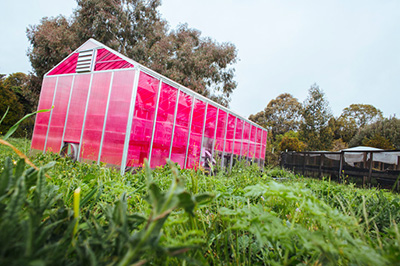
This solar greenhouse could change the way we eat
Thanks to solar technology developed at UC Santa Cruz, greenhouses are enjoying a new moment in the sun.
-
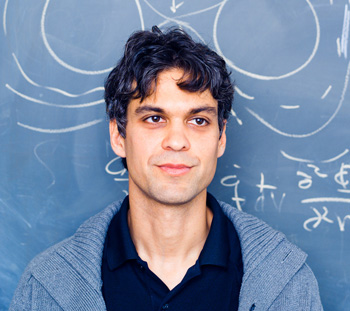
Astronomer Enrico Ramirez-Ruiz awarded Niels Bohr Professorship
Award from the Danish National Research Foundation provides $5 million to fund research in theoretical astrophysics.
-
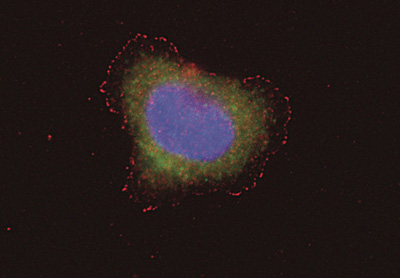
Malignancy-associated gene network regulated by an RNA binding protein
An extensive regulatory network associated with tumor metastasis was found in pancreatic cancer cells.
-

Astronomer Sandra Faber to receive honorary degree from Amherst College
Faber will receive an honorary degree from Amherst College during its commencement exercises on May 22.
-
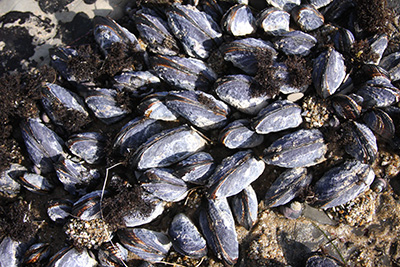
Shellfish response to ocean acidification depends on other stressors
Researchers found the vulnerability of mussels to harmful effects from acidic seawater varies among different locations.
-

Shallow slow-motion earthquakes detected offshore of New Zealand
Scientists documented slow slip in the shallow portion of an offshore subduction zone for the first time.