Ecology & Evolutionary Biology
-
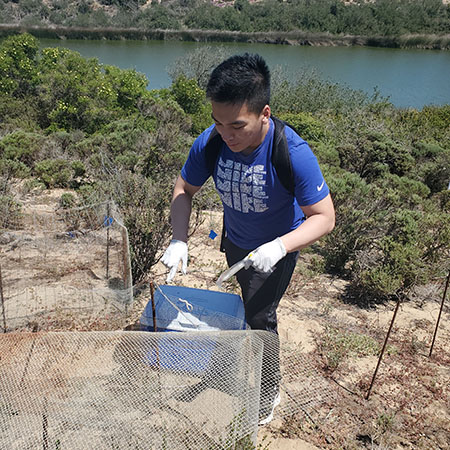
Frontier Fellows: Peter Nguyen
The Earth Futures Institute’s Frontier Fellows program offers undergraduate research opportunities and funding at UC Santa Cruz. UCSC student Peter Nguyen studies a federally listed endangered flowering plant—Lupinus nipomensis.
-

Innovative climate resilience projects supported by 2022 CITRIS Campus Seed Funding awards
Four winning projects have been funded through the The Center for Information Technology Research in the Interest of Society (CITRIS) and the Banatao Institute at UC Santa Cruz’s Campus Seed Funding program to pursue research relating to climate resilience.
-
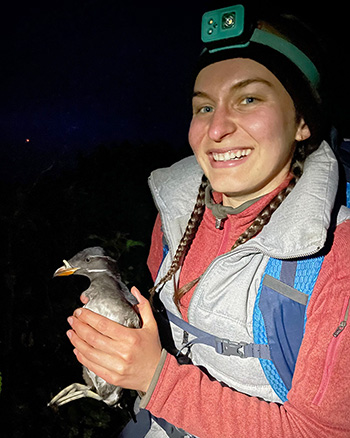
NOAA scholarship supports graduate student’s seabird conservation research
Aspen Ellis, a Ph.D. student in ecology and evolutionary biology, is one of seven students nationwide selected by NOAA’s Office of National Marine Sanctuaries to receive a 2022 Nancy Foster Scholarship.
-

Data from elephant seals reveal new features of marine heatwave ‘the Blob’
Instruments carried by migrating elephant seals measured deep warm-water anomalies that lasted much longer than the surface warming.
-

Eric Palkovacs appointed Associate Vice Chancellor for Strategic Initiatives
Longtime UCSC professor Eric Palkovacs was recently appointed Associate Vice Chancellor (AVC) for Strategic Initiatives for the Office of Research (OR). In this role, Eric will advise campus leadership on developing and implementing several key initiatives, including state and systemwide climate change programs and seed funding. Eric will also serve on OR’s senior leadership team,…
-

Researchers track juvenile elephant seals for insights into mortality rates
An outreach program to bring science and scientists into K-12 classrooms is part of a study investigating the differences between male and female elephant seals.
-

ASPIRE program launches to aid conservation in a changing climate
A new program out of the UC Santa Cruz Genomics Institute involves students in an effort to measure changes in biodiversity and ultimately prevent them.
-

Narwhals show physiological disruption in response to seismic survey ship noise
Scientists deployed monitoring devices on narwhals to record heart rates, breathing, and diving behavior during seismic air gun pulses from a ship in the fjords of Greenland.
-
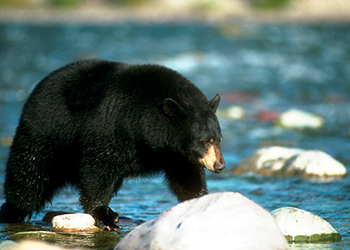
UCSC scholars join researchers statewide on a massive genomic study of California’s biodiversity
The California Conservation Genomics Project (CCGP) is a state-funded initiative with a single goal: to produce the most comprehensive, multispecies genomic dataset ever assembled to help manage regional biodiversity.
-

Destruction and recovery of kelp forests driven by changes in sea urchin behavior
A long-term study of kelp forest dynamics on California’s Central Coast highlights the critical role of sea urchin behavior, not just the size of the urchin population.
-
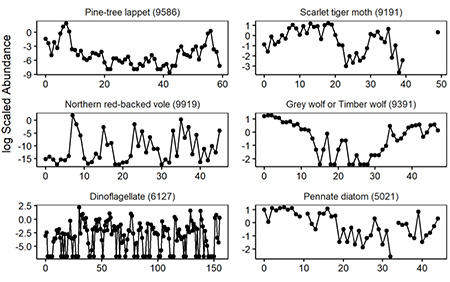
Study finds chaos is more common in ecological systems than previously thought
The idea that chaos is rare in natural populations may be due to methodological and data limitations, rather than the inherent stability of ecosystems.
-

Polar bears in Southeast Greenland shed light on the species’ future in a warming Arctic
The most genetically isolated population of polar bears on the planet, they have limited access to sea ice and use ice from Greenland’s glaciers to survive.