Ecology & Evolutionary Biology
-
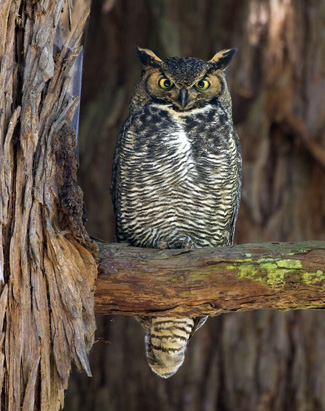
Fledging season for owls means clumsy chicks on the ground
Experts says it’s normal to see owl chicks on the ground, and they should be left alone.
-
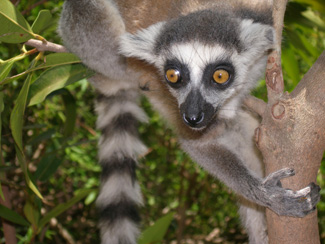
Lemur extinctions and ecological retreat followed arrival of humans in Madagascar
A study of lemurs in Madagascar suggests that factors driving lemur extinctions have also sparked an ongoing “ecological retreat” by surviving species.
-
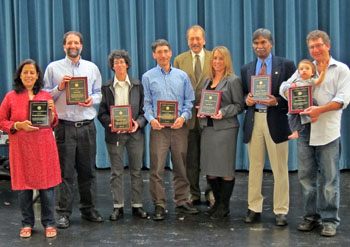
Recognizing excellence in teaching at UCSC
The 2011-12 Excellence in Teaching Awards honored eight caring professors who inspired their students at UCSC. UCSC Chancellor George Blumenthal presented the awards at the Stevenson Event Center on campus.
-

Research team investigates biological methods to prevent bat extinction
Motivated by the prospect of conserving bat populations and species diversity, UC Santa Cruz researchers are investigating whether antifungal skin microbes can be used to help fight the deadly fungus that is causing a massive die-off of bats in eastern North America.
-

Two UCSC marine scientists awarded Pew Fellowships in Marine Conservation
Two scientists affiliated with UCSC’s Institute of Marine Sciences have been awarded 2012 Pew Fellowships in Marine Conservation.
-

Hatchery fish mask the decline of wild salmon populations
Only about 10 percent of the fall-run Chinook salmon spawning in the Mokelumne River are naturally produced wild salmon.
-
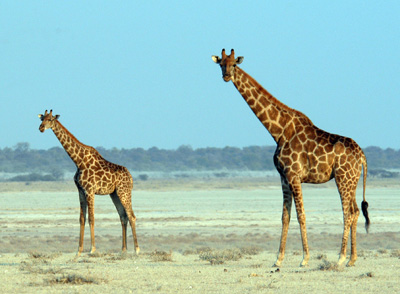
In evolution of body size, 24 million generations from mouse to elephant
The first study to measure how fast large-scale evolution can occur in mammals found that it takes 24 million generations for a mouse-sized animal to evolve to the size of an elephant.
-

Plant scientist Jean Langenheim honored by Graduate Women in Science
The Graduate Women in Science organization Sigma Delta Epsilon has awarded its highest honor to botanist Jean Langenheim.
-

Arboretum celebrates partnership with Amah Mutsun tribe
The Arboretum and the Amah Mutsun tribe are working together on a project that highlights native plants traditionally used by the Mutsun people.
-
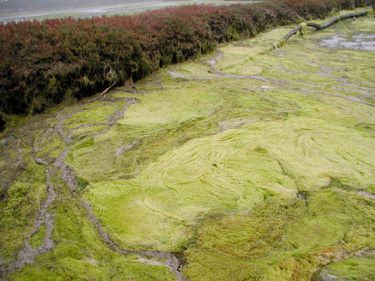
Excess nutrients threaten Elkhorn Slough ecosystem
A new study documents the effects of high nutrient levels in Elkhorn Slough, especially where water control structures limit tidal exchange.
-

Video shows tool use by a fish
The first video of tool use by a fish has been published in the journal Coral Reefs by biologist Giacomo Bernardi.