Chemistry & Biochemistry
-
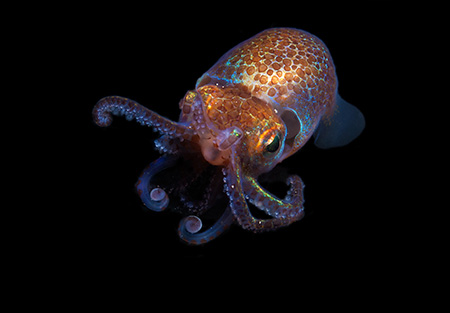
A little squid and its glowing bacteria yield new clues to symbiotic relationships
A small molecule produced by bioluminescent bacteria as they colonize the light organ of the Hawaiian bobtail squid may play a key role in establishing the symbiosis.
-

Yuan Ping wins OpenEye award for outstanding junior faculty
The award from the American Chemical Society identifies junior stars in the area of computational chemistry.
-

In Memoriam: Claude F. Bernasconi (1939–2021)
The Department of Chemistry and Biochemistry is deeply saddened to announce that Distinguished Professor Claude F. Bernasconi passed away on January 4, 2021, from complications due to COVID-19.
-
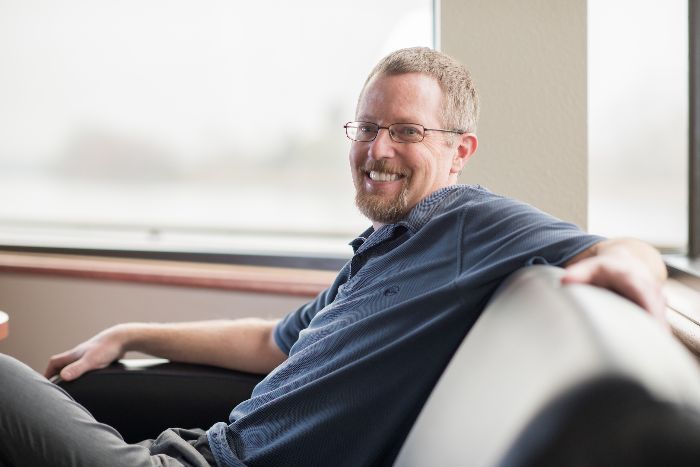
Coming full circle
Alumnus Darren Thompson, an accomplished chemist and student mentor, overcame a dark turn in his life with help from his determination, his Christian faith, and a UC Santa Cruz professor.
-

UCSC expands COVID-19 testing during surge to support community needs
A gift from Bud and Rebecca Colligan will expand testing capacity and help fund a new, dedicated laboratory space to house the diagnostic lab in the Genomics Institute’s facilities at the Westside Research Park.
-

New cryo-electron microscopy facility a boon for UCSC structural biologists
With major funding from NIH, researchers at UC Santa Cruz have acquired powerful imaging tools for studying the structures of biomolecules and their roles in disease.
-
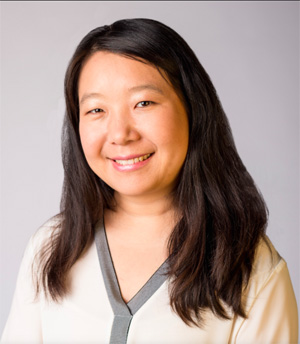
Materials theorist Yuan Ping wins grant from Air Force Young Investigator Program
Ping’s research on spin dynamics in two-dimensional materials has applications for spintronics and quantum information technologies.
-

Novel technique spotlights neuronal uptake of amyloid beta in Alzheimer’s disease
Study finds a short section of the amyloid beta protein is recognized by the cellular prion protein, which mediates its uptake into neurons and subsequent toxicity.
-

Scientists discover how a common mutation leads to ‘night owl’ sleep disorder
A small change in a key component of our biological clocks lengthens the clock period, causing people to stay up late at night and sleep late in the morning.
-
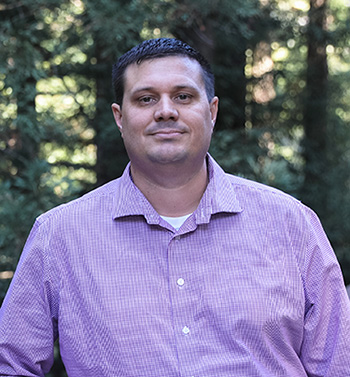
UC Santa Cruz leads research center on botanical dietary supplements
A new $5 million NIH grant supports a collaborative research program to understand the cellular mechanisms by which botanical natural products may affect human health.
-
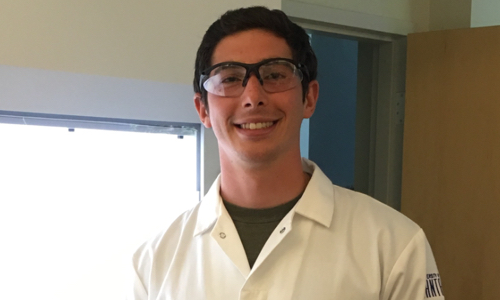
Steck Award recipient helps discover protein involved with circadian clock timing
Afred Freeberg assisted the Partch lab in studying the molecular basis for circadian rhythms – biological processes that occur naturally in line with the Earth’s 24-hour daily rotation cycle.
-

New method predicts spin dynamics of materials for quantum computing
A universal first-principles approach will accelerate the identification and design of materials for quantum information science and other spintronics applications.