Astronomy & Astrophysics
-
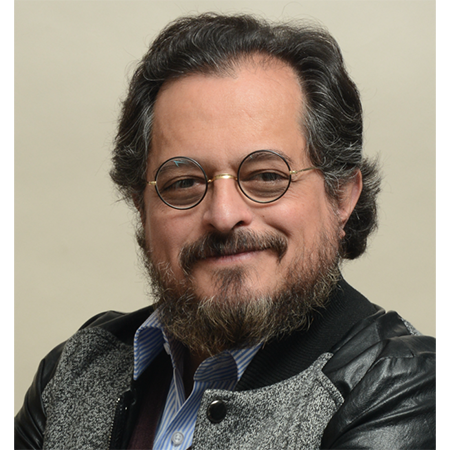
The Science Division announces recipients of Distinguished Alumni Awards
Dr. José de Jesús González, Dr. Maximiliano Mateo Cuevas, and Dr. Charles A. Lawson are this year’s Distinguished Alumni Award recipients for the Science Division.
-
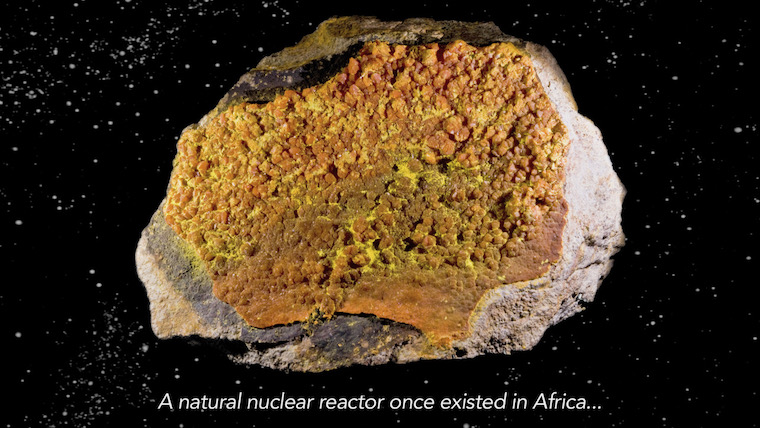
The Center for Creative Ecologies presents “Nuclear Nows: Contemporary Art, Radiation, and Militarized Ecologies”
This two-part symposium is the work of Zoe Weldon-Yochim, a Ph.D. Candidate in Visual Studies, in collaboration with T.J. Demos, Professor in the Department of the History of Art and Visual Culture and Director of the Center for Creative Ecologies, and will discuss the intersection of contemporary art, militarized ecologies, and nuclear nationalism.
-
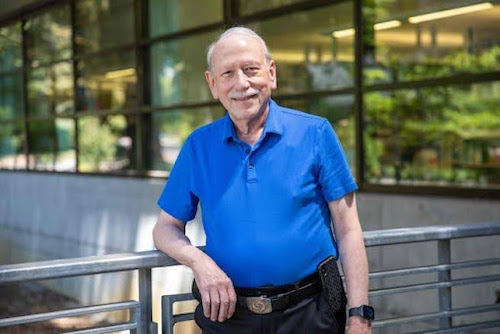
UC Santa Cruz Physicist Joel Primack wins 2024 AAAS Abelson Prize
The American Association for the Advancement of Science (AAAS) has awarded the prestigious 2024 Philip Hauge Abelson Prize to Joel R. Primack, distinguished professor of physics emeritus at the University of California, Santa Cruz and a key architect of the Cold Dark Matter theory.
-
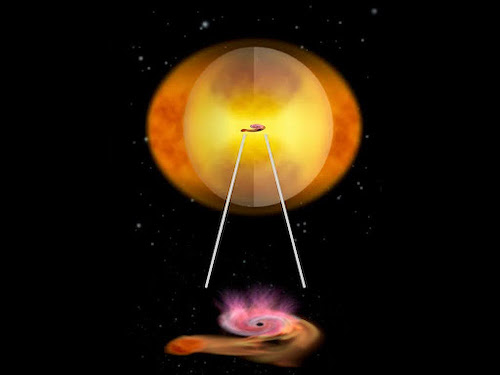
Students search for hidden black hole activity
When stars get too close to the supermassive black holes at the centers of galaxies, the black holes shred them apart in a process called a tidal disruption event (TDE). These TDEs cause bright flashes, but recent models suggest that scientists should see more of them than have been observed.
-

2023 list of most highly cited researchers includes 18 UC Santa Cruz scientists and engineers
In a notable recognition of scholarly achievement, 18 scientists and engineers from UC Santa Cruz have earned a spot on the 2023 Highly Cited Researchers list, recently unveiled by Clarivate.
-
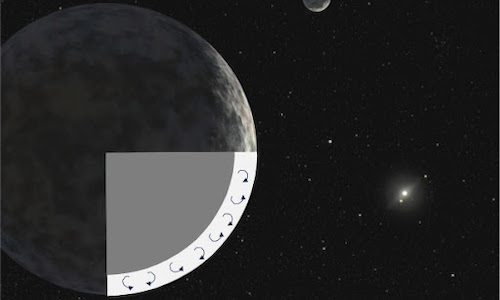
Dwarf planet Eris is squishier than expected
University of California, Santa Cruz Professor of Planetary Sciences Francis Nimmo recently co-authored a Science Advances paper about the internal structure of the dwarf planet Eris.
-
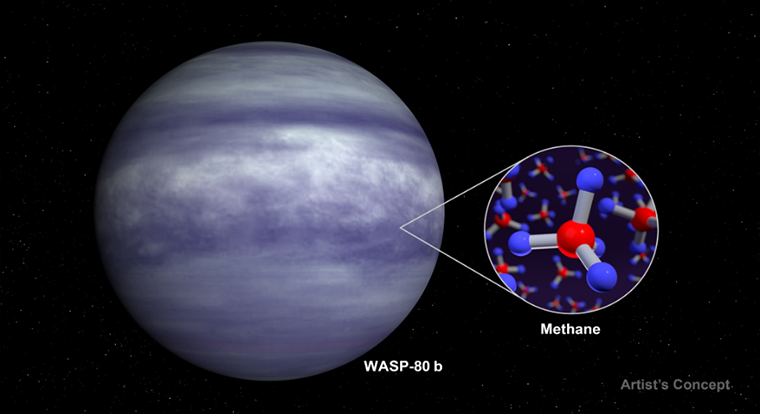
NASA’s Webb Identifies Methane In an Exoplanet’s Atmosphere
NASA’s James Webb Space Telescope observed the exoplanet WASP-80 b as it passed in front of and behind its host star, revealing spectra indicative of an atmosphere containing methane gas and water vapor.
-
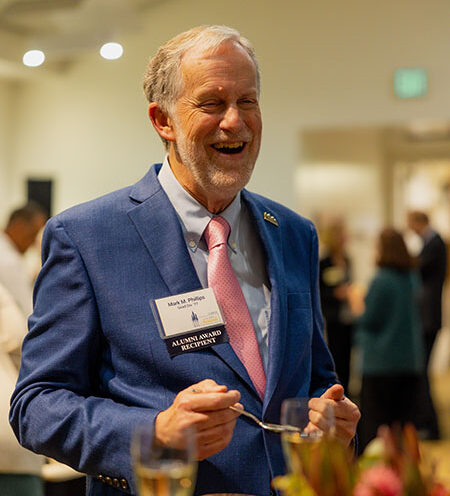
World-renowned supernova expert honored for breakthrough contributions to astronomy
Mark Phillips received the Alumni Achievement Award on Oct. 27, 2023, for his pioneering supernova research that led to the reversal of a major scientific theory on the trajectory of the universe, and for the indelible legacy he has left for aspiring astronomers.
-
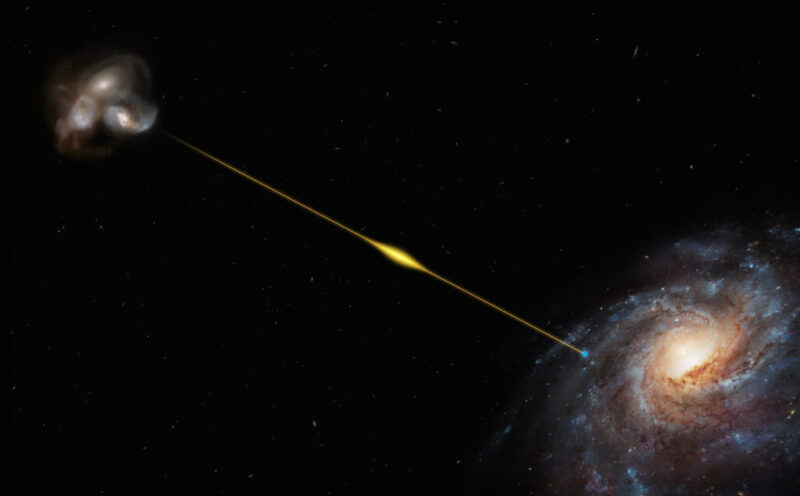
Record-breaking fast radio burst is most distant ever detected
Scientists have discovered an eight-billion-year-old fast radio burst (FRB) – the most ancient and distant located to date.
-

2023 ARCS Foundation scholarships support UCSC graduate students in the sciences and engineering
Sixteen UC Santa Cruz graduate students have received scholarships worth a total of $175,000 from the Achievement Rewards for College Scientists (ARCS) Foundation for the 2023-24 academic year.
-
Celebrating the success of a human-centered approach to supporting emerging scientists
Graduate school admissions, NSF Graduate Research Fellowship awards, and American Astronomical Society honors mark a banner year for UCSC’s Lamat Institute.
-
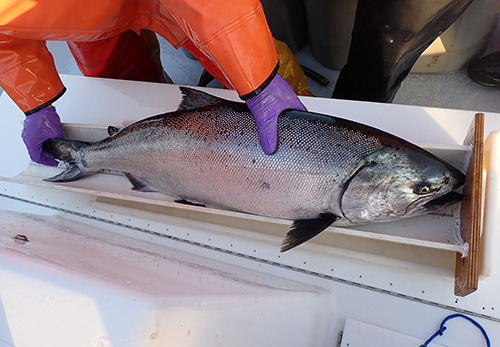
UCSC’s Center for Coastal Climate Resilience awards over $4.6 million to support California coastal projects
The UCSC Center for Coastal Climate Resilience has awarded over $4.6 million in funding to 23 UC Santa Cruz research groups for pilot projects and implementation projects supporting efforts to fight climate change in coastal communities across California and beyond. Funds for these grant programs came from the California State Budget Act of 2022-23.