Astronomy & Astrophysics
-

Neutron star merger observations hailed as scientific breakthrough of the year
Both Science and Physics World noted the significance of the findings in which UC Santa Cruz astronomers played a key role.
-

Supermassive black holes control star formation in large galaxies
Astronomers found a close correlation between the mass of a galaxy’s central black hole and its star formation history.
-
UC Santa Cruz ranks in top 50 of global research universities, 5th for space sciences
UC Santa Cruz ranks fifth in the world for space sciences and is one of six University of California campuses ranked among the top 50 research universities overall, according to a study by U.S. News and World Report.
-
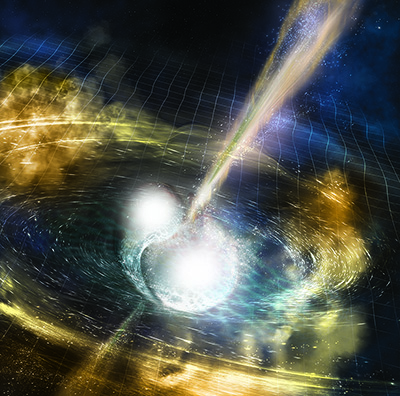
First observations of merging neutron stars mark a new era in astronomy
A UC Santa Cruz team made the first ever observations of a visible event linked to the detection of gravitational waves, using the small Swope Telescope in Chile.
-
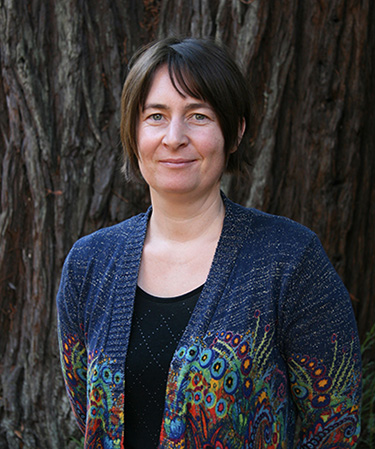
Astronomer Alexie Leauthaud wins prestigious Packard Fellowship
Leauthaud is the 13th UCSC faculty member, and sixth UCSC astronomer, to receive a Packard Fellowship.
-

Lick Observatory hosts Latino students and parents for night of astronomy
An evening event for high school students and their family members, called La Noche de las Estrellas, was the observatory’s first Spanish-language event.
-
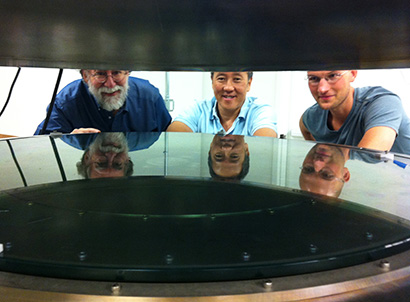
New mirror-coating technology promises dramatic improvements in telescopes
An electrical engineer teamed up with astronomers to improve telescope mirrors using thin-film technology from the electronics industry
-

UC Santa Cruz hosts international workshop for Thirty Meter Telescope
Work on TMT is in high gear at UC Santa Cruz and other partner institutions and countries around the world.
-
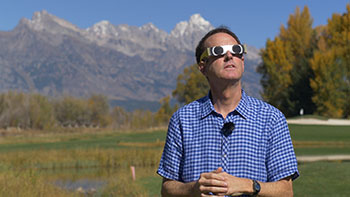
Chasing the eclipse
Douglas Duncan, director of the Fiske Planetarium at the University of Colorado, and a distinguished UC Santa Cruz astronomy grad, is leading an eclipse-watching trip to Wyoming.
-

Four Earth-sized planets detected orbiting the nearest sun-like star
Four Earth-sized planets orbit the nearest sun-like star, tau Ceti, which is about 12 light years away and visible to the naked eye, astronomers say.
-

Superluminous supernova marks the death of a star at cosmic high noon
At a distance of 10 billion light years, a supernova detected by the Dark Energy Survey team is one of the most distant ever discovered and confirmed.
-
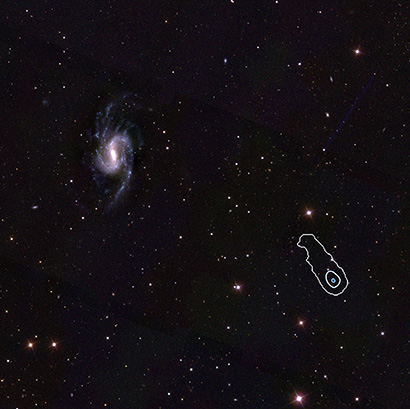
‘Little Cub’ gives astronomers rare chance to see galaxy demise
A primitive galaxy that could provide clues about the early universe has been spotted by astronomers as it begins to be consumed by a gigantic neighboring galaxy.