Biomolecular Engineering
-

Bioluminescent proteins made from scratch enable non-invasive, multi-functional biological imaging
Assistant Professor of Biomolecular Engineering Andy Yeh is designing completely artificial proteins that produce bioluminescence to serve as a non-invasive method for bioimaging, diagnostics, drug discovery, and more.
-
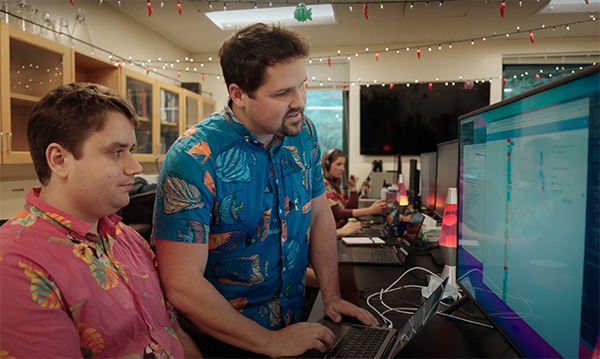
Engineers awarded CDC contract to build pathogen-tracing public health tools
The CDC has awarded Corbett-Detig and his team at the UCSC Genomics Institute a two-year, $2.52 million contract to continue their work tracking the COVID-19 virus’s evolution and expand their software tools to track other pathogens.
-
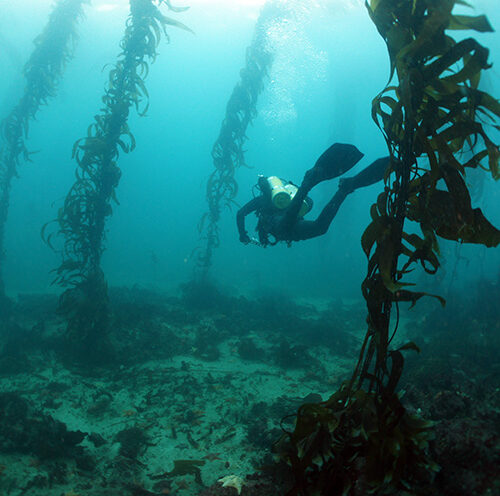
Genomics Institute provides seed funds for six multidisciplinary projects
The Genomics Institute has awarded grants of up to $50,000 to six multidisciplinary research projects in the inaugural year of its seed funding program
-

ARCS Foundation 2024 scholarships support outstanding graduate students in science and engineering
Sixteen outstanding UC Santa Cruz graduate students in science and engineering fields earned scholarships worth a total of $180,000 from the Achievement Rewards for College Scientists (ARCS) Foundation for the 2024-25 academic year.
-
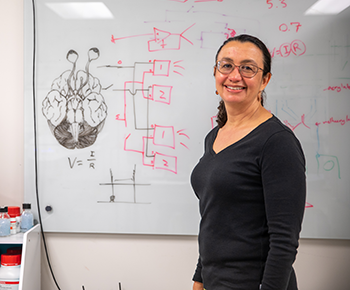
Researchers to investigate genetic roots of autism, look for new treatments
A new award from the California Institute for Regenerative Medicine will support a team of UC Santa Cruz researchers in exploring the genetic underpinnings of autism spectrum disorder.
-
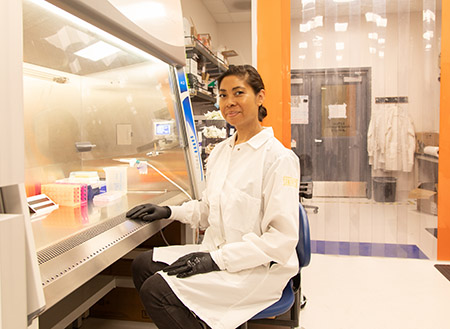
Mapping the mind
Ph.D student Asia Anderson focuses on the development of brain machine interfaces to model and study the development of the human brain, specifically those with neurodegenerative disorders.
-
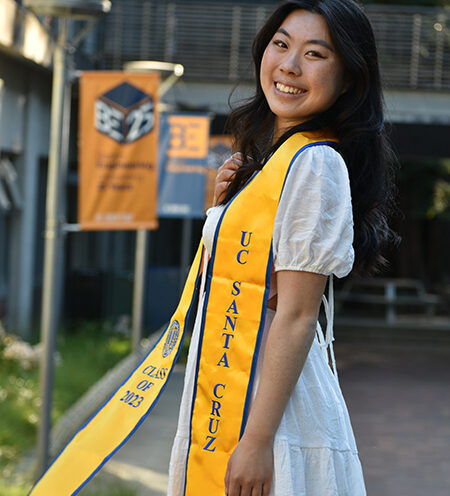
Genomics at heart
Sarah Xia (College Nine ’23, biomolecular engineering and bioinformatics) found her passion for genomics at UC Santa Cruz. Now, a year after earning her B.S. in biomolecular engineering and bioinformatics, Xia is a research associate at Stanford.
-

Scientists find that small regions of the brain can take micro-naps while the rest of the brain is awake and vice versa
For the first time, scientists have found that sleep can be detected by patterns of neuronal activity just milliseconds long
-

Study offers guidance on state-of-the-art long-read RNA sequencing techniques
A new study evaluates the strengths and weaknesses of the two leading long-read RNA sequencing platforms and offers guidance for the field.
-

Stem cell study reveals distinct population of ‘troublemaker’ platelet cells that appear with aging and lead to blood clotting, disease
Professor of Biomolecular Engineering Camilla Forsberg and her research group have discovered a distinct, secondary population of platelets that appears with aging and have hyperreactive behavior and unique molecular properties, which could make them easier to target with medication.
-
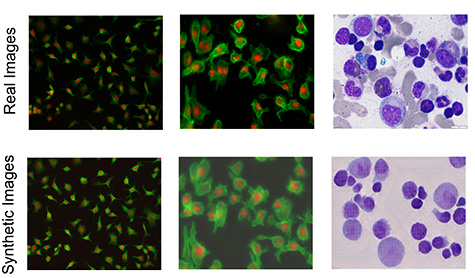
UC Santa Cruz researchers’ tool creates ‘synthetic’ images of cells for enhanced microscopy analysis
UC Santa Cruz researchers have developed a method to use an image generation AI model to create realistic images of single cells, which are then used as “synthetic data” to train an AI model to better carry out single cell-segmentation.
-
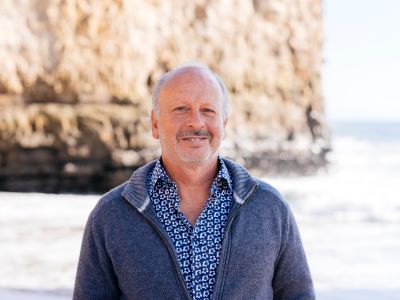
UC Santa Cruz researchers receive grants for early-stage technology innovations and climate action solutions
Eight UC Santa Cruz research teams focusing on some of the most pressing issues of our time, such as cancer detection, data encryption, and climate change, received more than $350,000 in awards as part of this year’s Innovation Catalyst Grant program, administered by the university’s Innovation & Business Engagement Hub.