Biomolecular Engineering
-

Genomics Institute faculty and staff help create non-profit to center Indigenous Knowledge while accelerating conservation genomics research
Several current and former UC Santa Cruz faculty and staff have joined with leading experts in the field of conservation genomics to launch Wise Ancestors, a non-profit centering Indigenous Peoples and Local Communities as co-creators of biodiversity conservation projects
-
24 in 2024: list of most highly cited researchers includes UC Santa Cruz scientists and engineers
In a notable recognition of scholarly achievement, 24 scientists and engineers from UC Santa Cruz have earned a spot on the 2024 Highly Cited Researchers list, recently unveiled by Clarivate.
-

2024 iGEM team’s foundational science project tackles infant formula affordability
The 2024 UC Santa Cruz iGEM team won a silver medal at the international Jamboree for a project focused on addressing the high cost of infant formula through a foundational synthetic biology approach.
-

How optogenetics can put the brakes on epilepsy seizures
In what could one day become a new treatment for epilepsy, researchers at UC San Francisco, UC Santa Cruz, and UC Berkeley have used pulses of light to prevent seizure-like activity in neurons.
-

Bioluminescent proteins made from scratch enable non-invasive, multi-functional biological imaging
Assistant Professor of Biomolecular Engineering Andy Yeh is designing completely artificial proteins that produce bioluminescence to serve as a non-invasive method for bioimaging, diagnostics, drug discovery, and more.
-
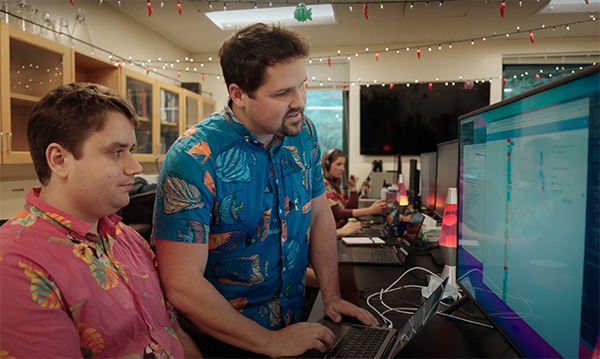
Engineers awarded CDC contract to build pathogen-tracing public health tools
The CDC has awarded Corbett-Detig and his team at the UCSC Genomics Institute a two-year, $2.52 million contract to continue their work tracking the COVID-19 virus’s evolution and expand their software tools to track other pathogens.
-
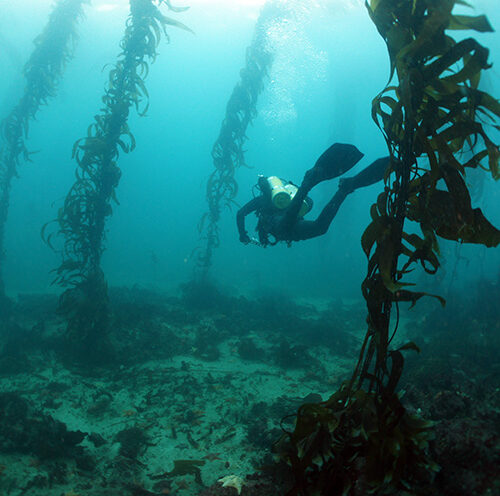
Genomics Institute provides seed funds for six multidisciplinary projects
The Genomics Institute has awarded grants of up to $50,000 to six multidisciplinary research projects in the inaugural year of its seed funding program
-

ARCS Foundation 2024 scholarships support outstanding graduate students in science and engineering
Sixteen outstanding UC Santa Cruz graduate students in science and engineering fields earned scholarships worth a total of $180,000 from the Achievement Rewards for College Scientists (ARCS) Foundation for the 2024-25 academic year.
-
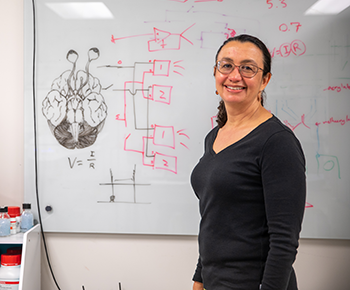
Researchers to investigate genetic roots of autism, look for new treatments
A new award from the California Institute for Regenerative Medicine will support a team of UC Santa Cruz researchers in exploring the genetic underpinnings of autism spectrum disorder.
-
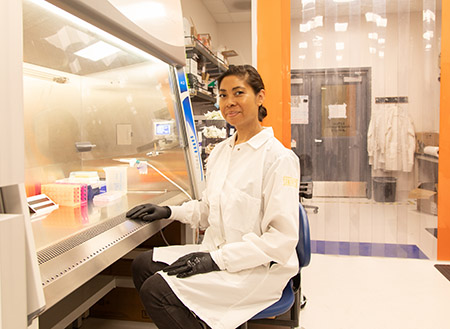
Mapping the mind
Ph.D student Asia Anderson focuses on the development of brain machine interfaces to model and study the development of the human brain, specifically those with neurodegenerative disorders.
-
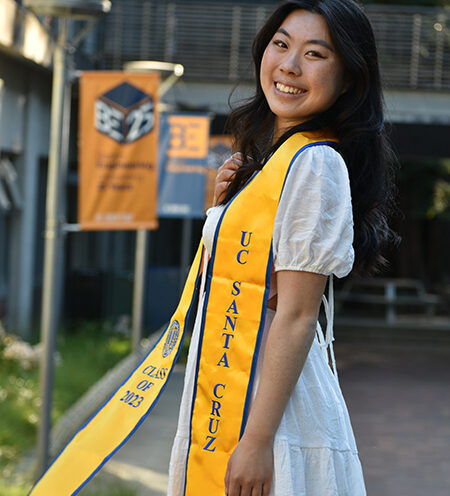
Life Beyond the Redwoods: Sarah Xia at Stanford
Sarah Xia (College Nine ’23, biomolecular engineering and bioinformatics) found her passion for genomics at UC Santa Cruz. Now, a year after earning her B.S. in biomolecular engineering and bioinformatics, Xia is a research associate at Stanford.
-

Scientists find that small regions of the brain can take micro-naps while the rest of the brain is awake and vice versa
For the first time, scientists have found that sleep can be detected by patterns of neuronal activity just milliseconds long