Social Justice & Community
UCSC alumna Quressa Robinson expands representation in publishing
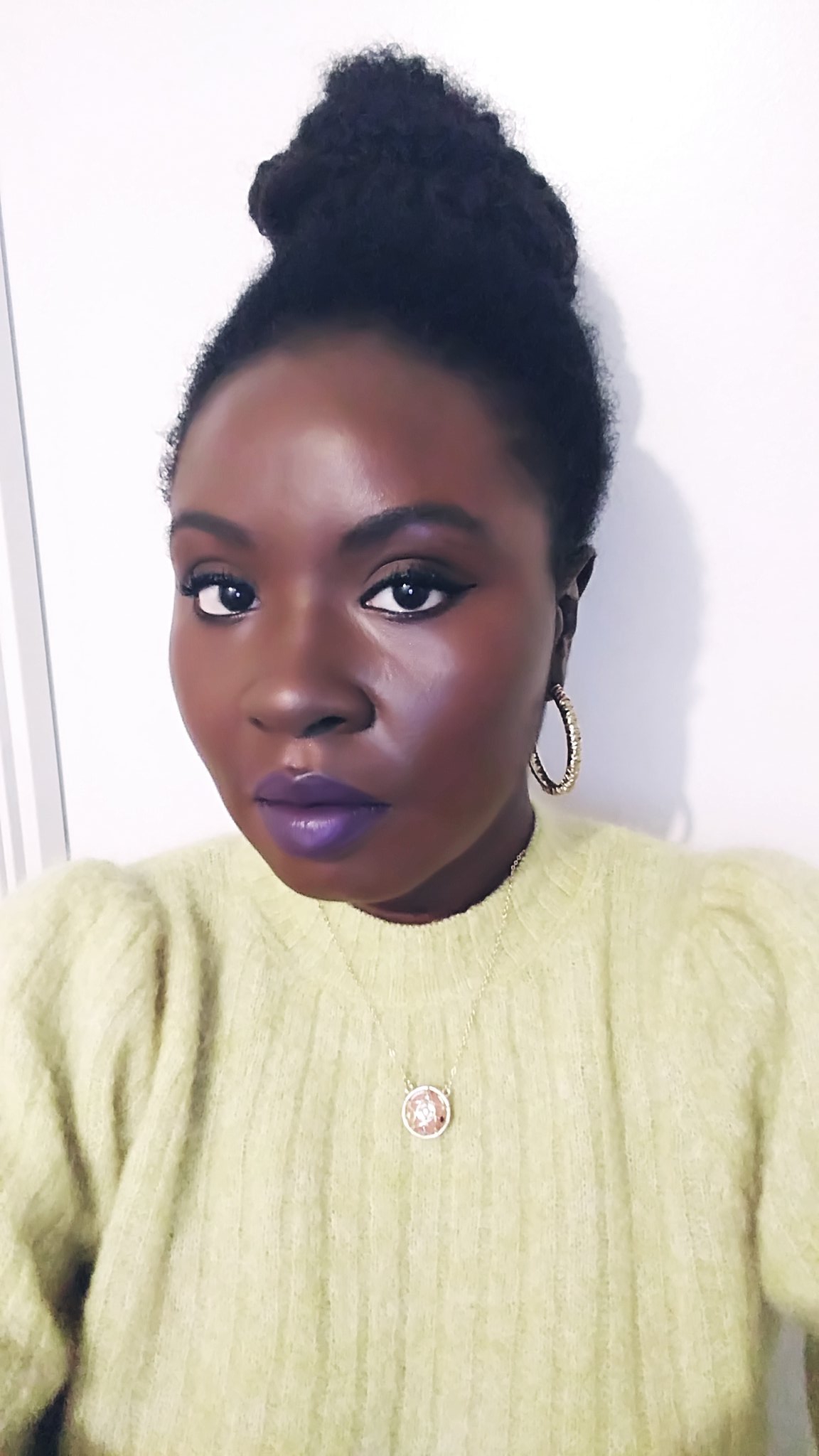
As a literary agent, Quressa Robinson (Oakes ‘03, literature) uses her influence to bring diverse, nuanced stories to young adult readers.
Key takeaways
- Robinson turned a childhood love of reading into a career as a literary agent at Folio Literary Management, where nearly all of the fiction writers she represents are authors of color.
- Her time at UCSC through organizations like the Afrikan Black Student Alliance and Destination Higher Education built the community and social justice foundation that drives her work today.
- By championing diverse stories in the young adult genre, Robinson hopes to raise a generation of readers who will demand the same representation in adult fiction.
Quressa Robinson (Oakes ‘03, literature), Scholastic book catalog in hand, started negotiating with her mom in elementary school. From one book to two books, to maybe even three if she could really sell it.
Zipping through books, a young Robinson found herself engulfed in other realms. It was her way of traveling beyond what she knew. That journey brought her to the world of being a literary agent.
“I realized I could become someone who reached out to kids who were just like me, who are passionate about reading, and I could help shape a generation of young readers,” Robinson said.
It wasn’t always the path she sought, actually applying to UC Santa Cruz as a biochemistry major.
Robinson lived in San Francisco, frequently engaged in summer camps and activities at UC Berkeley. UC Santa Cruz wasn’t on her radar until Destination Higher Education (DHE), an outreach organization highlighting the Black Experience at UCSC, came to her high school.
After her outreach trip to Santa Cruz, the woods, the proximity to home, and the people at DHE sold Robinson on the school. She had the plan to study biochemistry, but met her might with physics. She failed her physics class twice, and school policy made it so that she couldn’t take the class again. Robinson pivoted to literature, a major she knew she would excel in and enjoy.
Robinson studied modern literature, recognizing it was the only literature concentration that featured a diverse set of writers. She was able to take classes like Black Pulp Fiction and a poetry class with Professor Emeritus Nathaniel Mackey.
To date, Robinson has held onto an assigned reading from Professor Mackey’s class: A book of Robert Creeley poems. Classes like these were far and few between, but it drove Robinson to join organizations like the Afrikan Black Student Alliance (A/BSA), now the Black Student Union, and pay it forward by doing outreach for DHE.
“I grew up in a very diverse city. I was always in classes that were majority Black and Brown. At UCSC, I was usually the only Black person or person of color in a class,” Robinson said. “Being at Oakes and being a part of A/BSA and DHE, and developing community with Black people and allies helped shape who I am today.”
After graduating from UC Santa Cruz, Robinson interned at her mentor, Vendela Vida’s, magazine The Believer. Through the internship, Robinson discovered 826 Valencia, a nonprofit that worked on programming in publishing and writing dedicated to underserved youth in San Francisco.
Robinson spent a lot of time chatting with Vida about graduate programs and her work. Monthly they would meet, and Robinson would share her writing with Vida for feedback.
“A published writer, who had an advanced degree in writing, wanted to read my writing and give me feedback on it. She encouraged me and told me I had talent,” Robinson said. “It’s rare that we meet those types of people in our lives who encourage us, especially when it comes to creative endeavors.”
Robinson, inspired by her work and time at 826 Valencia, applied and got into the writing MFA program at Columbia University. While in her program, Robinson took interest in publishing. After graduating, she was in her early thirties and many places considered her overqualified for an editorial assistant position. It took some time, but she found a position at St. Martin’s Press. Within three years, she was an assistant editor.
One of the things Robinson learned by working at a publishing house was that everything was done by committee. As an editor, she had to go to her editorial team, get second reads, and then have the team cosign. Then, the book got taken to an acquisitions meeting. Everyone had to say yes to have the book published.
“As the only Black person in a room filled with White faces, I was very focused on diversity and inclusion. It was very rare to get everyone on the same page,” Robinson said. “I decided that I didn’t want to have that role anymore and needed a little more power to be the first gatekeeper. That’s how I became an agent.”
Pivoting to being a literary agent was Robinson’s way of using her power to shape reading in the young adult genre. The first time Robinson saw herself represented in media was watching Issa Rae’s web series “Awkward Black Girl”. She wanted to emulate that in the types of stories she represented. Specifically, for kids of color, where they could see themselves more realized and three-dimensional. In that regard, the industry is changing.
“Instead of showing people of color as a monolith, you are starting to get a wide variety of stories. A lot of times it would be only inner-city stories of gun violence, gangs, and death,” Robinson said. “ Now it’s Black people grow up middle class, upper middle class, and there are stories of falling in love.”
Robinson currently works at Folio Literary Management where she represents fiction writers, most being authors of color.
The best part of her job, Robinson says, is getting to tell the writers that an editor at a publishing house submitted an offer to buy their work.
“Especially because my list is 98 percent people of color. Being able to tell the authors that your foot is through the door and that your book is going to be out there on shelves for you and your family to see is the best part of my job,” Robinson said.
Robinson will keep shaping the literary world. In hopes that one day, as she keeps bringing diverse stories to the young adult genre, that her readers will grow up and demand the same representation from the adult genres.
It was at UC Santa Cruz that Robinson found her social justice spark, thinking about how to make folks in underrepresented communities visible. She’s put theory into practice with her work. But before her higher education journey, it was reading that introduced her to different people and worlds.
“People forget our past and history. We all are human, we all bleed red, we all have dreams and aspirations. There are so many worlds that we don’t get introduced to that you can only find in reading,” Robinson said. “Being able to imagine different kinds of worlds and societies and stories of human experience is something you can only do in fiction. Just the amount of imagination it sparks for me, I can imagine that being greater for kids growing up and just discovering the world.”