Technology
UC Santa Cruz trio takes third at 2026 Mistral AI hackathon with cybersecurity platform
A team of UC Santa Cruz students and an alumnus earned third place at the 2026 Mistral AI Worldwide Hackathon in San Francisco for developing an artificial intelligence-powered cybersecurity solution to help companies prevent phishing attacks.
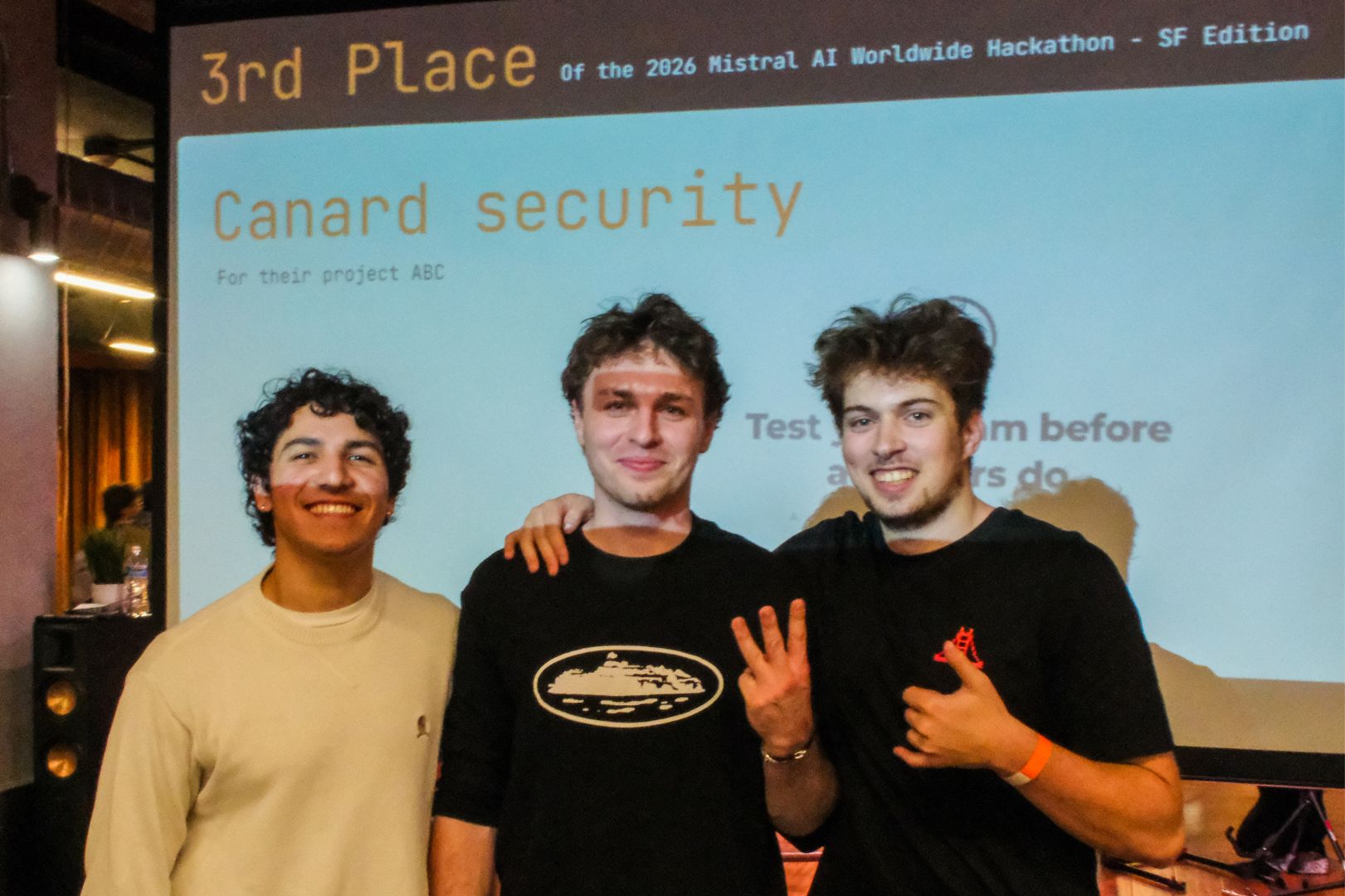
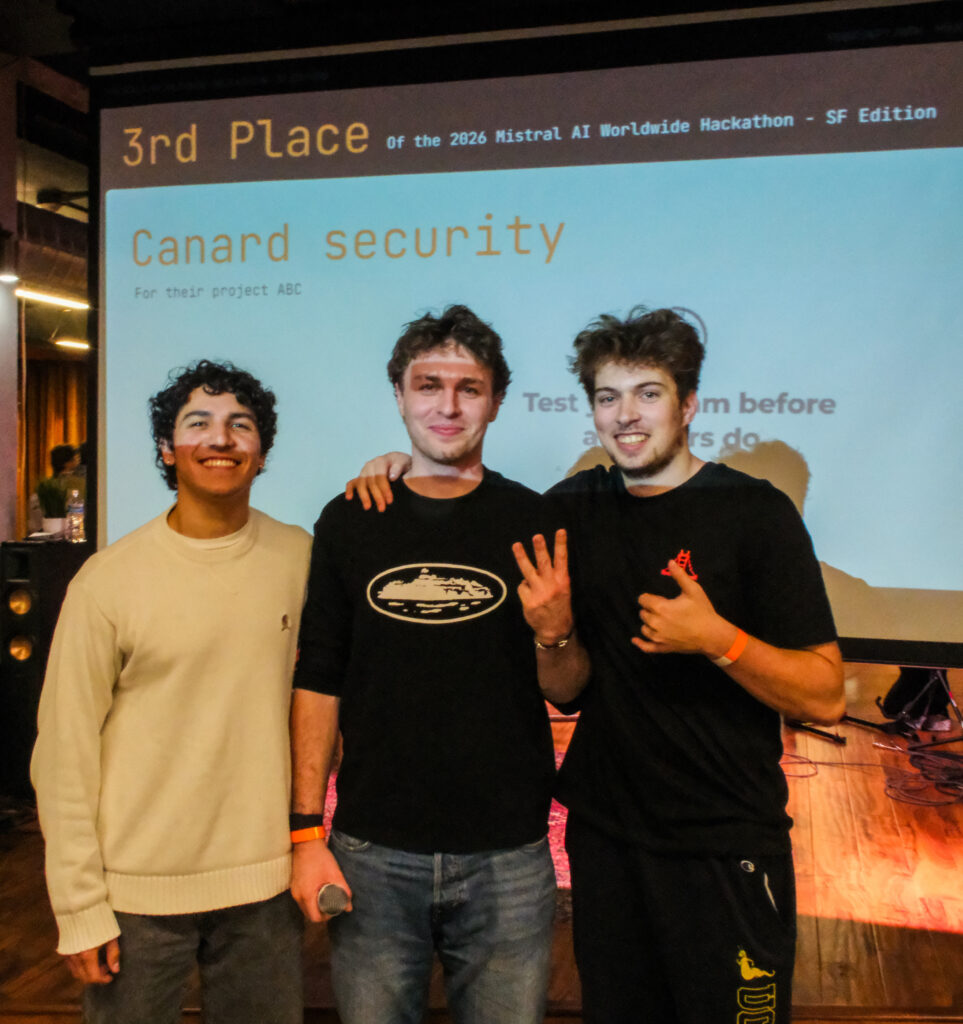
UC Santa Cruz team from left to right: Anthony Lamas, Ivan Severinov, and Daniel Perlov.
A team of UC Santa Cruz students and an alumnus earned third place at the 2026 Mistral AI Worldwide Hackathon in San Francisco for developing an artificial intelligence-powered cybersecurity solution to help companies prevent phishing attacks.
Anthony Lamas (B.S. ’26, computer science), Ivan Severinov (B.S. ’26, computer science), and Daniel Perlov (B.S. ’25, applied mathematics and computer engineering) built Canard Security, a voice phishing simulation platform that runs test calls with employees to detect vulnerabilities before real cyberattacks occur.
“We were competing against YC founders, Google DeepMind researchers, Meta product managers, and other AI experts,” Lamas said. “Most participants were already working in industry or doing advanced research. It was a really interesting experience being one of the youngest people in the room.”
The invite-only hackathon took place simultaneously in cities around the world, including Paris, London, and Tokyo. Around 70 teams competed at the San Francisco event, where participants had 36 hours to build projects using models developed by Mistral AI, a company known for its high-performing, open-source large language models.
Leading technology companies including Amazon and Nvidia sponsored the event. The UC Santa Cruz team received $500 in cash and $1,000 in credits to use Mistral AI models.
The team developed Canard Security in response to growing cybersecurity breaches, which can cost companies millions of dollars. The platform focuses on “vishing,” or voice phishing, a form of social engineering in which attackers attempt to extract sensitive information over the phone.
“It takes a really exceptional hacker to break into a company’s systems,” Severinov said. “But it’s much easier to get someone to reveal sensitive information through a conversation. While many companies focus on email security, there are far fewer that specialize in social engineering tactics like vishing.”
Canard Security uses AI to conduct live, unscripted calls that mimic real-world vishing attempts. During these calls, an AI agent adopts a persona, such as a company executive, IT staff member, or promotional caller, and adjusts its responses in real time based on the employee’s answers. By simulating cybersecurity attacks in a controlled environment, the platform can help organizations train employees and reduce the risk of data breaches.
The system is powered by a large language model that generates responses during calls, which are converted into natural-sounding speech using ElevenLabs, a platform that produces AI-generated voices. Calls are placed through Twilio, a service that allows software to make and receive phone calls. Employees’ spoken replies are transcribed, processed by the AI, and converted back into audio, creating a continuous, two-way interaction.
The platform also allows security managers to tailor scenarios using company-specific information, such as employee roles and reporting structures. This enables the AI to reference familiar names or situations, making the simulations more realistic and convincing.
Both Lamas and Severinov credited their UC Santa Cruz coursework with giving them the tools and hands-on experience needed to build Canard Security.
“I want to thank all the classes I’ve taken at Baskin Engineering,” Severinov said. “All the things I’ve learned along the way have helped me become a better engineer. What I love about computer science is the range of things you can do–the applications are limitless.”
Lamas pointed to project-based classes such as CSE 115A and CSE115B, as well as CRWN 102, for providing insight into developing robust, industry-driven solutions.
“If you’re interested in innovation and want to build cool things, UCSC is a great place to be,” Lamas said. “There are so many students getting into startups, and it’s an incredible environment to meet people with interesting ideas. Santa Cruz has really shaped how I think about building products.”
The team plans to continue refining Canard Security and may expand it to address other cybersecurity risks, including “smishing,” a type of phishing conducted through text messages.