Earth & Space
Astrophysicist Stan Woosley awarded Gruber Cosmology Prize for theoretical work on supernovae
UC Santa Cruz professor shares one of cosmology’s highest honors with Alex Filippenko at UC Berkeley and Ken Nomoto at the University of Tokyo
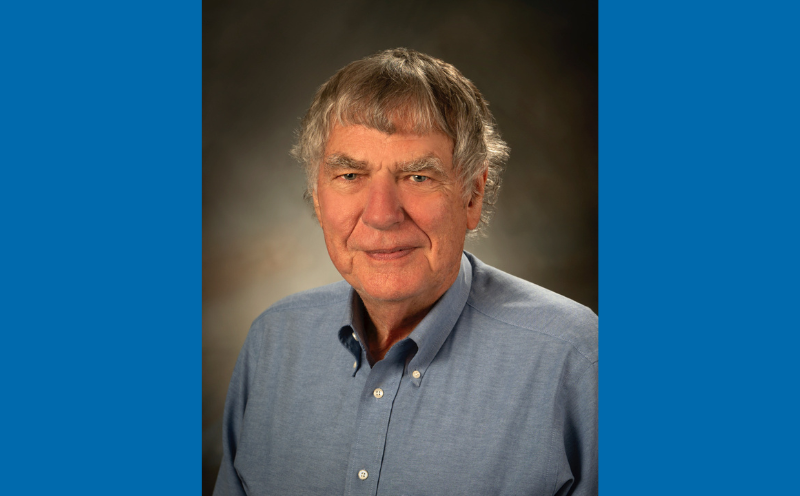
Stan Woosley has been a professor in the Department of Astronomy & Astrophysics at UC Santa Cruz since 1975 and chaired the department from 1989 to 2003.
Stan Woosley, professor of astronomy and astrophysics at the University of California, Santa Cruz, will share the 2026 Gruber Cosmology Prize. The Gruber Foundation named Woosley, UC Berkeley astrophysicist Alex Filippenko, and University of Tokyo theoretical physicist Ken Nomoto as the award’s co-recipients on May 19.
The prize, one of the most prestigious awards for research on the origin and fate of the universe, comes with $500,000 to be shared equally. The scientists were cited for “transforming supernovae from poorly understood stellar explosions into the basis for a quantitative, predictive, and empirically validated framework.”
Observations of the sudden appearance of a new star, or nova, in the night sky date to ancient times. Not until the 1930s, however, did astronomers adopt the term supernova to differentiate between two types of bright stars. A nova brightens intensely before returning to its previous level of luminosity, while a supernova ends its life in a display of fireworks tens of thousands of times brighter than a nova.
Woosley and Nomoto contributed to the theoretical understanding of how these stars explode and the elements they produce. Filippenko, an astronomy professor at Cal, played a major role in clarifying the varieties of Type Ia supernovae, allowing these exploding stars to be standardized so that their intrinsic brightness could be used to measure the expansion of the universe.
When he was first notified about winning the prize, Woosley said he didn’t believe the call was real. But he became receptive after the second call and felt deep gratitude. “As Joni Mitchell famously said, ‘we are stardust,’” Woosley said. “I have worked a lifetime to show just how, in quantitative detail, that works. We are not only children of the stars, but the ashes of hundreds of millions of titanic explosions in which many of them died.”
Among the many honors that Woosley has received for his work are fellowships in the American Physical Society, the American Academy of Arts and Sciences, and the National Academy of Sciences. In 2005, he received both the H. A. Bethe Prize in Nuclear Astrophysics from the American Physical Society and the Bruno Rossi Prize in High Energy Astrophysics from the American Astronomical Society. From 1995 to 1997, he was an Alexander von Humboldt Award recipient. In 2019, he was selected for the inaugural class of American Astronomical Society Fellows.
Seminal supernovae researchers
When the three recipients of the 2026 Gruber Prize in Cosmology started studying supernovae in the late 1970s and early 1980s, sightings were rare, and that field was still in its infancy. Over the following four decades, the independent investigations of Filippenko, via observations, and the theoretical work of Woosley and Nomoto transformed not just the science of exploding stars, but astronomy itself, according to the official prize announcement.
Astronomers had known since the early 1940s that supernovae come in at least two varieties: Type I, which do not contain hydrogen, and Type II, that do. Filippenko’s observations in the mid-to-late 1980s and early 1990s helped identify three Type I subcategories, including Type Ia, Ib and Ic. For theoretical models of Type Ia, Woosley and Nomoto independently studied the evolution of the white dwarfs that undergo mass accretion from the companion stars in close binaries and found that the white dwarf explosion models are in good agreement with the observational features of Type Ia.
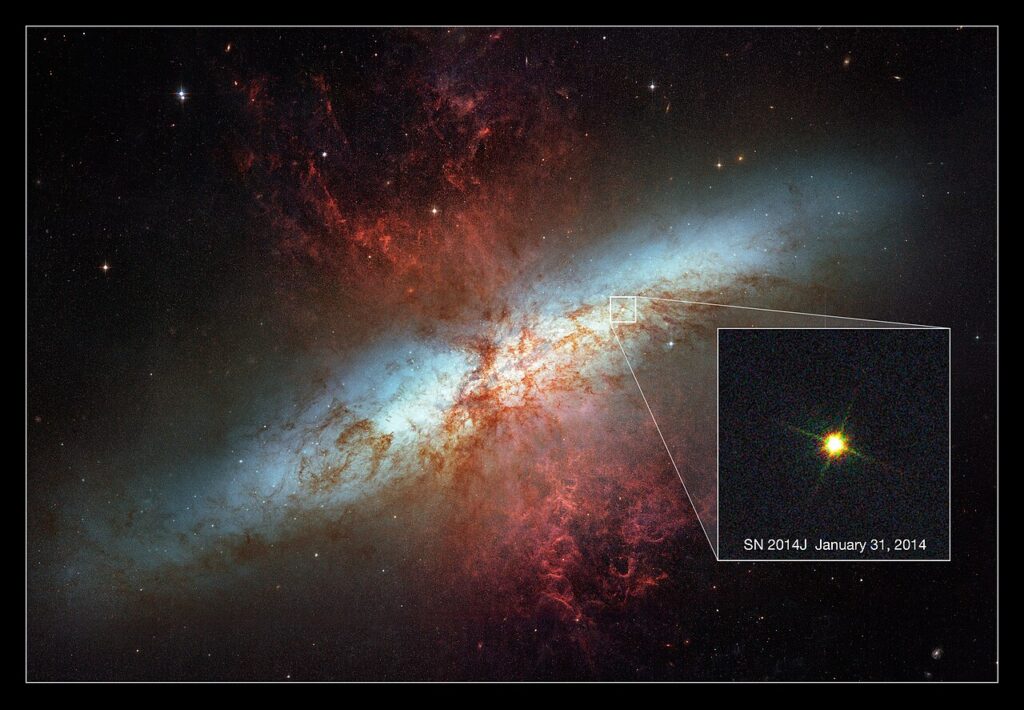
Then in the 1990s, again independently, Woosley and Nomoto worked on models of rotating supernovae of Type Ib that, though rare, matched observations of gamma-ray bursts (GRBs), the most energetic phenomena in the universe. Woosley concluded that GRBs are the result of stars collapsing into a black hole, and he and Nomoto both explored the observational consequences of such a model. Woosley himself made some of those observations of GRBs—which can be observed only from outside Earth’s obscuring atmosphere—as a co-investigator on the High Energy Transient Explorer space mission from 2000 to 2008.
Woosley and Nomoto calculated models for individual supernovae that addressed, not only the complicated physics of the explosion, but the specific amount of each element made and ejected. When summed over all supernova masses and types, the result agreed accurately with what we see in our solar system and many other stars formed throughout the history of the galaxy. In effect, Woosley and Nomoto had transformed the study of supernovae into a predictive science.
Lick supercharges search
Though a theorist, Woosley benefited from and was influenced heavily by being embedded with observers and users of Lick Observatory, where UC Observatories serves as a managing partner, and where much supernova-related research is carried out. He also frequently interacted with Filippenko—a major Lick user.
Filippenko used the 3-meter Shane telescope at Lick to identify various Type Ia supernova subtypes, leading to them becoming “standardizable candles,” and also studied many varieties of supernovae, revealing much about their physical nature and providing observational tests for the theoretical models of Woosley and Nomoto.
Filippenko also commissioned a new telescope at Lick, the 0.76 m Katzman Automatic Imaging Telescope (KAIT), with which he conducted the Lick Observatory Supernova Search. From 1998 to 2008, this survey found more relatively nearby exploding stars—nearly 800—than all of the world’s other searches combined. KAIT was one of the first modern automated supernova-discovering telescopes; it laid the groundwork for the larger surveys later. The supernova research of Filippenko’s team continues, now in its fifth decade at Lick and fourth decade at Keck.
“Taken together,” the Gruber Foundation stated, “Filippenko, Nomoto, and Woosley’s work links stellar evolution, explosive nucleosynthesis, the origin of heavy elements, and the chemical evolution of the Universe, while also supporting the use of supernovae for precision cosmology.”
Their award will be formally presented on November 10 at the “Illuminating the Cosmos” conference at the Max Planck Institute for Astronomy in Heidelberg, Germany.