Technology
Astrophysicists win AI grant for ‘Holy Grail’ project to automate laborious calibration process
Anthropic’s AI for Science Program has awarded the UC Santa Cruz team $50,000 in API credits to fund the development of an automated wavelength-calibration algorithm for astronomical spectra.
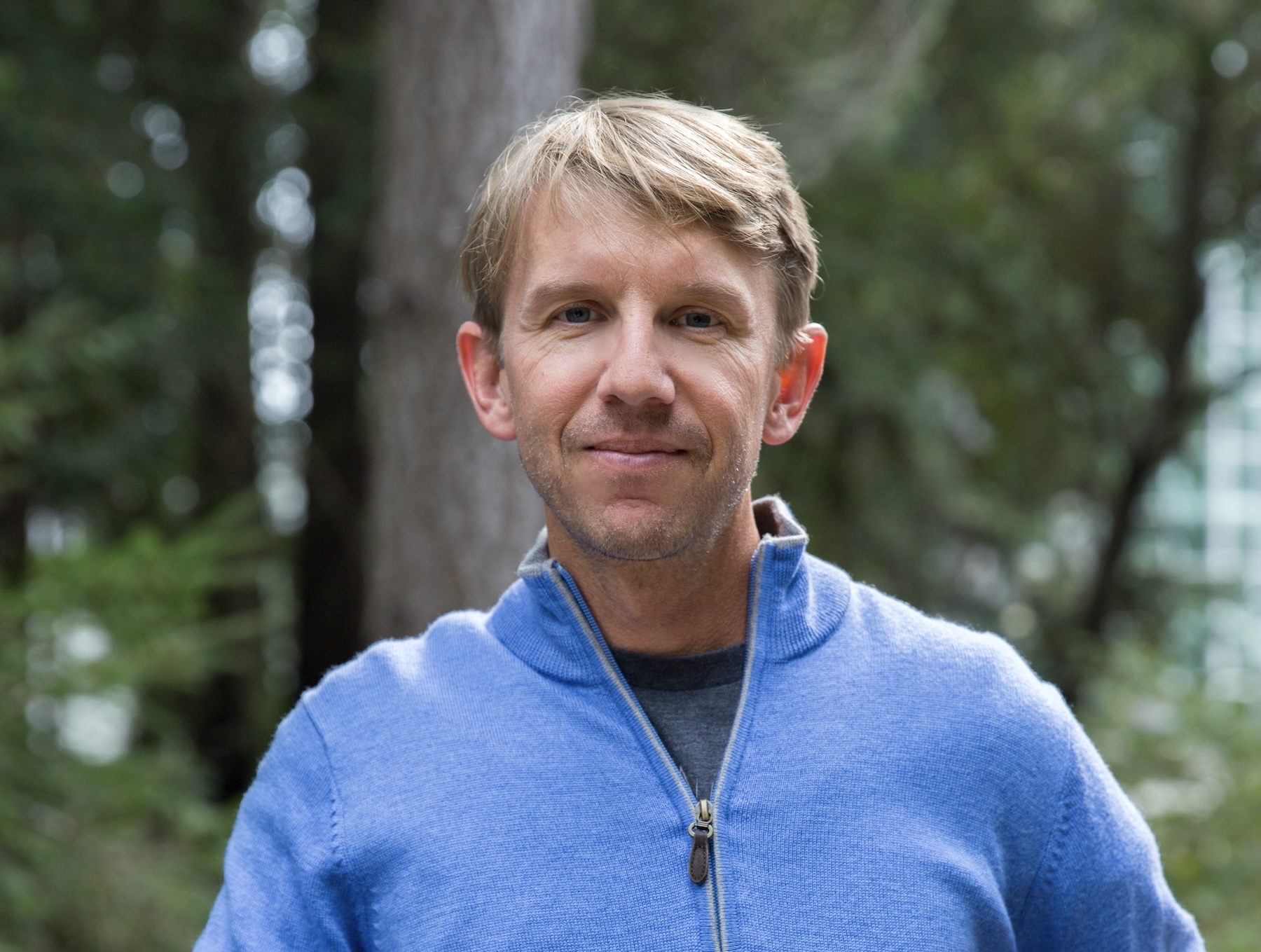
Astronomy and astrophysics professor J. Xavier Prochaska leads the team that received a science grant from the artificial-intelligence company Anthropic.
Photo by Carolyn Lagattuta
J. Xavier Prochaska, professor of astronomy and astrophysics at the University of California, Santa Cruz, leads a team that has been awarded a grant of approximately $50,000 in API credits from artificial-intelligence company Anthropic through its AI for Science Program. Starting on September 29, the award will support “The Holy Grail: An automated approach to the fundamental calibration of astronomical spectra,” Prochaska’s research project that aims to eliminate one of the most persistent computational bottlenecks in observational astronomy.
When telescopes observe distant stars and galaxies, spectrographs break the incoming light into spectra and record them on digital detectors as patterns of raw pixels. To turn those pixel coordinates into true physical wavelengths—enabling astronomers to calculate cosmic expansion, stellar velocity, or elemental composition—researchers must perform wavelength calibration using specialized reference lamps.
Today, this task is much like trying to read a barcode scanned from an unlabeled grocery item without a price lookup catalog or scale. An expert spectroscopist must manually inform the pipeline which calibration lamps were illuminated and how the instrument disperses light. Over the course of his career, Prochaska estimated that this manual activity has occupied more of his time than any other. Ten years ago, he and team member Ryan Cooke—now at Durham University—attempted to automate the process with traditional algorithms, but failed and coined the problem as their “Holy Grail.”
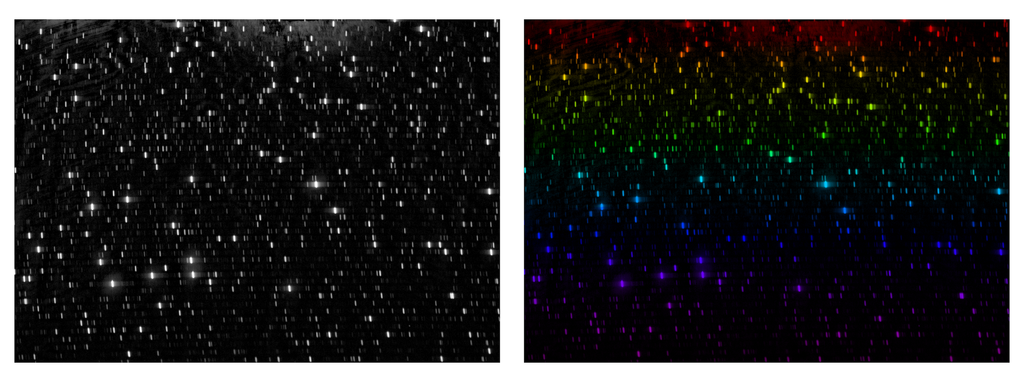
Prochaska’s initiative with Anthropic will use AI reasoning to design a standalone algorithm capable of examining an entirely unlabeled spectrum, recognizing its light source automatically, and mapping detector pixels to precise wavelengths without human intervention. Helping him will be team member Kyle Westfall, a UC Observatories project scientist at Lick.
Prochaska’s team joins a select group of organizations supported by Anthropic’s scientific funding initiative. Other grant recipients include Every Cure, a nonprofit organization utilizing Claude to screen millions of drug candidates to identify repurposing opportunities; the Centre for Population Genomics, which uses AI to automate genetic variant classifications for rare-disease diagnostics; and the Violet Research Institute, a nonprofit researching ultra-rare genetic conditions using AI to execute bioinformatics pipelines and analyze experimental data.
First launched in May 2025, Anthropic’s AI for Science Program was established to accelerate research by providing free API credits to scientists at academic and research institutions. Inspired by Anthropic’s mission to harness AI for broad societal benefit, the initiative seeks to reduce the time needed to process complex scientific data, test hypotheses, and validate discoveries.
While the program initially prioritized biology and life sciences applications—such as understanding complex genetic systems and drug discovery—its scope extends across the physical sciences to tackle computationally demanding challenges in fields like astronomy and instrumentation. Applications are accepted year-round, and grants are awarded on a rolling basis.