Earth & Space
DOE selects AI-driven geothermal initiative to develop safe, affordable way to tap abundant underground resource
UC Santa Cruz will provide geoscience leadership through Emily Brodsky, distinguished professor of Earth and planetary science
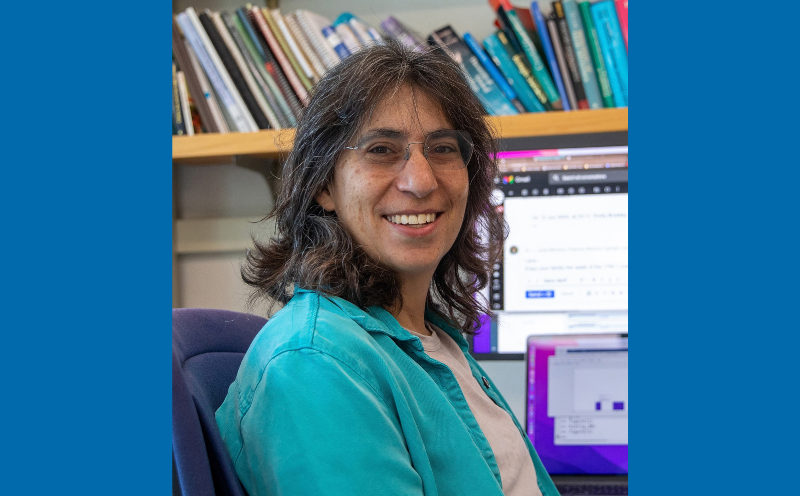
Distinguished Professor Emily Brodsky is a member of the initiative's leadership team.
Press Contact
Key takeaways
- Project MAESTRO aims to use artificial intelligence to safely and affordably unlock deep underground geothermal energy to generate clean electricity nationwide.
- The initiative aims to overcome complex barriers based in geoscience that traditionally make geothermal development slow, expensive, and risky.
- The project will address earthquake risks from induced seismicity and, ultimately, provide open-source tools to advance public safety and understanding.
- Researchers say more than enough potential geothermal energy exists underground in the United States to power the whole country.
The U.S. Department of Energy (DOE) has selected a geothermal-energy project involving five University of California campuses and four national laboratories to move forward with an initiative that will use the latest artificial intelligence tools to tap into heat beneath the Earth’s surface to spin turbines and generate electricity for the entire country.
Project MAESTRO is led by engineers at UC Irvine, and the DOE Office of Science’s selection allows the effort to move into a second phase that will span three years. The goal is to unlock the nation’s vast supply of geothermal energy safely and affordably with the use of a multi-agent AI expert for subsurface reasoning and optimization.
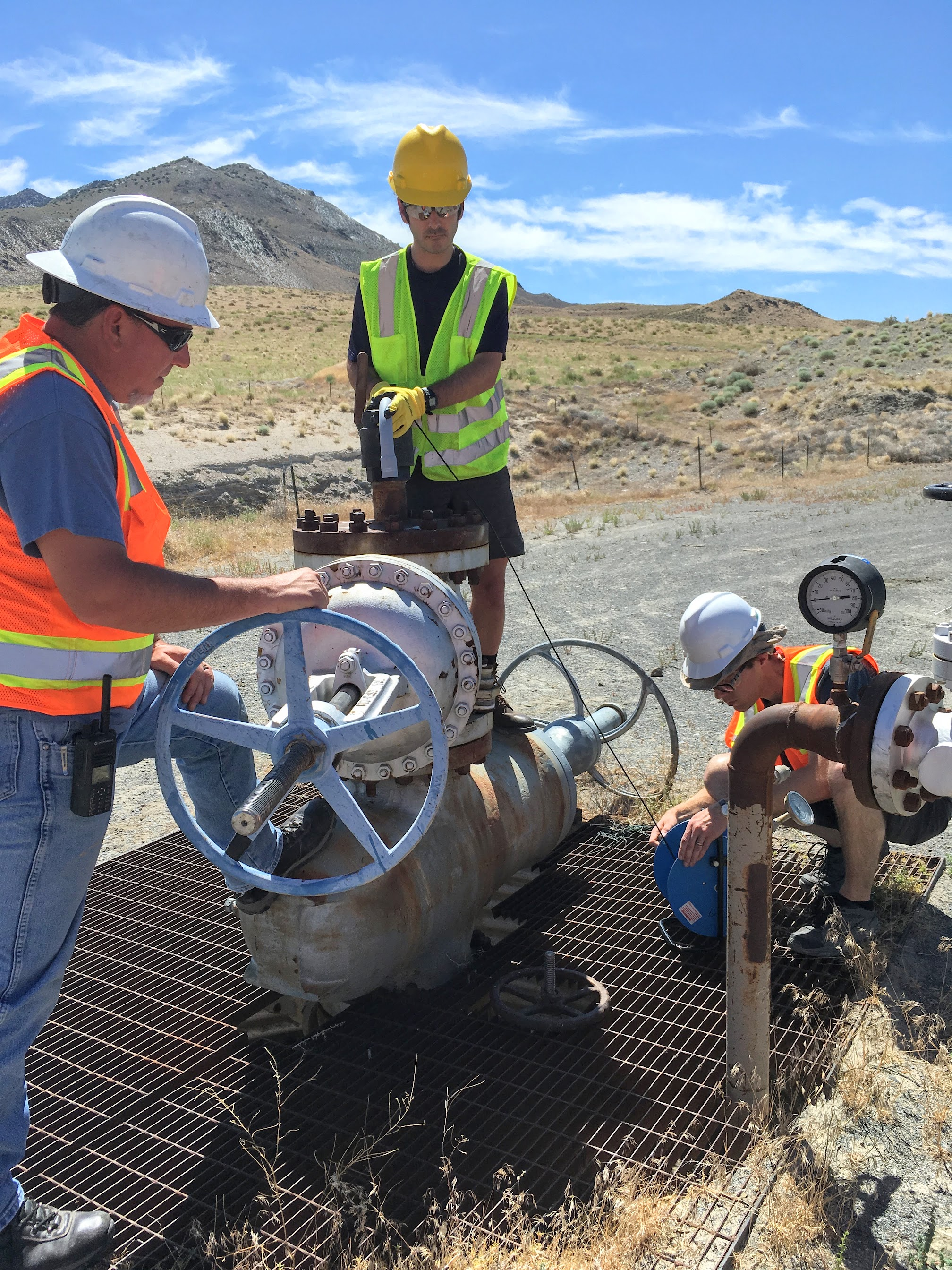
Enhanced geothermal systems (EGS) tap this energy by engineering fluid-circulation pathways through deep, hard rock. But these environments are complex and poorly understood. Rock-fracture patterns, underground stress conditions, and the interactions between heat, fluid, and chemistry are all difficult to predict.
Traditional approaches treat these factors separately using slow, disconnected workflows, and critical knowledge gets lost between disciplines. The result is high costs, long development timelines, and unnecessary risk. MAESTRO is designed to resolve this gap, and in addition to expertise in engineering and AI, the project will require the strong oversight of someone steeped in the study of solid Earth, rocks, minerals, and the processes that shape the ground.
Emily Brodsky, a distinguished professor of Earth and planetary sciences at UC Santa Cruz, will serve as the project’s geoscience lead. “Geothermal power could be a major source of energy in the future,” Brodsky said, “and we are excited to grapple with some of the key hurdles to scaling it up, such as induced seismicity and generalizing behavior between fields.”
A sector-spanning initiative
MAESTRO is among several recently granted DOE Genesis Phase 2 awards that are intended to capitalize on the powers of AI to transform how specific goals are accomplished—in this case, sustainable energy generation that can enhance national security and economic stability.
“This is, of course, an honor but also a major responsibility to meet the grand vision set by the DOE for the Genesis Mission,” said lead principal investigator Mohammad Javad Abdolhosseini Qomi, UC Irvine professor of civil and environmental engineering. He explained that receiving a Phase 2 grant means that the team has satisfied Phase 1 requirements to make “transformative contributions” to the field of geothermal energy.
In addition to UC Irvine and Santa Cruz, other MAESTRO members include researchers from UC Berkeley, Riverside, and San Diego. Also collaborating are Los Alamos, Lawrence Livermore, Lawrence Berkeley, and Pacific Northwest national labs, along with three private-industry partners. The large team combines expertise in geophysics, geomechanics, geochemistry, AI, and machine learning, as well as the engineering capabilities involved in developing and operating sustainable-energy resources.
Open sourcing for public safety
Another important outcome of the MAESTRO project will be to better understand and control induced seismicity—earthquakes that can result from hydrologic fracturing activities. Technologies and AI tools developed for this purpose may also serve as the basis for early warning of naturally occurring earthquakes.
Ultimately, MAESTRO will offer benefits beyond the research lab. The project will be open source, making digital resources available to researchers, government policymakers, and the general public. Professionals in the sustainable energy development industry will have access to real-time guidance that can reduce the financial risks and time costs of bringing geothermal projects to fruition.
“For communities, continuous underground monitoring will greatly enhance safety in earthquake-prone regions,” said co-principal investigator Russ Detwiler, UC Irvine associate professor of civil and environmental engineering. “Our tools will be packaged into a free, browser-based tool that anyone can use to explore geothermal potential, assess risk, and review data across the country.”
This article was adapted from an announcement by UC Irvine.