Campus News
Nine projects receive seed funding from the Genomics Institute
From listening to the electrical signals of fungal networks in fire-scarred forests to training AI models that can interpret the most complex regions of the human genome, this year’s cohort is using genomics in bold new applications.
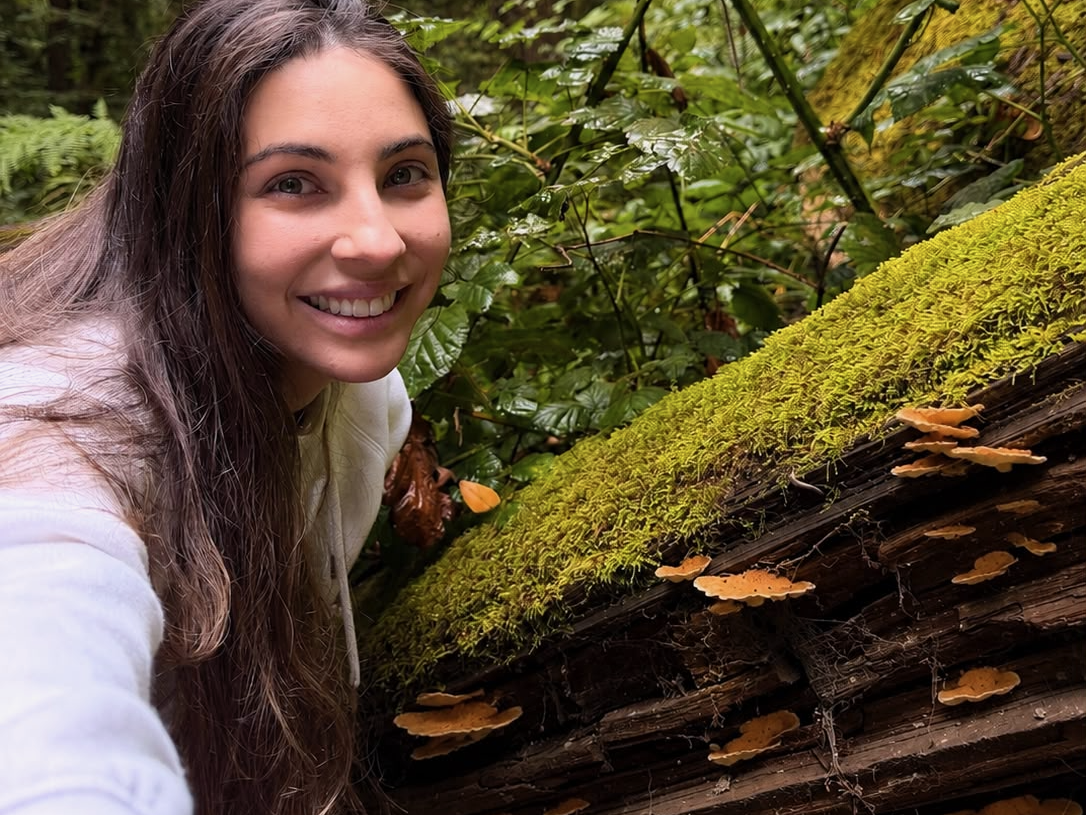
Ella Ferraz, a graduate student at UC Santa Cruz, is working on a project to understand how fungal networks communicate through electrical signals after wildfires that just received seed funding from the UC Santa Cruz Genomics Institute. Photo credit: Ella Ferraz.
Media Access
From listening to the electrical signals of fungal networks in fire-scarred forests to training AI models that can interpret the most complex regions of the human genome, this year’s cohort of Genomics Institute seed funding awardees is using genomics in bold new applications.
The UC Santa Cruz Genomics Institute has just awarded seed funding of up to $50,000 to nine multidisciplinary research projects as part of its annual seed funding program. The span of these projects, cutting across the biology of aging, cancer, evolutionary history, pollinator health, and even the hidden communication of fungal networks, shows what happens when researchers are given room to imagine genomics doing something entirely new.
The seed funding program helps high-risk, high-reward ideas get off the ground with an initial round of funding, giving researchers the resources to establish proof of concept and build toward larger grants, donor gifts, and industry or nonprofit collaborations. True to the Institute’s collaborative ethos, all projects are being led by co-investigators from at least two different departments, and in several cases bring together scientists and engineers who had never worked together before.
“What excites me most about this year’s cohort is the sheer imagination on display,” said David Haussler, scientific director of the UC Santa Cruz Genomics Institute. “There are some dream-team collaborations represented here, applying and in some cases building the most cutting-edge AI models and sequencing methods to projects that could have a tremendous impact. This is exactly the kind of bold risk-taking that leads to breakthroughs, and I can’t wait to see the results.”
The funding for this seed program comes from the Genomics Institute’s Healthier World Fund, which is supported by a generous 10-year gift from an anonymous donor. The program will fund the following projects:
Leveraging the human pangenome to uncover genomic determinants of telomere length
Investigators: Carol Greider (Professor, Molecular, Cell, and Developmental Biology) and Karen Miga (Associate Professor, Biomolecular Engineering)
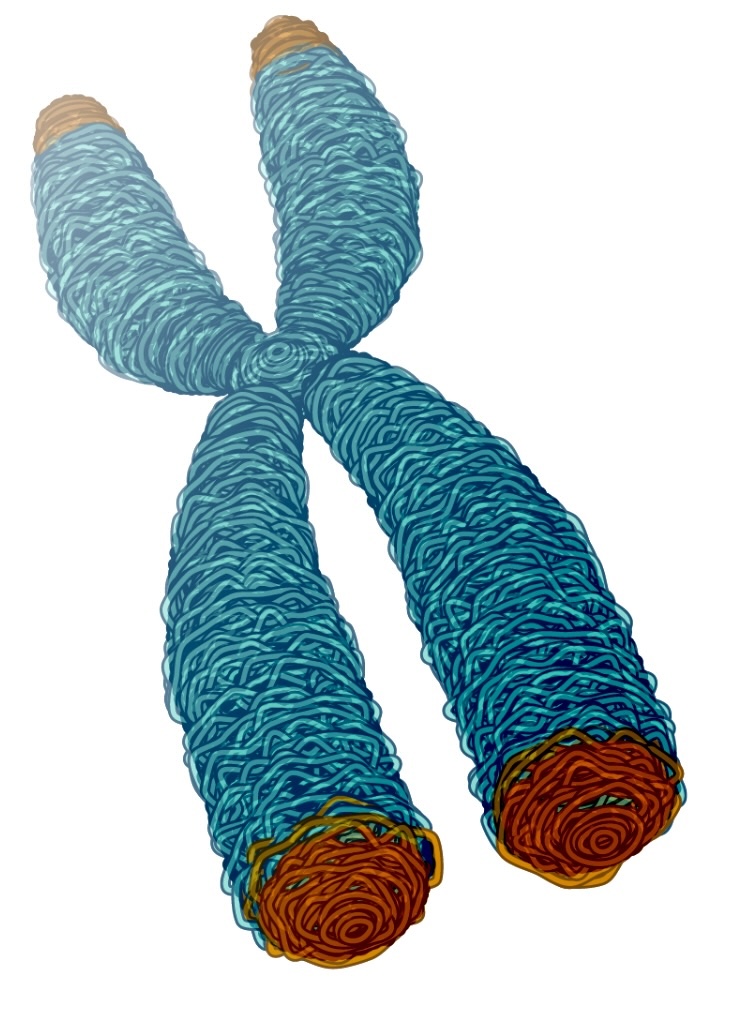
This study focuses on understanding a strange property Greider recently observed in telomeres, which are the protective caps at the ends of our chromosomes that naturally shorten as we age. The team will use the massive new database of human genetic diversity created by the Human Pangenome Reference Consortium, which Miga leads, to identify the specific genetic patterns that determine why some people have longer or shorter telomeres than others, and why some chromosomes even within the same person have different length telomeres. Because critically short telomeres are linked to many age-related disorders, and long telomeres are linked to cancer, understanding these genetic switches has enormous potential for improving human health. This research aims to provide new insights into the biology of aging and potentially uncover new ways to treat cancer and age-related decline.
Listening to the underground: Decoding the language of fungal networks in California’s fire-adapted forests
Investigators: Colleen Josephson (Assistant Professor, Electrical and Computer Engineering and Computer Science and Engineering) and Mircea Teodorescu (Associate Professor, Electrical and Computer Engineering and Biomolecular Engineering)
This project explores how massive underground networks of fungi communicate through electrical signals, especially after devastating wildfires. The researchers are developing a new tool that can record these faint electrical “conversations” across large areas of soil. By listening to these networks, they hope to determine if a forest’s underground infrastructure is successfully healing or if it remains broken after a fire. This information is essential for monitoring forest recovery and soil health in California’s increasingly fire-prone landscapes. Following the interdisciplinary spirit intended by the seed funding program, this project creatively repurposes technology developed by Teodorescu’s lab to read the electrical signals of neural tissue. It turns an instrument that the Genomics Institute’s Braingeneers group is using for human health toward a bold new question to assess the health of our forests.
Sequence-to-function models of long-read genomes for understanding disease
Investigators: Nilah Ioannidis (Assistant Professor, Applied Mathematics), Karen Miga (Associate Professor, Biomolecular Engineering), and Benedict Paten (Professor, Biomolecular Engineering)
This project aims to improve artificial intelligence tools so they can read and interpret the newest, most complete human genomes, which capture stretches of DNA that earlier methods couldn’t see. Around half of rare disease patients remain undiagnosed after having their genome sequenced with traditional methods. New long-read sequencing methods have a real chance to improve that rate, thanks largely to the Telomere to Telomere consortium spearheaded by Miga, but today’s leading AI models were never trained or tested on this kind of data. The team is teaching their models to recognize which genetic differences in these newly visible regions are likely to cause disease. Ultimately, this work will help doctors diagnose rare diseases and cancer in patients who currently have no clear genetic explanation for their illness.
Effects of shared floral resources, landscape composition, seasonality on virus and parasite transmission in urban gardens
Investigators: Iris Rivera (Postdoctoral Scholar, Environmental Studies), Stacy Philpott (Professor, Environmental Studies), Rachel Meyer (Adjunct Assistant Professor, Ecology and Evolutionary Biology), and Ingrid Parker (Professor, Ecology and Evolutionary Biology)

This team is investigating how the layout and plant life of urban gardens affect the health of bees. Parasite and virus infections are among the leading causes of pollinator decline, and the team aims to explore whether gardens in city environments act as “hotspots” where these pathogens can easily spread from one bee to another as they visit the same flowers. By tracking bee movements and testing both bees and flowers for pathogens, the researchers hope to find ways to design gardens that support pollinator health. This work has the potential to both protect the bees that pollinate our food crops and maintain the health of our local environments.
Enhanced prediction of the RNA expression impacts of genome variation from DNA sequence and accessibility data
Investigators: Angela Brooks (Professor, Biomolecular Engineering), Yuyin Zhou (Assistant Professor, Computer Science and Engineering), and Nilah Ioannidis (Assistant Professor, Applied Mathematics)
The goal of this project is to build an artificial intelligence model to better predict how our genes are turned into proteins. While most models only look at the DNA sequence itself, this team is adding information about how DNA is packed and chemically modified within a cell. They are particularly focused on predicting isoforms, which are different versions of proteins that can be created from a single gene. A vast majority of human genes have multiple isoforms but they are incredibly under-researchered, and the Brooks lab has been exploring these isoforms as potential drivers of cancer and drug resistance. This project’s approach will help scientists understand how small genetic variations contribute to diseases and could lead to new ways to diagnose and treat cancer.
Inferring the complete genealogical history of humans via machine learning
Investigators: Razvan V. Marinescu (Assistant Professor, Computer Science and Engineering) and Russ Corbett-Detig (Professor, Biomolecular Engineering)
Scientists on this project are using a cutting-edge machine learning framework to create the most complete map of human genetic history to date using ancestral recombination graphs. Unlike standard maps that look at a single path that evolution took, this new tool will account for parts of the genome that follow different genealogical histories from one another. This more accurate map will provide a powerful unifying structure for both population and medical genomics, potentially revolutionizing how we map disease-associated variants and reconstruct ancestry for humans and other species.
Viral genomics in population-scale biobanks: Linking HLA variation to pathogen susceptibility
Investigators: Alexander Ioannidis (Assistant Professor, Biomolecular Engineering) and Omar Cornejo (Associate Professor, Ecology and Evolutionary Biology)
This project uses advanced AI tools to map out a relationship between hosts and pathogens at a population scale. The team will take advantage of the UK Biobank and US “All of Us” research program, which collectively catalog the genetic information of almost a million people. While this data was originally collected to study humans, it also captures snippets of viral genomes that were present in subjects at the time their samples were collected. Ioannidis and Cornejo hope to leverage these sequences to investigate a link between infection patterns and genetic variations in a region of the genome known as the HLA region, that is known to help our bodies recognize and fight off infections. Ultimately, this work could transform personalized medicine by helping doctors to predict a patient’s risk for various infectious diseases and tailor treatments accordingly.
Identifying structural variants associated with high temperature tolerance for giants of the coast
Investigators: Malin Pinsky (Professor, Ecology and Evolutionary Biology), Karen Miga (Associate Professor, Biomolecular Engineering), and Benedict Paten (Professor, Biomolecular Engineering)
This project aims to identify the specific genetic differences that allow giant kelp to survive in warmer ocean waters. Using advanced long-read DNA sequencing technology developed at UC Santa Cruz, the team will look for complex genetic changes that traditional methods often miss. By understanding these heat-tolerance genes, researchers can help guide efforts to restore the kelp forests that are vital for California’s ocean economy and biodiversity by recommending which strains of kelp will have the greatest chance of long-term survival. This work also serves as a model for using genetic tools to help other species adapt to a rapidly changing climate.

Mechanisms promoting metastasis in the post-viral lung environment
Investigators: Shaheen Sikandar (Assistant Professor, Molecular, Cell, and Developmental Biology), David Boyd (Assistant Professor, Molecular, Cell, and Developmental Biology), Jing Zhu (Research Scientist, Genomics Institute), and Mary Goldman (Design and Usability Engineer, Genomics Institute)
This project investigates a concerning link between severe lung infections, like the flu or COVID-19, and the spread of breast cancer. In a successful project that the Genomics Institute seed-funded last year, Boyd and Sikandar were able to use single-cell RNA sequencing to find that the lungs of post-viral mice were heavily infiltrated by immune cells, but that these cells were found to be in an “exhausted” state and unable to effectively fight the cancer. A new round of seed funding this year will expand this project to test whether specific interventions can “rescue” the immune system’s function and reduce lung metastasis in post-viral environments.
Ambitious, early-stage projects like these are only possible because of the generosity of our donors. Philanthropic support is what allows the Genomics Institute to back bold ideas before traditional funding will, giving researchers the runway to turn a promising concept into real-world impact. In today’s tightening funding landscape, that support matters more than ever.
Last year’s inaugural cohort is already yielding results. If you’d like to help power the next generation of discovery and impact, consider making a gift to the Genomics Institute. Every contribution helps our researchers take the kind of chances that lead to breakthroughs.