Health
In Memoriam: Barry Bowman
For nearly 40 years, Barry Bowman and his wife, Emma Jean (Rusty) Bowman, worked side by side in UC Santa Cruz’s Sinsheimer Laboratories, conducting research to build our understanding of a part of the cell called the vacuole.
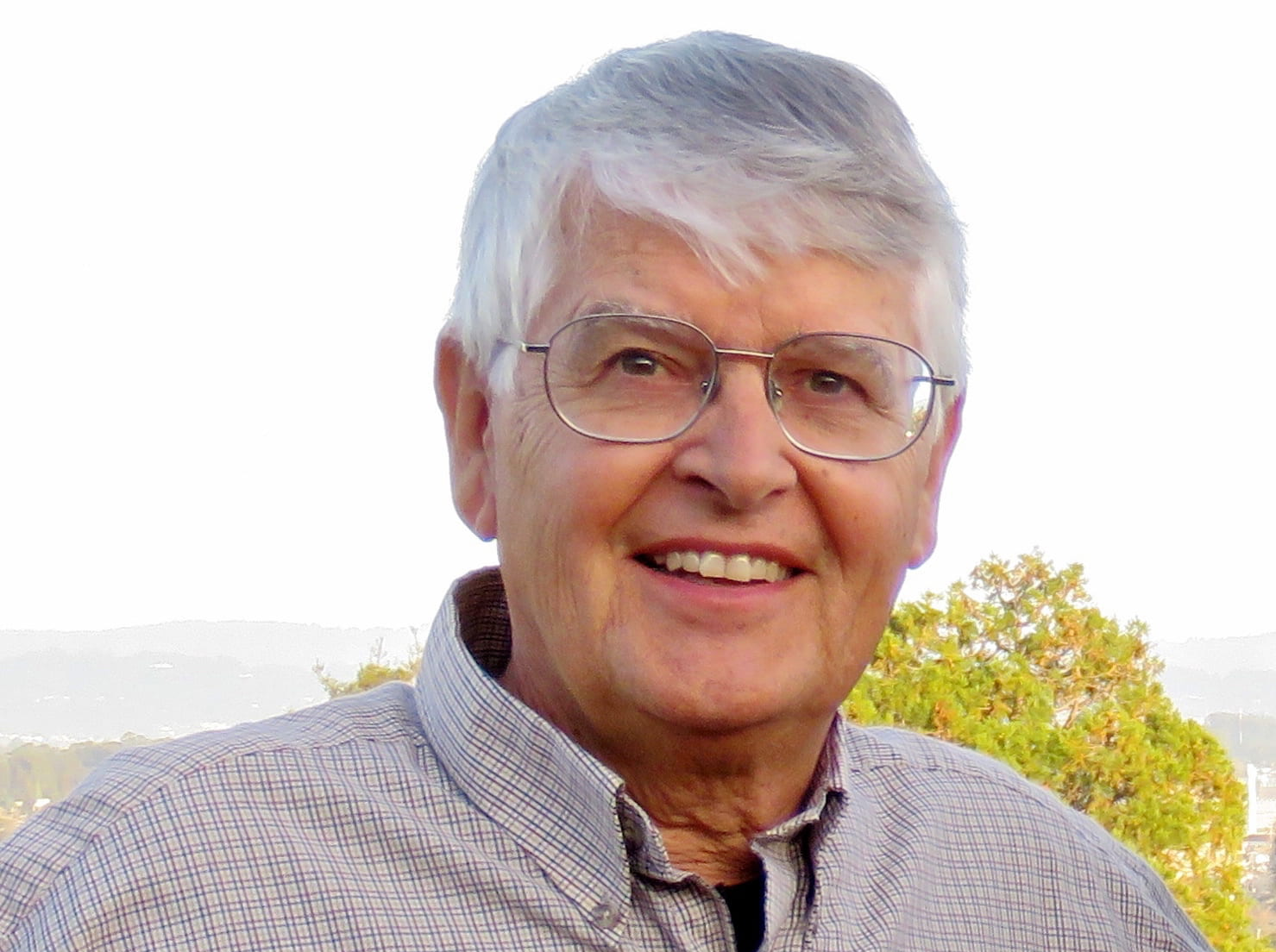
Barry Bowman
Barry J. Bowman, professor emeritus of molecular, cell, and developmental biology and a devoted supporter of UC Santa Cruz and of scientific discovery, died May 9 at his home in Santa Cruz surrounded by loved ones.
Bowman joined the faculty in 1979. For nearly 40 years, he and his wife, Emma Jean (Rusty) Bowman, worked side by side in UC Santa Cruz’s Sinsheimer Laboratories, conducting research to build our understanding of a part of the cell called the vacuole. Specifically, they sought to reveal the structure and biological function of the vacuolar ATPase, which is essentially the primary molecule that stores and moves energy in all living cells.
“Barry Bowman embodied the very best of UC Santa Cruz,” said Chancellor Cynthia Larive. “He was a pioneering scientist, dedicated teacher, and generous mentor whose impact will be felt for generations. Alongside Rusty, his research expanded our understanding of the fundamental mechanisms of life, while his commitment to students and young researchers opened doors for countless future scientists. He leaves behind an extraordinary legacy of discovery, service, and community.”
Most recently, Barry Bowman received the 2025 Fiat Lux Award, one of UC Santa Cruz’s highest honors for alumni, emeriti faculty, and other friends of campus who have demonstrated outstanding achievement and distinguished service. Not long after the Bowmans retired in 2016, they created an endowment for a program in the Department of Molecular, Cell, and Developmental Biology to support researchers during gaps between grants, which is often when they’re at an early stage in their academic career exploring something fundamental.
“You’d find these very bright young people who’d got that first grant and done well, and they were struggling to get that second one funded,” Barry Bowman said about the endowment. The Bowmans also established the Fund for Research in Ecology and Evolutionary Biology.
During his career at UC Santa Cruz, Barry Bowman twice served as a department chair, first for the Biology Department and later for the Department of Molecular, Cell, and Developmental Biology. He was active in the Academic Senate as well, chairing several committees. In 1999, he received the UC Santa Cruz Alumni Association’s Distinguished Teaching Award. A year later, he was honored with the Division of Natural Sciences Outstanding Faculty Award for his distinguished research career, commitment to service, and teaching excellence.
Pioneering research on cellular structures
Bowman was recognized nationally and internationally as a leader in his field. For nearly 40 years, he and Emma Jean, who goes by the nickname Rusty, studied the vacuole, which breaks down big molecules so a cell can use the pieces again. The process requires the inside of the vacuole to be acidic. Vacuolar ATPase moves acid through the membrane that surrounds the vacuole. Their research revealed how V-ATPase works, how it is structured, and how cells make it.
This work helps us understand critical biological activities such as hearing, bone growth, and kidney function. ATP stands for adenosine triphosphate and is often referred to as the “molecular unit of currency” for intracellular energy transfer. ATP stores energy in its high-energy phosphate bonds. Then, when a cell needs energy, it breaks off one of the three phosphate groups, and this reaction converts ATP into ADP (adenosine diphosphate) and releases a significant amount of energy.
The cycle of converting ATP to ADP and back again is constant. A human body essentially recycles its entire weight in ATP every single day to keep our systems running. The Bowmans used a filamental fungus called Neurospora crassa as a model organism for their research. Barry Bowman’s lab was among the first to discover the vacuolar ATPase enzyme and clone the genes encoding its subunits.
“We’re big supporters of the idea of doing science,” Barry Bowman said, “especially basic science — science that doesn’t obviously have some medical practical role but could discover some fundamental things about how the living world works.”
Labor of love
The Bowmans worked side by side in UC Santa Cruz’s Sinsheimer Laboratories for most of their careers. As a researcher, Rusty performed experiments, while Barry contributed and served in other professional roles. “We were in this rare situation of spending more time within 40 feet of each other than almost any other couple,” he once said.
For 25 years, Bowman was director of a UC Santa Cruz program sponsored by the National Institutes of Health focused on training students from communities historically excluded from academia for research careers. More than 130 participants in the NIH-funded Minority Biomedical Research Support (MBRS) program earned a Ph.D. In accepting the 2025 Fiat Lux Award, Bowman talked about why he felt so strongly about ensuring that underrepresented minorities pursue college degrees:
Upon retirement, Bowman quickly became active in the UC Santa Cruz Emeriti Association, where he served as president and on the executive committee. He also served as president and active board member of the Osher Lifelong Learning Institute at UC Santa Cruz, a group with more than 600 members from the local community.
In a letter to Osher members on May 11, President Doug Garcia expressed deep sadness and condolences to Rusty on behalf of the community: “Words fail to describe what an important pillar of our OLLI community Barry was. Over many years, he served as a former OLLI president, a remarkable instructor, and an active participant in many interest groups. He shared his knowledge freely and believed deeply in OLLI, giving generously of his time and energy on its behalf.”
Rusty Bowman requests no gifts at this time. A memorial or similar service may be announced in the near future.