Social Justice & Community
Exploring the potential impacts of California’s minimum wage for fast food workers
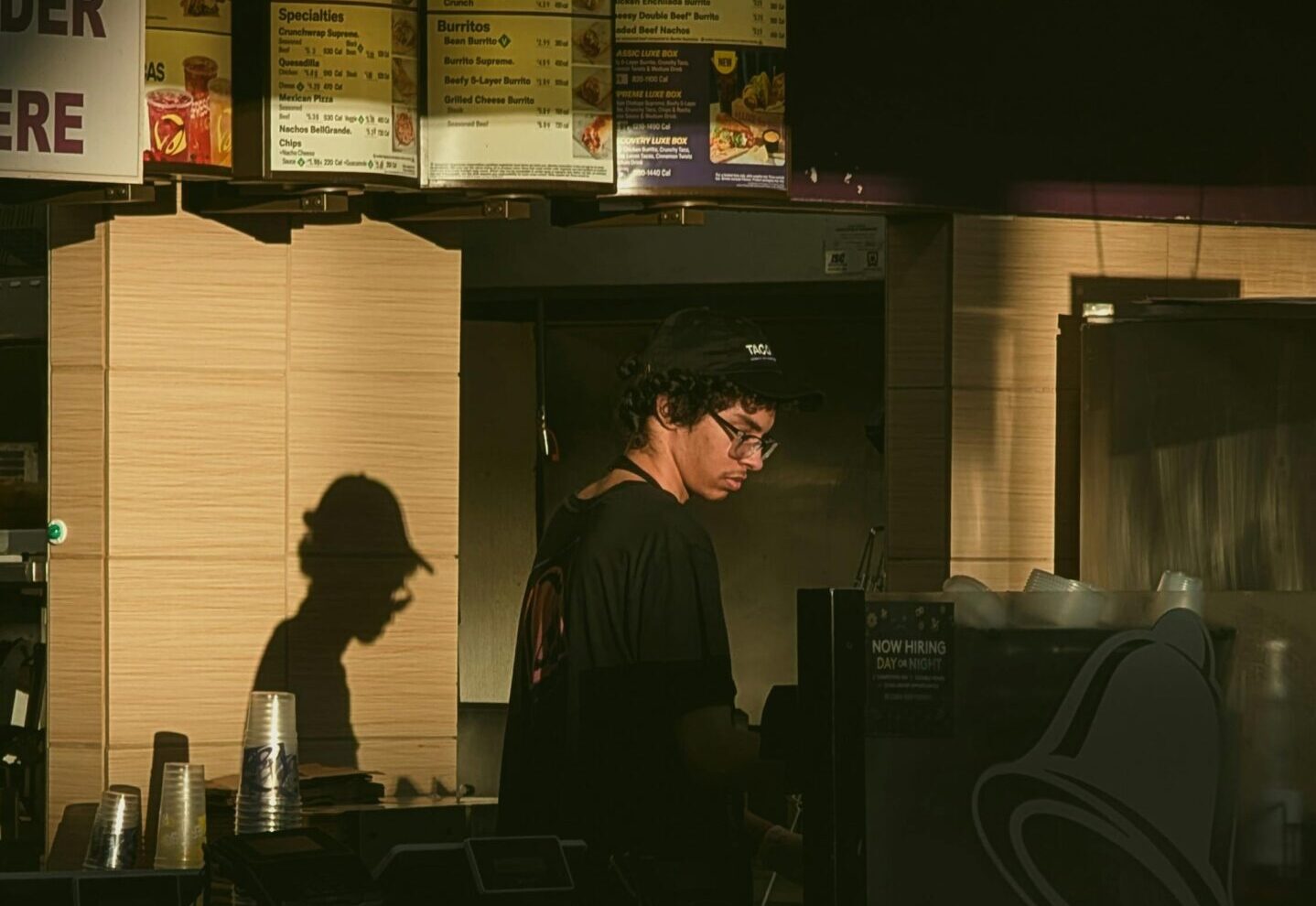
Workers at franchised fast food restaurants got a big pay bump about two years ago. A UC Santa Cruz lecturer suggests that may have come with a side of unintended consequences.
Yazan Alhaija/ Pexels
Press Contact
California is about to mark an important milestone in the implementation of a hotly contested economic policy.
Two years ago, in April 2024, a statewide, sector-specific minimum wage increase went into effect for fast food workers, mandating pay of at least $20 an hour for employees at franchise restaurants with 60 or more locations in California—firmly above the $16.90 an hour 2026 state-wide minimum wage. This marked the beginning of an experimental shift in labor policy across the state. Similar sector-specific minimum wage increases have since been implemented statewide for healthcare workers and passed into law at the city level on behalf of hotel workers in Los Angeles and hospitality workers in San Diego.
Labor unions argue that these policies help to address cost of living concerns for employees, providing greater financial security to some of the state’s lowest paid workers. Meanwhile, business associations argue that these changes force them to raise prices and hire fewer workers. Two years into the implementation of the fast food minimum wage increase, there’s still a lot of disagreement about what the impacts have actually been thus far.
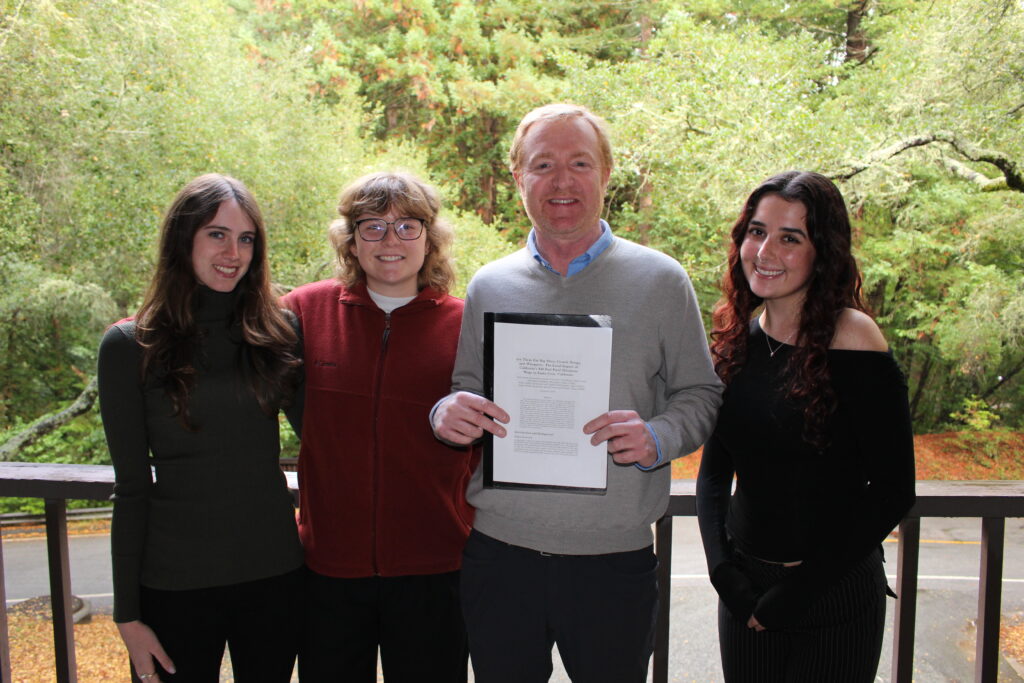
UC Santa Cruz economics lecturer Stephen Owen set out to conduct an independent investigation, with help from a team of undergraduate researchers funded by the Building Belonging Program at the Institute for Social Transformation. Their results are shared in a new working paper, which has not yet been peer reviewed.
The researchers interviewed business owners and managers representing more than 100 fast food franchise restaurants across the state, reviewed financial and hiring records for these businesses, and observed operations to get a sense for how things have changed since higher minimum wages were implemented. They also conducted in-depth interviews with owners of three independent restaurants in the City of Santa Cruz to learn how the impacts of this legislation had spilled over into their day-to-day operations.
“Based on what we’ve found, I think this legislation is a classic case of ‘no good deed goes unpunished,’” Owen said. “There are unintended consequences and knock-on effects, and overall, I think the results have definitely not been as positive as policymakers had been expecting.”
Signs of a supply and demand mismatch in the labor market
If there’s one universally agreed upon truth about the impacts of the fast food minimum wage increase, it’s that it has made jobs in the fast food industry significantly more desirable.
Owen’s team reviewed data on monthly job applicant totals for 2023, 2024, and early 2025 from a Burger King franchise group that operates more than 50 locations in California and saw indications of a dramatic increase in applications. August 2024 had one of the largest spikes, with a 400% increase compared to the same month in 2023. Applications remained greatly elevated throughout early 2025.
However, at the same time that higher wages seem to be creating increased interest in fast food jobs, greater labor costs to businesses may be creating less demand for workers. According to records reviewed by the research team, Burger King locations of at least one franchise owner in coastal markets reported a more than 21% decline in shift work for employees from October 2023 to October 2024. Some locations partially restored hours by 2025, but labor-hour levels remained reduced from those measured in 2023. Meanwhile, across 18 McDonald’s franchise locations in the Central Valley, total labor hours reportedly declined by nearly 12% across equal 12-month periods from April 2023 to March 2025, equivalent to a loss of 62 full time jobs for a year.
Owen says these types of trends could be considered an expected impact, based on some interpretations of economic theory. But so far, the way that fast food workers have experienced the new minimum wage policy seems complicated. While most now earn substantially more per hour, many may now work fewer hours, potentially limiting improvements to their overall earnings. Reduced hours may also mean that fewer employees are able to qualify for benefits. In addition, many franchises report eliminating overtime, which had previously been an important way for longer-term employees to increase their earnings.
One potential bright spot for both businesses and employees has been that increased wages seem to have reduced turnover from between 150-300% to about 150-200%. Lower turnover improves employee productivity and reduces training expenses to businesses—the benefits of what economists recognize as an “efficiency wage”. But it’s still unclear to what extent those benefits might help mitigate increased labor costs on businesses’ balance sheets.
Rising costs reported for both businesses and consumers
Owen’s findings suggests that franchise owners have thus far responded to increased labor costs not only by cutting hours for their employees, but also by raising menu prices.
The new minimum wage for fast food workers increased labor costs for businesses by approximately 25%, which Owen says could potentially be expected to raise overall operating costs by about 9%, if businesses made no other changes. The team’s study found that franchised fast food restaurants seemed to have increased their menu prices by approximately 8-12% from September 2023, likely demonstrating a combination of some labor costs being passed on to consumers and the influence of other inflationary factors and supply chain dynamics.
Since fast food is often considered an “inferior good,” these price increases could disproportionately affect low-income consumers, Owen says. Even with price increases, businesses may still be feeling an impact to their bottom line. One Burger King franchise owner in Northern California told the research team they plan to close the lowest-performing 10% of their locations over the next two years to mitigate the impact of reduced profit potential.
“Restaurants are a notoriously tough business, with slim margins, so if you have to raise labor costs, which is a significant portion of operating costs, it won’t be long before some will go under,” Owen explained. “Businesses can absorb increased costs to a certain extent, but the question is for how long. I would argue that we will likely see closures ahead.”
To avoid such a fate, Owen’s team saw many fast food franchises increasingly investing in labor automation as a cost-cutting measure. Burger King, McDonald’s, and Taco Bell franchises that the research team analyzed had all invested in automated kiosks for ordering and payment. Some were also piloting AI voice ordering systems and automated dish washing. Across the broader fast food landscape, mobile app ordering is growing, and restaurants such as Chipotle and Sweetgreen are using robotics to automate kitchen tasks too. These trends will undoubtedly lead to significant job losses in the sector, Owen says.
“Competitiveness in the fast food industry has always been about progressions in sophistication and efficiency, so the industry is really ripe for automation,” Owen said. “Is what we’re seeing a natural, organic adoption of these technologies in fast food? I think there’s definitely an element of that, but I would argue that it has been accelerated by introduced wage pressures.”
Troubleshooting the affordability crisis
Owen says one of his main takeaways from his research so far is that sector-specific minimum wage increases may not be the best policy tool for state-level policymakers to achieve their desired goals. He recognizes the need to better support the working poor across California but says that sector-specific wage increases for the lowest paid jobs can actually create perverse incentives for people to enter and stay in industries with little potential for upward mobility.
“When we see a massive increase in applications for fast food jobs, if you’re running the state, that’s probably not really where you want to be incentivizing people to work,” Owen said. “Sector-specific minimum wage increases have the effect of prioritizing an industry, so if you’re going to do that, then it might make more sense to target industries like healthcare or manufacturing that are more value-added industries.”
Another potential lesson is that minimum wage increase policies designed to target “big business” could still have ripple effects for small businesses. For example, even though the fast food minimum wage applied only to franchised restaurants, some independent restaurants not directly impacted by the minimum wage legislation have also felt squeezed. In interviews with Owen’s team, independent restaurant owners in Santa Cruz said they faced mounting pressure to raise their own wages and increase menu prices in order to compete for employees, and they were concerned about the effects this could have on the long-term sustainability of their business models.
Policies with potential unintended consequences like business closures or reduced scale of job opportunities actually risk exacerbating economic inequities, Owen says. But alternative approaches like improvements to the social safety net or changes to the earned income tax credit could avoid these potential pitfalls while also more directly helping those in need.
“The working poor struggle to get by in California, and that’s a fact,” he said. “So if we’re serious about helping the working poor, then I think it makes a lot more sense, and would ultimately be more effective, for the government to focus on other types of policies.”
UC Santa Cruz students Molly Jenkins, Ella Ripley-Rodriguez, Kayson Tang, and Sophie Walsh contributed to this study.
Editor’s note: The working paper referenced has not yet been peer-reviewed.