Technology
Girls in Engineering brings STEM to life for middle school students
This summer, 45 middle school students from across Santa Cruz and Monterey counties participated in the five-day camp, taking part in hands-on projects, lab tours, and a field trip to Google.
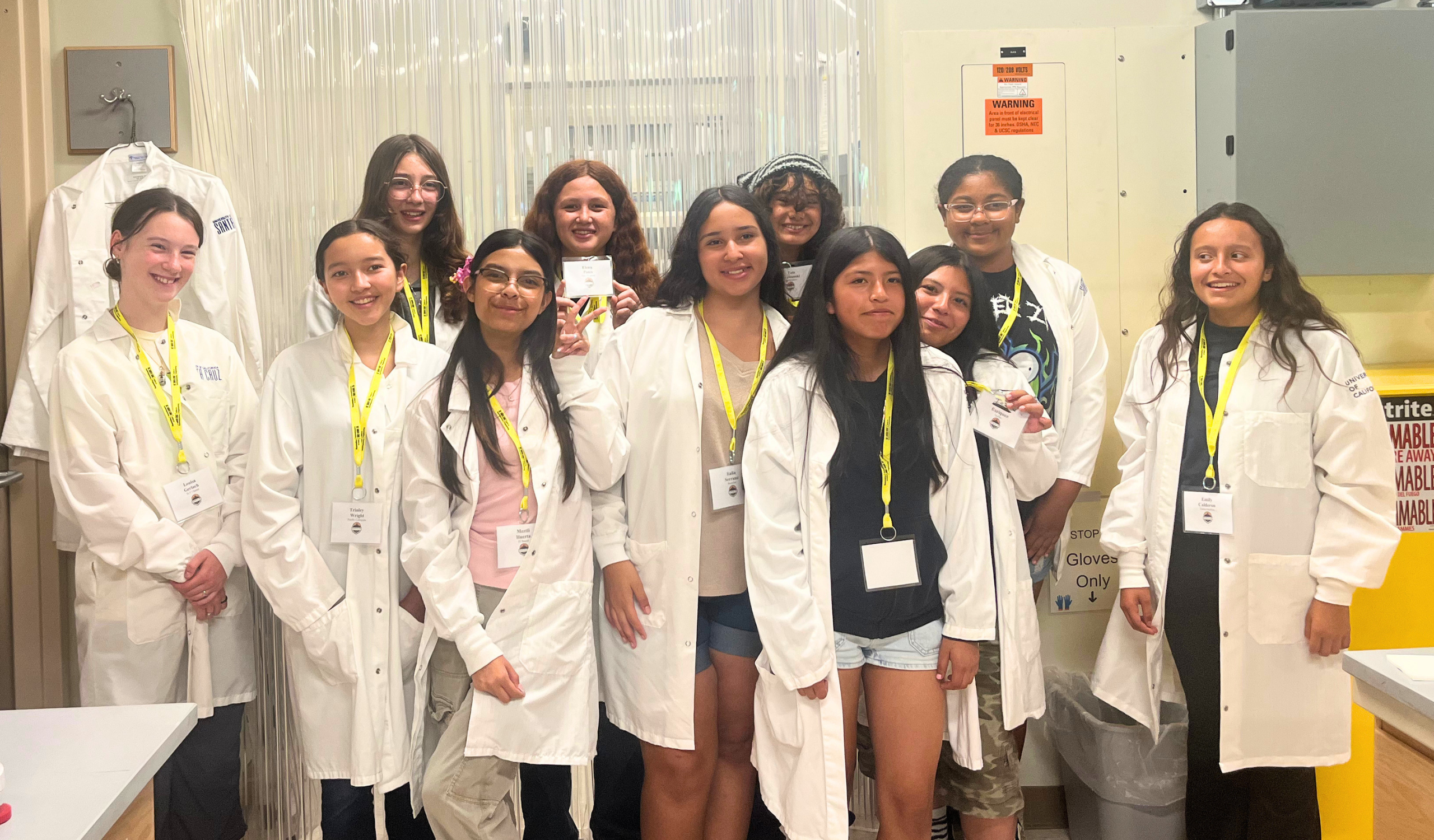
Girls in Engineering participants visit a UC Santa Cruz lab.
For many young students, a career in science, technology, engineering, and mathematics (STEM) can feel like a distant possibility, especially if they have never met an engineer or scientist or explored STEM through experiential learning.
The Girls in Engineering program at the University of California, Santa Cruz, is designed to change that. This summer, 45 middle school students from across Santa Cruz and Monterey counties participated in the five-day camp, taking part in hands-on projects, lab tours, and a field trip to Google.
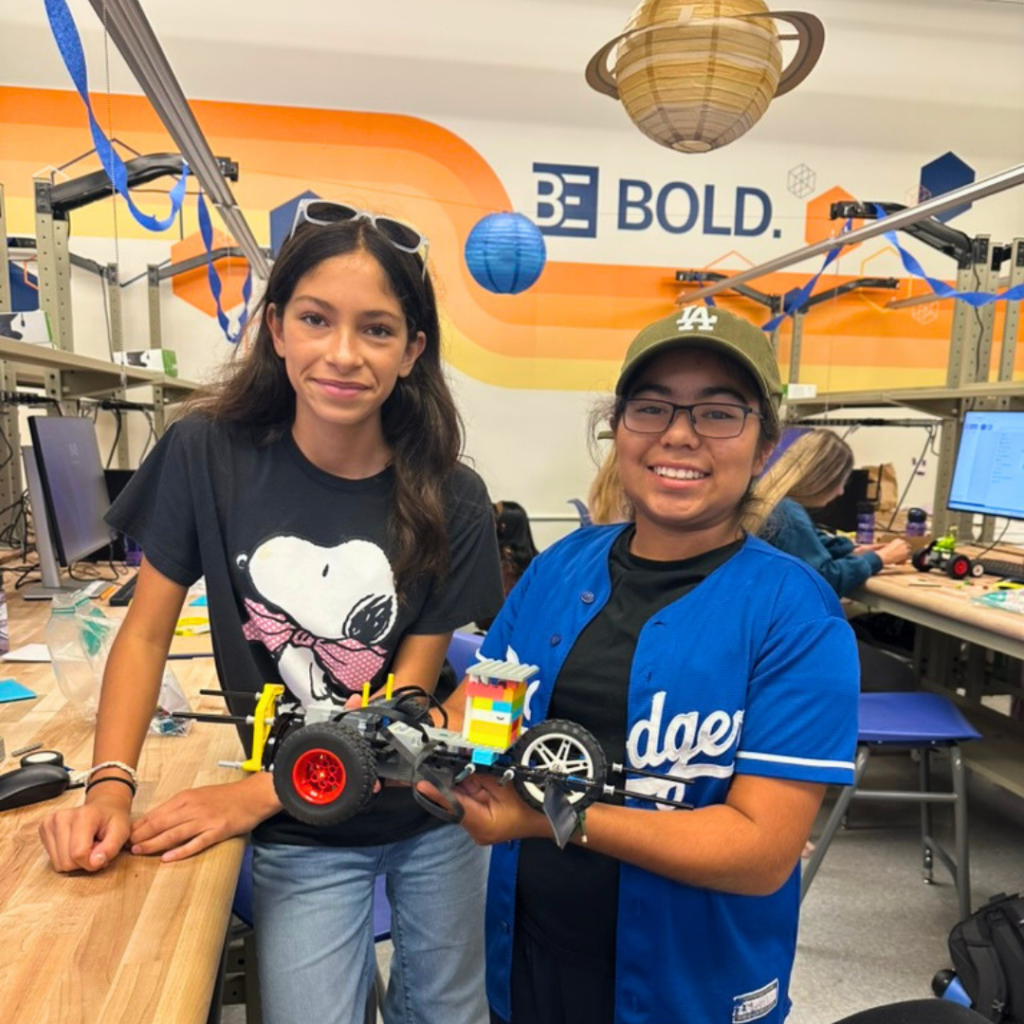
Hosted at the Baskin School of Engineering, the camp creates an environment where students can begin imagining themselves as future engineers and scientists.
“I think it’s important to show that girls can accomplish hard things and that we can be engineers,” said a participant.
By providing transportation, meals, and all materials at no cost, the program removes barriers to participation and makes STEM opportunities accessible.
“For students who don’t have access to these types of opportunities at their schools or in their local communities, this may be their first time in a lab or working on a coding project,” said Marcella Gomez, associate professor of applied mathematics and associate dean for diversity, equity and inclusion at Baskin Engineering. “It opens up a world of possibilities and introduces students to career pathways they didn’t know existed.”
Throughout the week, students worked in pairs to create 2D video games and animations using the Scratch programming environment, build computer-controlled robots using motors and microcontrollers, or program Sphero robots to navigate mazes using block-based coding. After days of experimentation, problem-solving, and collaboration, they presented their completed projects to the group.
“The activities we do create a sense of self-efficacy — a sense that this is something they can do,” Gomez said. “Many of the students have never programmed before, or even knew it existed. Not only are they seeing it for the first time, but they leave with a project they created themselves. That is a big deal in shaping how they see their future.”
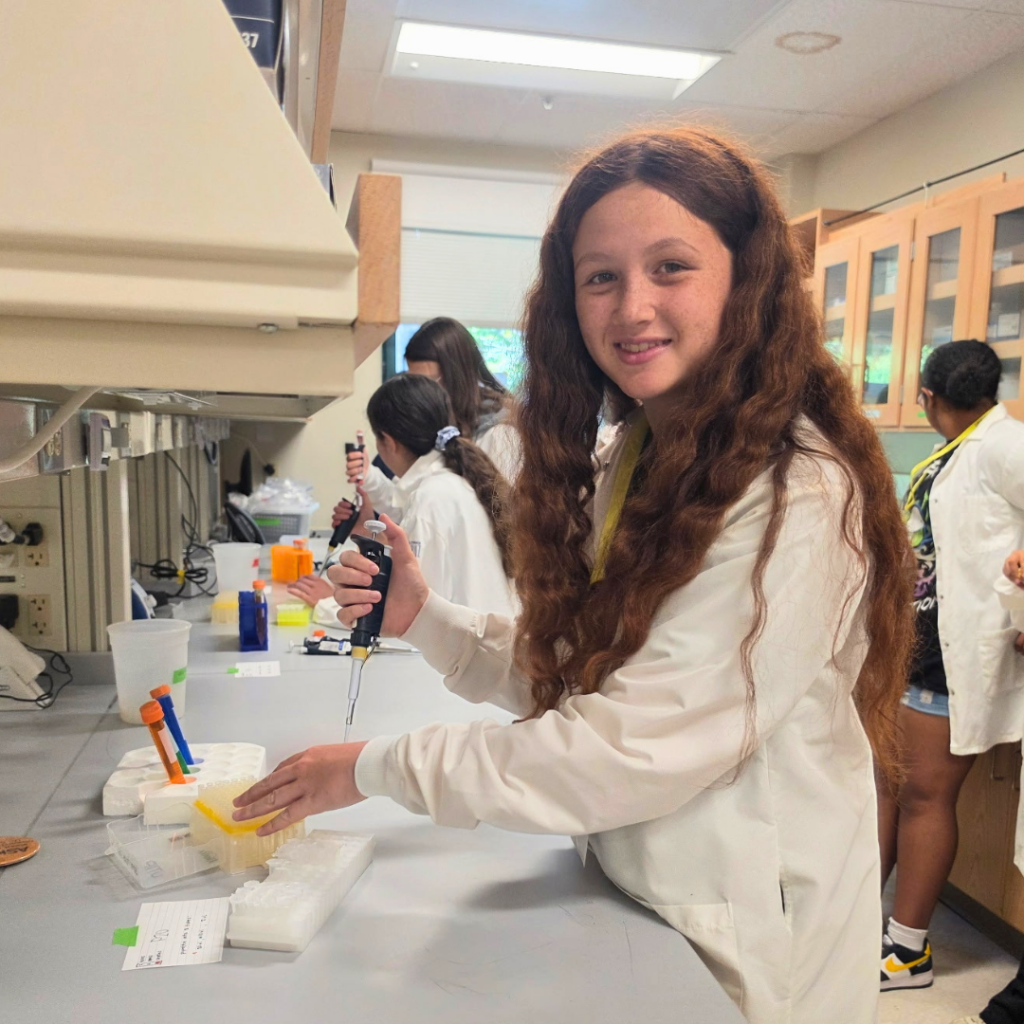
Beyond the classroom, participants explored research happening across UC Santa Cruz through tours of Baskin Engineering and campus laboratories. At the UC Santa Cruz International Genetically Engineered Machine (iGEM) lab, they discovered how the undergraduate research group uses synthetic biology to develop solutions to real-world challenges.
At the Haussler-Salama Lab, participants got a firsthand look at neuroscience research from Sofie Salama, professor of molecular, cell and developmental biology and faculty director of diversity at the UC Santa Cruz Genomics Institute. They learned how researchers use specialized chips to stimulate and measure neuronal cells while observing the cells’ activity on a computer.
Participants also visited the Vaske Lab, led by Olena Vaske, assistant professor of molecular, cell, and developmental biology and director of the Treehouse Childhood Cancer Initiative at UC Santa Cruz. There, students learned laboratory techniques by practicing pipetting and extracting DNA from strawberries.
The week also introduced the students to the California State Summer School for Mathematics and Science (COSMOS), a four-week residential program at UC Santa Cruz that brings high school students together with researchers to explore advanced topics in science and mathematics. They toured residence halls and learned about the academic and student life experiences available through the program.
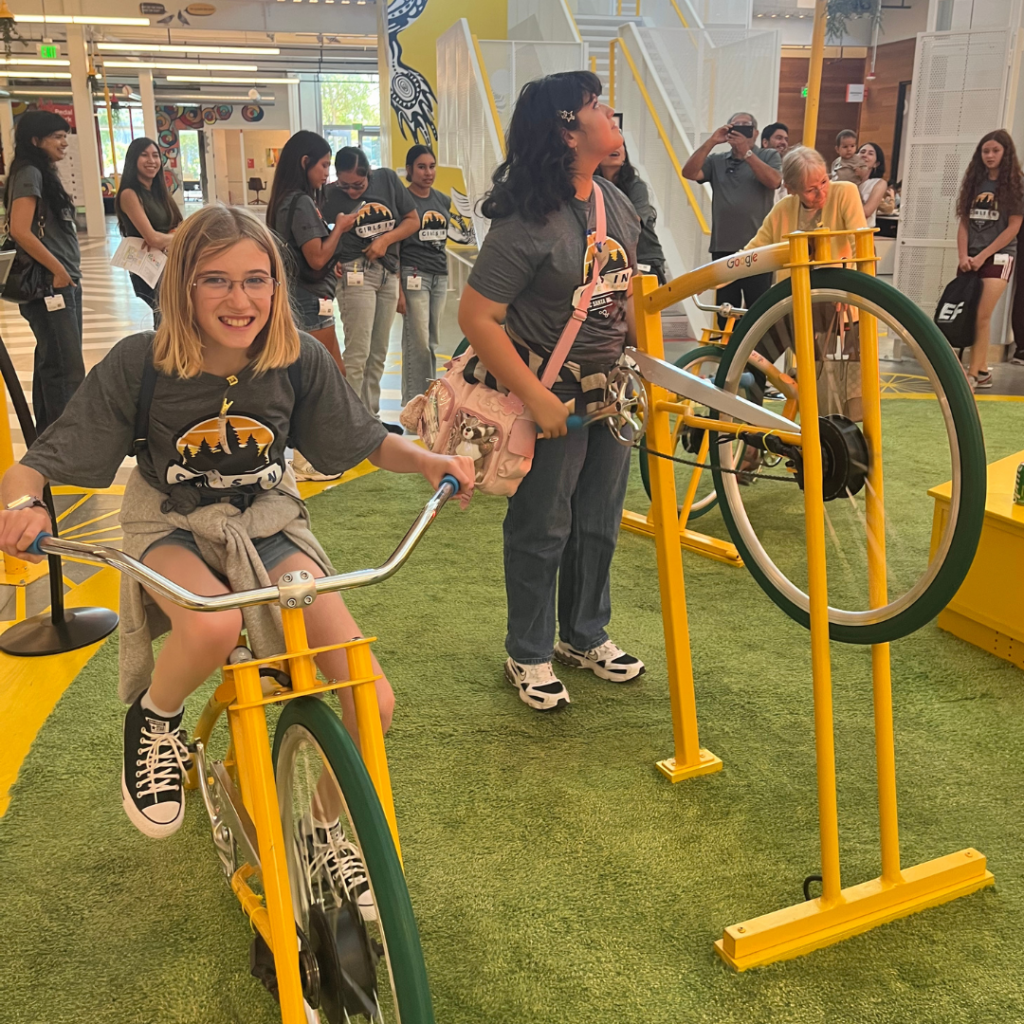
The camp concluded with a field trip to Google, where students built Hexbug micro-robots, met Google employees, and listened to a panel discussion. They also brainstormed ideas for their own apps after learning about the company’s technologies.
“Visiting Google made me realize that kids like me can become people who work at Google or a large company,” said a participant.
Girls in Engineering is open to all eligible students consistent with state and federal law, and the UC Nondiscrimination Statement.