Social Justice & Community
Cal Teach at 20: Striving to continue sending much-needed STEM educators into underserved communities
UC Santa Cruz program marks 20 years of putting service-minded STEM majors on a path to helping public schools students embrace math and science
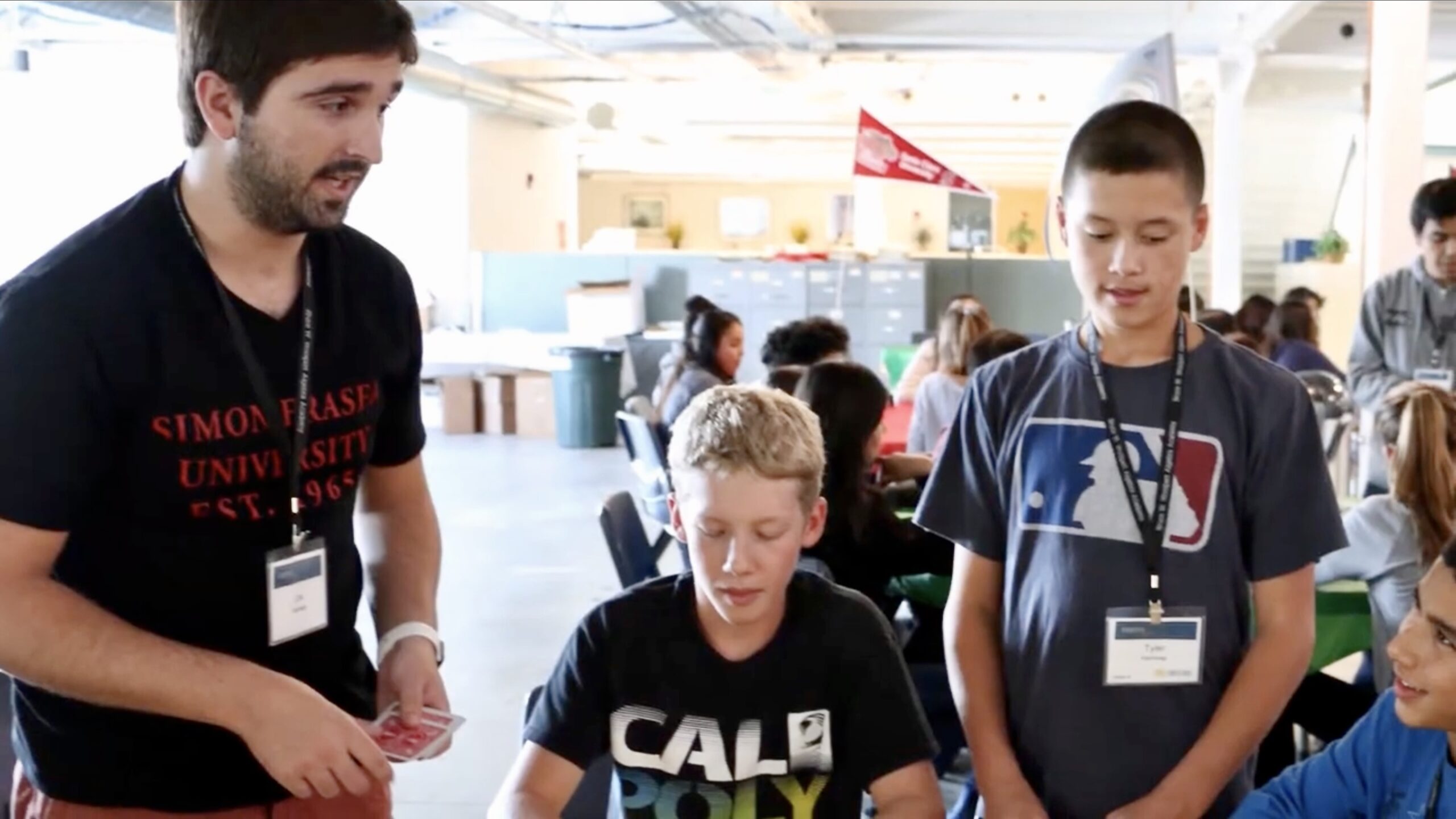
Since 2005, more than 350 UC Santa Cruz students have completed Cal Teach and gone on to be credentialed instructors in middle and high schools across the state and country.
Frances Venegas can speak volumes about the importance of the Cal Teach program at the University of California, Santa Cruz, and the deeply meaningful impact that it has made through its efforts to increase the number and retention of new, highly qualified science and mathematics teachers in public schools in underserved communities.
Venegas, who recently retired after 17 years of instructing elementary, middle, and high-school students in largely immigrant communities inland of the Central Coast, never imagined herself as a teacher before joining the program in 2006. She transferred to UC Santa Cruz from Monterey Peninsula College as a re-entry student at the age of 40, previously working as a restaurant server.
She was always drawn to the ocean, and so took the requisite courses at the community college to pursue a marine-biology degree at UC Santa Cruz—and ultimately, become a researcher. Then, when she arrived on campus and came across Cal Teach, she discovered a welcoming community of mentors and advisors who helped her see that she might one day be a superb science teacher.
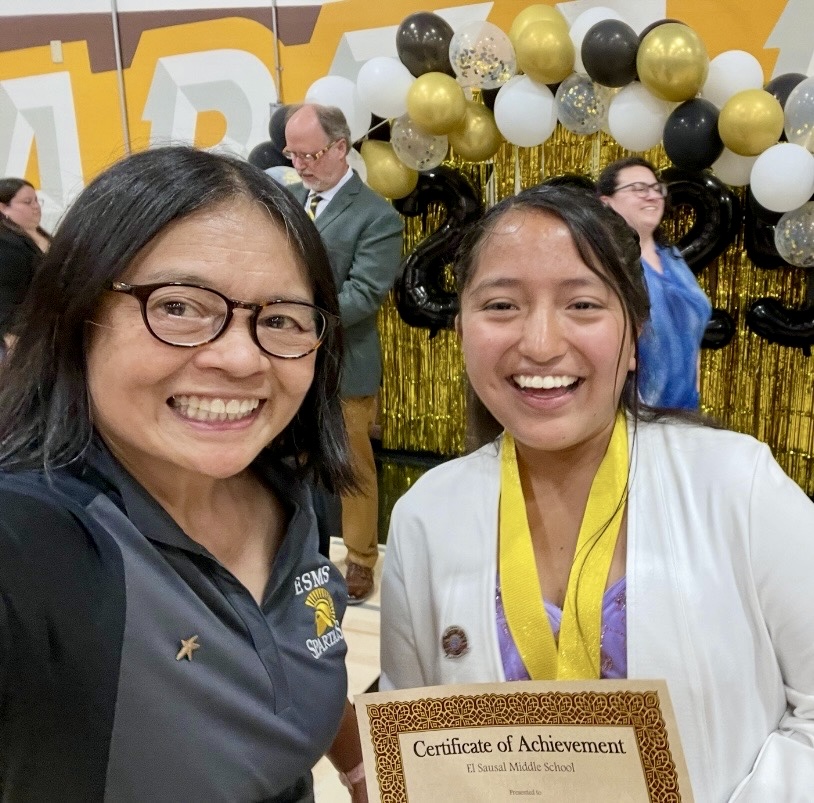
“Cal Teach was my spark—it’s what made me realize I wanted to be a teacher,” Venegas said. “I don’t think I would have been successful without their guidance. They gave me everything I needed: the background, the resources, and the encouragement to make it happen.”
Venegas earned that bachelor’s degree in marine biology, and then became the first Cal Teach graduate from the new program at UC Santa Cruz to enter a credential program–earning a master’s degree and teaching credentials in 2008. She is among the more than 350 Cal Teach alumni who have completed the program’s immersive internships in public schools throughout the region and gone on to be teachers across the state and country.
Program support needed
Countless middle- and high-school students have benefited from the skills and enthusiasm that Cal Teach’s graduates bring to their own classrooms, hoping to awaken the same wonder that set them on a path to becoming STEM educators. But this year, as Cal Teach marks its 20th anniversary, the program’s need for funding is painfully clear, with the campus’s budget challenges resulting in fewer incoming dollars and staff to run the program.
Also, Cal Teach has an ongoing need for financial support to cover the expenses embedded in the field experiences that have proved pivotal for Venegas and the 75 to 100 program participants each year who seek to answer the call for more STEM teachers in high-need communities. These include the cost of providing students with much-needed financial aid, and paying for basic necessities like tuberculosis testing and reimbursements for background checks.
“Our state and national need for effective STEM-educated teachers is greater than ever,” said Gretchen Andreasen, director of Cal Teach at UC Santa Cruz since its inception. “The scaled-down program resulting from the budget cut will launch fewer teachers who will be less likely to be retained in the profession for the long term.”
In California, the need is clear: Only 35% of high school graduates are prepared for college-level science classes. In response to a call from then Gov. Arnold Schwarzenegger for more highly qualified secondary science and math teachers to help meet the state’s workforce needs, the University of California launched its Science and Mathematics Initiative (SMI), which led to the creation of Cal Teach. On most UC campuses, as at UC Santa Cruz, the first cohort of students began their internship experiences in spring 2006.
Venegas was in that first cohort, and it’s where she started to visualize her career path, as well as find a community of support. For someone who re-entered college in her 40s, without a built-in network of peers on campus, that was huge. The Cal Teach student lounge became a place to eat lunch, ask questions, and talk to others going through similar experiences. “I knew I wasn’t alone,” Venegas said. “They helped me figure out what classes to take, what tests I needed for teaching credentials—everything.”
Giving students clarity and confidence
At UC Santa Cruz, Cal Teach consists of a sequence of three school-based K-12 internships and accompanying seminars that are designed to foster interest in and successful preparation for teaching careers. A collaboration between the Science Division and the Education Department at UC Santa Cruz, Cal Teach also provides academic and career advising, enrichment opportunities, and financial support for prospective and novice science or math teachers who have completed at least one program internship.

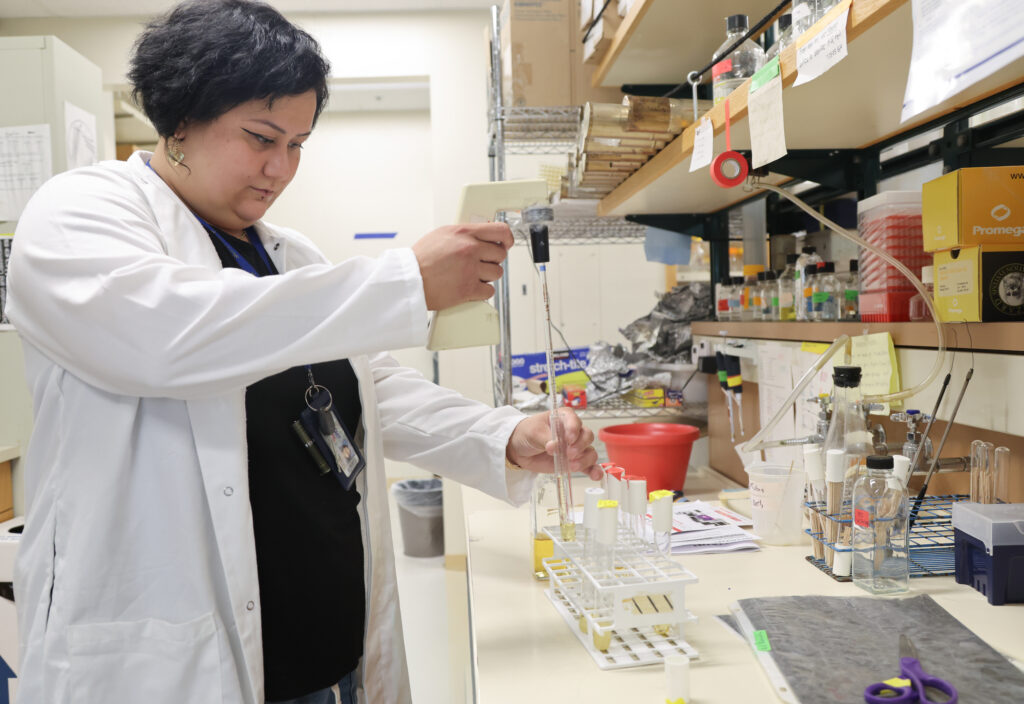
Through Cal Teach’s “Labs to Lessons” program, Professor Grant Hartzog provides interns with research opportunities in the Department of Molecular, Cell, and Developmental Biology that spark enthusiasm and connect them to projects adaptable for K-12 learning. “I’m proud to have been involved with Cal Teach since its early days. Success in college STEM programs starts in our K-12 classrooms,” said Hartzog, Cal Teach’s faculty director. “Sharing the excitement of scientific research and discovery keeps students engaged through the challenges of STEM.”
Across the UC system, Cal Teach educates about 30% of all math and science teachers credentialed in California, according to Cal Teach’s systemwide executive director, Mayya Tokman, an applied-mathematics professor at UC Merced. Through the program’s in-depth and immersive approach, Cal Teach aims to address a perennial challenge in STEM education.

One of CalTeach’s strengths is that the program gives undergraduates an opportunity to explore teaching as a career before they enroll in a teacher preparation program, said professor Lora Bartlett, chair of UC Santa Cruz’s education department and a longtime collaborator. “As a scholar of teachers’ work, I can tell you that career preview is one of the surest ways to increase teacher recruitment and retention. The internships help draw STEM students into teaching and the resulting career clarity and confidence helps ensure they stay in the profession.”
Passing on a passion for STEM
Venegas said Cal Teach ingrained the value of hands-on, inquiry-based science teaching, which resulted in simple classroom experiments intended to spark wonder in her students. “Just to see these young people observing things that are connected to them, to see their own cheek cells or DNA, it gives them that ‘wow’ moment!”
While she doesn’t know what paths all of her former students have taken, Venegas said the influence of her lessons and passion for science have rippled far beyond her classroom. She has inspired students to volunteer at the Monterey Bay Aquarium, two of whom went on to become employees and study marine biology. She also knows that, over the years, some very enthusiastic members of Girls in Engineering at UC Santa Cruz were former students.
“I wanted students to know they could go farther in these fields,” Venegas said. “I’d tell them, ‘You can make a difference: Use science and engineering to make the planet a better place.’”
Your support for Cal Teach will help increase the number and retention of new, highly qualified science and mathematics teachers in high-need California public schools.
Learn more about how we’re supporting Student Success through our Inspiring Change fundraising campaign.