Climate & Sustainability
From nanopore sequencing to neutron stars, UC Santa Cruz research advances our understanding, wellbeing
The federal government has been—and must remain—a critical partner in foundational technological innovation and research breakthroughs.
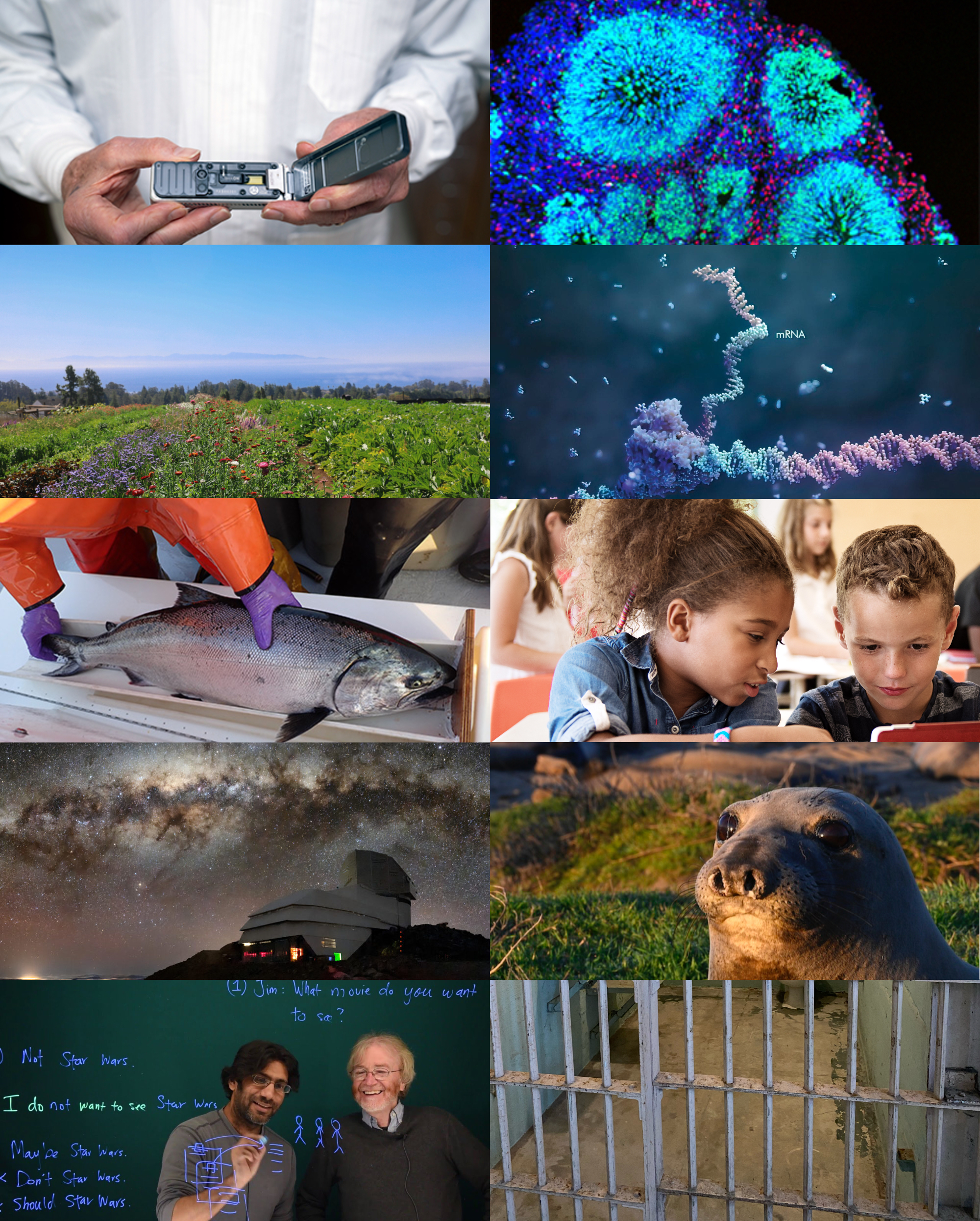
Funding from agencies such as the National Science Foundation, the National Institutes of Health, NASA and many more help ensure the United States remains at the forefront of discoveries in health, agriculture, technology and much more.
UC Santa Cruz research has changed the world—whether it’s proving that commercial strawberry agriculture can be done organically, peering deep into space to understand our universe, or documenting the dehumanizing effects of solitary confinement.
The federal government has been—and must remain—a critical partner in foundational technological innovation and research breakthroughs. Funding from agencies such as the National Science Foundation, the National Institutes of Health, NASA and many more help ensure the United States remains at the forefront of discoveries in health, agriculture, technology and much more.
Everyone in the University of California can Stand Up for UC and advocate for innovation and discovery.

Revolutionizing DNA sequencing
David Deamer and Mark Akeson, both emeritus professors of biomolecular engineering at the Baskin School of Engineering, invented a revolutionary method to read DNA and RNA. The resulting technology has been everywhere from our local California communities to overseas to map the spread of COVID and Ebola, and even on the international space station to sequence the organisms growing there.
The concept for nanopore sequencing technology, licensed to the UK-based company Oxford Nanopore Technologies, led to the creation of the MinION, the only hand-held device for genetic sequencing, priced at a fraction of the cost of other sequencers. This transformational technology allows sequencing to take place in remote and resource-poor environments and has enabled some of the most significant genomics breakthroughs of the last two decades.
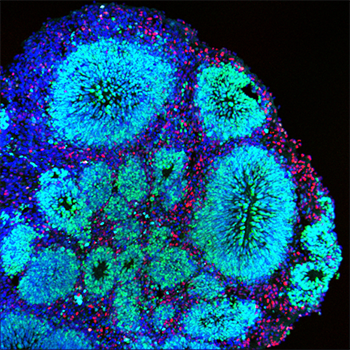
Sequencing the human genome and creating the genome browser
Twenty-five years ago, UC Santa Cruz played a pivotal role in assembling the first working draft of the human genome—what has been called the “moon‑landing” of modern biology—and researchers continue to be breaking new ground in decoding our DNA.
Across the world, hundreds of thousands of clinicians, researchers, and educators use the UCSC Genome Browser to explore genomic data on humans and thousands of other species, with the goal of strengthening human health, curing diseases, and conserving endangered species.
The first truly complete sequence of a human genome, covering each chromosome from end to end with no gaps and unprecedented accuracy, was released on the UCSC Genome Browser in 2022. Karen Miga, associate professor of biomolecular engineering at UC Santa Cruz, and Adam Phillippy at the National Human Genome Research Institute (NHGRI) organized an international team of scientists—the Telomere-to-Telomere (T2T) Consortium—to fill in the pieces of the genome that were missing after the original Human Genome Project.
UC Santa Cruz researchers also co-led the creation of a draft of the first human pangenome in 2023—a new, usable reference for genomics that combines the genetic information of 47 individuals from different ancestral backgrounds to allow for a deeper, more accurate understanding of worldwide genomic diversity. The team has since expanded the draft to include over 200 individuals and aims to include all common genetic diversity in the new reference.

Leading the nation in organic farming
UC Santa Cruz is a University of California Agricultural Experiment Station and has a long history of ground-breaking work in agroecology and regenerative agriculture, work that has helped farmers feed people across the United States.
UC Santa Cruz researchers pioneered alternatives to methyl bromide in commercial strawberry production and continue to identify new ways to fight agricultural disease and pests without using synthetic pesticides.
Center for Agroecology staff participate in interdisciplinary research projects that focus on improving organic farming practices and increasing the sustainability and resilience of food systems. They collaborate with UC Santa Cruz faculty and students, local farmers and gardeners, the UC Division of Agriculture and Natural Resources (UCANR), and others to study farming and food systems issues.
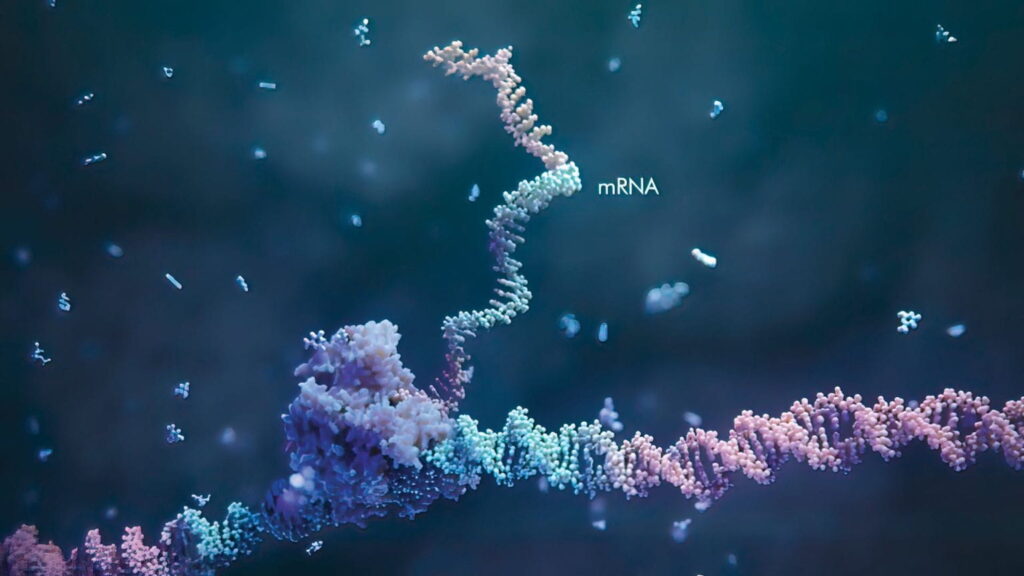
Revealing the ribosome
From antibiotics to the origins of life, researchers are discovering RNA’s critical role in human health and as a biomarker for disease diagnostics. Experts believe that RNA research will lead to new targeted treatments for diseases such as myotonic dystrophy, rheumatoid arthritis, and cancer.
UC Santa Cruz is home to one of the largest and most prominent groupings of RNA researchers in the world, with 20 RNA research groups, three members of the National Academy of Sciences, a Nobel laureate and a Breakthrough laureate working collaboratively through the UCSC RNA Center.
Researchers are continuing to discover and characterize myriad functions of RNA in the cell, reshaping our understanding of molecular biology.

Understanding how children develop
Children are constantly learning about the world around them, and UC Santa Cruz researchers are studying how cultural and community-based environments influence their development, offering new insights into how to support education and family harmony.
Barbara Rogoff, a distinguished professor of psychology and co-director of the New Gen Learning collaborative at UC Santa Cruz, has found especially sophisticated collaboration among children and families from Indigenous communities of the Americas.
Rogoff conducts research on the ways that children learn through their engagement in everyday activities with their family and community members. She is an internationally acclaimed leader in studying the role of culture in human development. Her work has been instrumental in helping educators tap into different cultural strengths for learning among children and to recognize the importance of learning in informal settings.
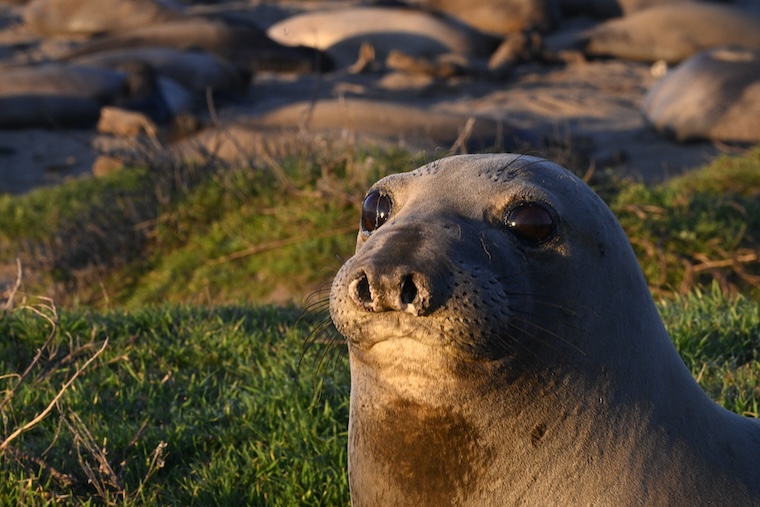
Studying the northern elephant seal and its ocean home
Over the past 60 years, marine biologists at UC Santa Cruz have studied the behavior of northern elephant seals that journey to nearby Año Nuevo Natural Reserve. With the seals gathering on the beach by the thousands to breed and molt, generations of researchers have been able to amass more than 350,000 observations on over 50,000 seals.
With the help of powerful technologies and the intrepidness to get close enough to carefully tag, weigh, and observe these loud and lumbering marine mammals, the long-term research project has extensive historical and real-time data on their fitness, foraging success, at-sea behavior, and population dynamics.
Advances in technology are enabling new and innovative ways to work with seals as “smart sensors” for monitoring fish populations in the ocean’s eerily dim “twilight zone.” This is the layer of water between 200 and 1,000 meters below sea level, where sunlight penetration all but stops, and today’s ocean monitoring tools cannot reach with ease. Ships and floating buoys only allow measurements of a tiny fraction of the ocean, while satellites can’t measure below the surface where fish occur.
Conserving and protecting California’s fisheries
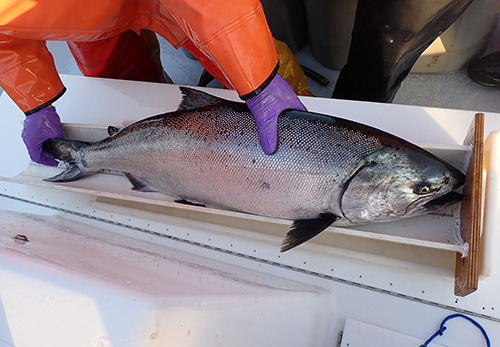
For 25 years, scientists with UC Santa Cruz and NOAA have been working together through the Fisheries Collaborative Program to conduct research for the conservation and management of California’s living coastal and marine resources.
There are many active projects underway, including work in the Central Valley to support the conservation and management of California Chinook salmon, work on the coast to understand the impacts of wildfire on aquatic ecosystems, and work in the ocean to forecast future changes in marine food webs.
With federal and state support, researchers are developing new tools and techniques, from genomics to satellites, and tackling urgent issues related to fisheries sustainability and management, climate change, and conservation of coastal freshwater and marine ecosystems.

At the forefront of exploring our universe
UC Santa Cruz researchers are innovators of telescope technology, creators of new research methods, and pioneers in using the world’s fastest supercomputers. From planets to stars to galaxies to cosmology, they have made some of the biggest discoveries in the field and have received some of the highest honors.
From the first ever observations of a visible event linked to the detection of gravitational waves to discovering the earliest, most distant galaxy with the James Webb Space Telescope, UC Santa Cruz is home to one of the world’s leading centers for both observational and theoretical investigation of our universe.
Scientists have designed new pathways for observational discovery from Earth and from space. They designed the Fermi Gamma-ray Space Telescope, the Keck Telescopes on Mauna Kea, and the Automated Planet Finder at Lick Observatory—and figured out how to fix the flawed optics on the Hubble Space Telescope. They partner in NASA exploration, including the Kepler planet-finding telescope and Cassini mission to Saturn.
Understanding how we communicate
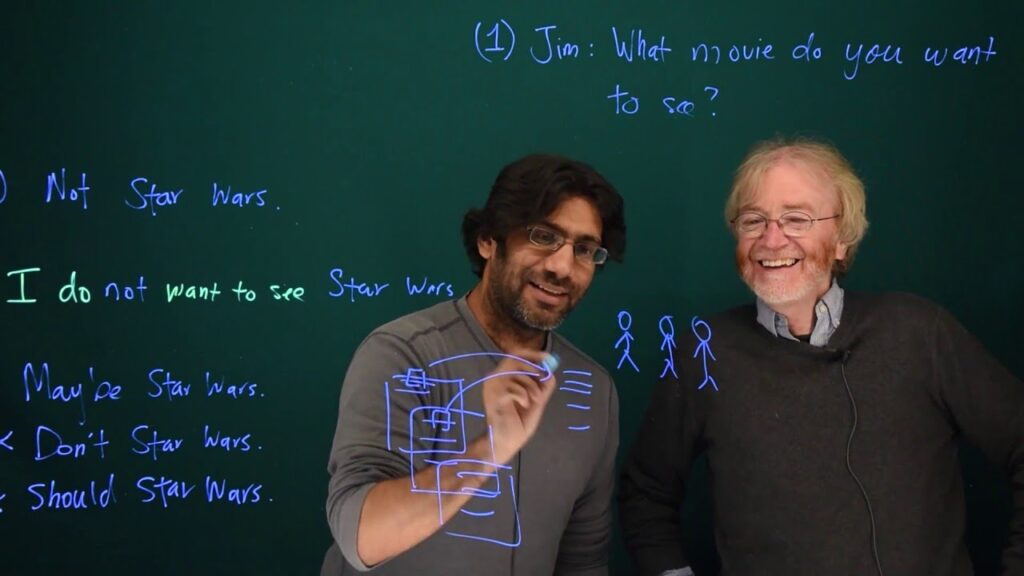
Rich, expressive communication is at the heart of the human experience, and the knowledge gained through the study of linguistics has many practical consequences and uses.
Linguistic research has applications in natural language interfaces, search engines, language pedagogy, speech pathology, speech synthesis, machine translation, forensics, naming, and all forms of writing, editing, and publishing.
UC Santa Cruz has an internationally recognized group of linguistics researchers who are working to understand the human linguistic ability by studying a range of languages. Many of our faculty specialize in particular languages, including Chamorro (Austronesian), German, Hebrew, Hungarian, Irish, Japanese, Mayan (Tsotsil, Kaqchikel, and Uspanteko), Northern Paiute, Persian, Polish, Romanian, Russian, Turkish, and Zapote.

Reforming criminal justice
UC Santa Cruz Distinguished Professor Craig Haney has helped to reduce prison overcrowding in California, prohibit solitary confinement in Canada, save people from the death penalty, and shine a light on the need for criminal justice reform.
Haney has studied capital punishment, the criminal justice system, and the psychological impacts of incarceration for decades. In 2020, he published Criminality in Context: The Psychological Foundations of Criminal Justice Reform, a comprehensive, in-depth analysis of 40 years of research into the root causes of criminal behavior. Haney’s conclusions about the key role of preventable trauma and structural injustice also upend conventional thinking about how to bring about real reform in the criminal justice system.