
Technology
-

Study reveals user preferences for social media in the AR ‘metaverse’
Research explores how privacy and content format impact users’ level of comfort in sharing and consuming social media AR content.
-

UC Santa Cruz Alumni Association announces 2025 UCSC Alumni Awards recipients
Barry J. Bowman, Terri McCullough, Daniel (Nane) Alejandrez, Chanda Prescod-Weinstein, and Aviv Elor are the recipients of the 2025 UC Santa Cruz Alumni Awards.
-

Federal science agency funding fuels big breakthroughs at UC Santa Cruz
Funding from federal science agencies generates major results at UC Santa Cruz. Contact your members of Congress to let them know you support reinvesting in the federal science agencies that help make innovation possible.
-

UC Santa Cruz to help launch first-of-its-kind air mobility test ecosystem on the Central Coast
The test ecosystem for Advanced Air Mobility aircraft along the Central Coast will support innovation and create quality jobs.
-

Grants expand UC Santa Cruz-led drone workforce development programs for Californians
Nearly $3 million in regional and state-wide grants will fund the ‘Drones Uplifting California Communities’ program, serving high schoolers, college students, and the ag tech industry.
-
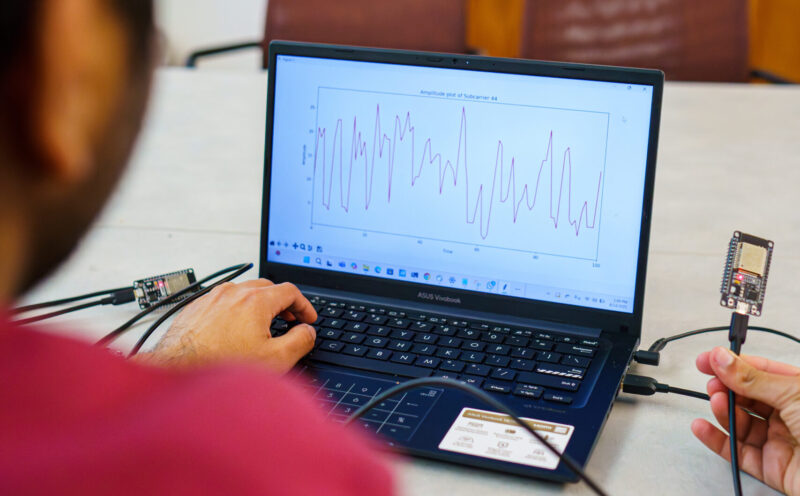
WiFi signals can measure heart rate—no wearables needed
Engineers prove their technique is effective even with the lowest-cost WiFi devices
-

New AnVIL Data Explorer makes valuable datasets more accessible for health research
The web-based tool allows scientists to make the most of past research investments by making it easy to find and use already-collected genomic datasets and is expected to accelerate discovery for conditions like cancer, rare disease, and Alzheimer’s.
-

Artificial biosensor can better measure the body’s main stress hormone
This research paves the way for point-of-care cortisol testing and diagnoses.
-

New software promises to make precision genome editing with CRISPR accessible to more researchers
Integration into widely used UCSC Genome Browser makes tool available to entire life-sciences community
-

Games promote preparedness and build community resilience to wildfire
UC Santa Cruz game makers invite users to test their safety instincts before disaster strikes
-

Understanding the influences of technology and economic development on genocide risk
Recent graduate John Bentley won the Chancellor’s award for his research on the risks of social media expansion in developing countries.
-

Using technology and games to build climate-resilient communities
Linda Hirsch, a postdoctoral fellow at UC Santa Cruz who is supported by the Center for Coastal Climate Resilience, is exploring how technology can help individuals and communities prepare for and recover from climate-related hazards.