
Technology
-

Fellowship to provide full tuition for up to 10 CA students to study Natural Language Processing at UC Santa Cruz
Up to ten California-residents will receive full scholarships to pursue a Masters of Science in Natural Language Processing for the 2025-26 academic year.
-

Researchers to develop technology for improving berry monitoring, harvesting, shipment
To investigate innovative methods to support the berry growing and harvesting process, UC Santa Cruz Professor of Electrical and Computer Engineering Ricardo Sanfelice is launching a new agricultural technology project.
-
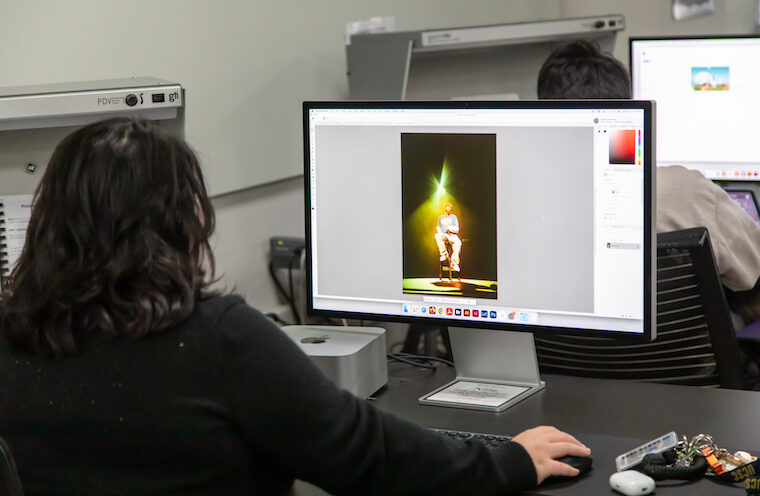
Creative Technologies is a new major for a new age
Launched at the start of Fall quarter 2024, the University of California, Santa Cruz created a first-of-its-kind interdisciplinary major in the Arts Division: Creative Technologies
-

Professor Elliot Anderson named the inaugural director of the new AI lab for the Arts Division
The Arts Division’s new AI lab on campus, A4, has an inaugural director. Professor Elliot Anderson, who is also the chair of the Art Department, is using his years of experience bridging art and technology to run the new lab.
-

A Justice-Focused Perspective on the Clean Energy Transition
Chris Benner investigates lithium extraction at the Salton Sea, and what it means for community groups and the future of clean energy.
-

Student team wins ‘Excellence in Safety’ award at second Farm Robotics Challenge
A team of engineering students were recognized with the “Excellence in Safety” award at the second-annual Farm Robotics Challenge
-

Bioluminescent proteins made from scratch enable non-invasive, multi-functional biological imaging
Assistant Professor of Biomolecular Engineering Andy Yeh is designing completely artificial proteins that produce bioluminescence to serve as a non-invasive method for bioimaging, diagnostics, drug discovery, and more.
-

Ultra-small spectrometer yields the power of a 1,000 times bigger device
UC Santa Cruz researchers are designing new ways to make spectrometers that are ultra-small but still very powerful, to be used for anything from detecting disease to observing stars in distant galaxies
-

Genomics Institute provides seed funds for six multidisciplinary projects
The Genomics Institute has awarded grants of up to $50,000 to six multidisciplinary research projects in the inaugural year of its seed funding program
-

New AI-driven multimedia lab bridges art and technology
This year the UC Santa Cruz Art Division is introducing a state-of-the-art AI multimedia lab. The Ai Art Augmentation and Acceleration Lab, also known as A4, is aimed at assisting students across the Arts Division and includes $50,000 dollars worth of state-of-the-art equipment.
-
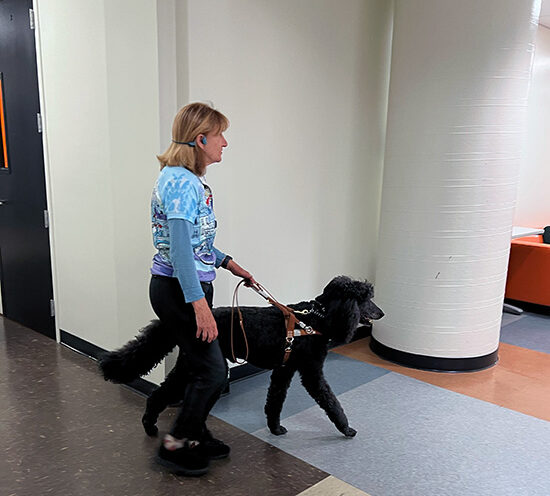
New apps will enable safer indoor navigation for blind people
Two new apps will enable blind people to navigate indoor buildings with spoken directions from a smartphone app, providing a safe method of wayfinding where GPS doesn’t work.
-

Experts on drone research discuss future challenges and opportunities at UC Santa Cruz Silicon Valley campus
An interdisciplinary and multi-institutional group of academics, researchers, and practitioners discussed challenges and opportunities in using drones at an event hosted at the UC Santa Cruz Silicon Valley campus on Friday, September 27.