Sequencing Technology Center
-

Karen Miga discusses the future of equitable genomics research with Clinton, Bono
UC Santa Cruz Assistant Professor of Biomolecular Engineering and Associate Director for Human Pangenomics at the UCSC Genomics Institute Karen Miga joined former President Bill Clinton, U2 lead singer Bono, and Director-General of the World Health Organization (WHO) Tedros Ghebreyesus to talk about the greatest health challenges and opportunities the world is currently facing.
-

Karen Miga to speak with former president and other visionaries at the Clinton Global Initiative Meeting
This Tuesday, September 20 at 1:30 PST, Karen Miga will speak during the conference’s closing plenary session, joining Bill Clinton, Lin Manuel Miranda, Dolores Huerta, and more.
-

From concept to commercialization: how UCSC researchers revolutionized DNA sequencing
More than a quarter century since the first patents were filed, the UCSC researchers who pioneered nanopore sequencing reflect on the impact of their invention
-

Karen Miga named one of TIME’s 100 Most Influential People of 2022
Karen Miga, assistant professor of biomolecular engineering at UC Santa Cruz, was named one of the 100 most influential people of 2022 by TIME. The honor was announced on May 23.
-
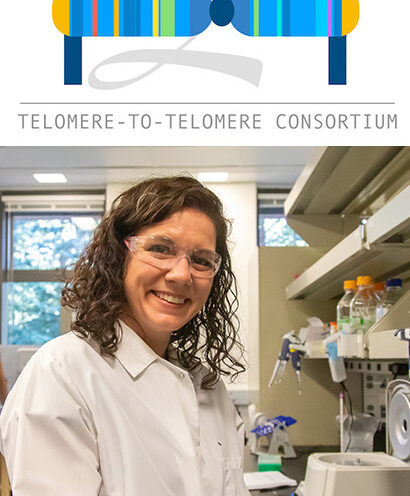
First complete, gapless sequence of a human genome reveals hidden regions
Parts of the human genome now available to study for the first time are important for understanding genetic diseases, human diversity, and evolution.
-

A new way to find genetic variations removes bias from human genotyping
Researchers at the UC Santa Cruz Genomics Institute have demonstrated an effective new tool for mapping genetic variants in sequencing data using ‘pangenomics’ instead of a single reference genome .
-
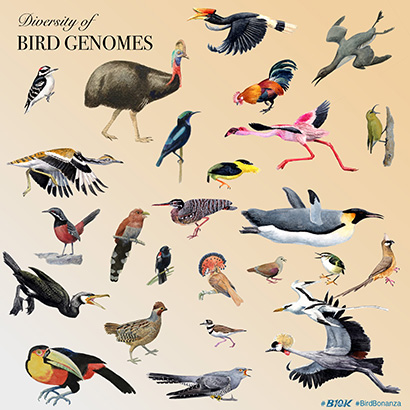
New genome alignment tool empowers large-scale studies of vertebrate evolution
Important new studies of the evolution of birds and mammals relied on Progressive Cactus, a genome alignment tool developed at the UC Santa Cruz Genomics Institute.
-

Scientists achieve first complete assembly of human X chromosome
The first end-to-end (‘telomere-to-telomere’) completely gapless DNA sequence of a human chromosome is a major milestone for genomics research.
-
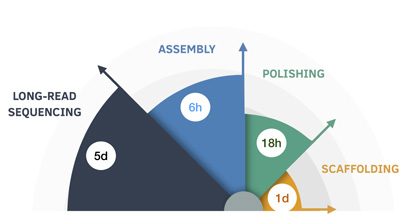
Eleven human genomes sequenced and assembled in nine days
The dawn of good, fast, and cheap human genome assembly has arrived, thanks in part to collaboration and innovation by an international team led by UC Santa Cruz researchers.
-
NIH funds new centers to expand and diversify the human reference genome
The UC Santa Cruz Genomics Institute will play a leading role in the ambitious new Human Pangenome Reference Sequence Project.
-
UCSC engineers collaborate with Western Digital to accelerate genome sequencing
The UC Santa Cruz Genomics Institute and Baskin School of Engineering have entered into a multi-year, joint research and development agreement with Western Digital.
-

Breakthrough leads to sequencing of a human genome using a pocket-sized device
Nanopore sequencing technology, based on concepts pioneered at UC Santa Cruz, has revealed parts of the genome scientists had been unable to sequence before.