International
-
Center for Archival Research and Training celebrates 10 years of success
This October, the University Library at UC Santa Cruz Elisabeth Remak-Honnef Center for Archival Research and Training (CART) marks its 10th anniversary, celebrating a decade of shaping graduate students’ careers through hands-on archival experience.
-

UC Santa Cruz astronomer delivers keynote speech for Mexico’s National Council of Humanities, Sciences and Technologies
The council chose Enrico Ramirez-Ruiz as the final speaker in the series, which leads up to the inauguration of Mexico’s new president on October 1, in honor of his distinguished career and accomplishments that followed his public education and training in Mexico.
-

A wobble from Mars could be sign of dark matter, new study finds
New simulations suggest that there are enough primordial black holes—potential dark matter candidates—in the universe for one to pass through the inner solar system every decade. The work builds upon an astrophysical theory that has growing popularity.
-

ARCS Foundation 2024 scholarships support outstanding graduate students in science and engineering
Sixteen outstanding UC Santa Cruz graduate students in science and engineering fields earned scholarships worth a total of $180,000 from the Achievement Rewards for College Scientists (ARCS) Foundation for the 2024-25 academic year.
-
Center for Coastal Climate Resilience to co-host event at New York Climate Week
UC Santa Cruz Center for Coastal Climate Resilience (CCCR) and California Ocean Science Trust will be co-hosting an event at New York Climate Week on policy and finance tools to accelerate nature-based solutions for climate adaptation.
-

National Academy of Education awarded Josephine H. Pham the Spencer Postdoctoral Fellowship
Josephine H. Pham, Assistant Professor of Critical Studies in Education at the University of California, Santa Cruz, has been awarded the prestigious National Academy of Education Spencer Postdoctoral Fellowship.
-
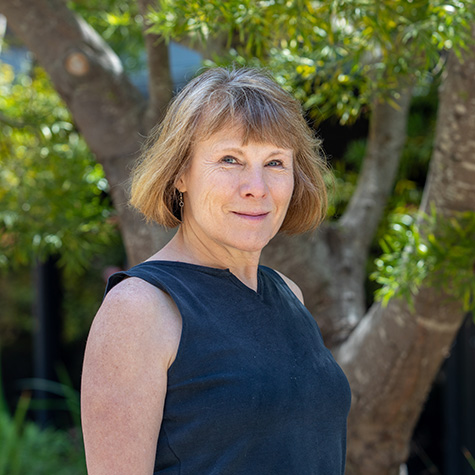
Genomics Institute researcher Melissa Cline to lead efforts to facilitate diagnosis of genetic diseases
Genomics Institute associate research scientist Melissa Cline will serve as the co-lead of the Global Alliance for Genomics and Health’s Genomic Knowledge Standards Work Stream.
-

Scientists to study nearby galaxies for galactic-formation history, dark matter
At approximately 100,000 light years in diameter, the Milky Way’s vastness and the broader, ever-changing dynamics of the cosmos defy any attempt to fully understand our home galaxy and its history. UC Santa Cruz astronomer Puragra “Raja” GuhaThakurta sums up this dilemma in more familiar and figurative terms: “We simply don’t have a selfie stick…
-

Singing from memory unlocks a surprisingly common musical superpower
UC Santa Cruz psychologists studied “earworms,” the types of songs that get stuck in your head and play automatically on a loop, to show that highly accurate pitch memory is much more common than might be expected.
-
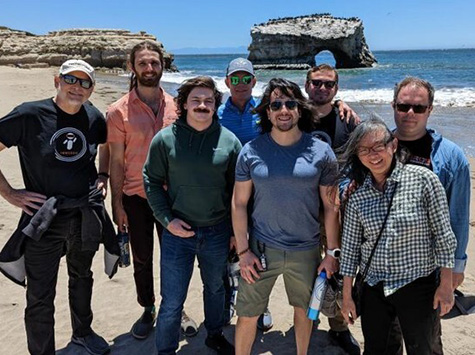
UCSC alumni awarded large NSF grant to grow virtual reality physical rehabilitation startup Immergo Labs
The National Science Foundation awarded three Baskin Engineering alumni with a $1,000,000 Small Business Innovation Research grant to support the research and development of an extended reality platform for full-body physical rehabilitation.
-
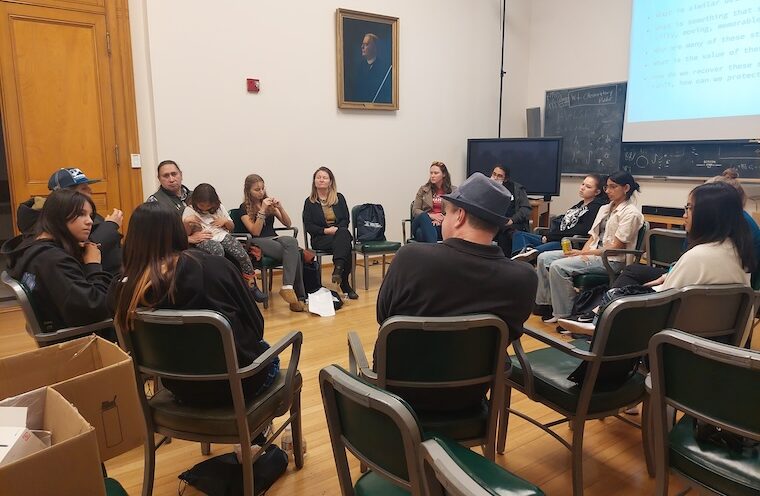
Annual event at Lick Observatory links modern astronomy to native perspectives
In collaboration with the UC Santa Cruz American Indian Resource Center, the University of California Observatories (UCO) recently hosted the second annual Native Star Stories Night at Lick Observatory. Held this year on May 9, the special event is intended to show that this traditional way of engaging with the cosmos remains as relevant and…