Gifts & Grants
-
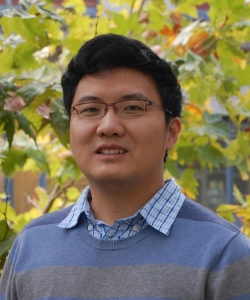
Computer engineer Chen Qian wins NSF CAREER Award
NSF funding supports Qian’s research on new memory-efficient and ultra-fast network algorithms and protocols.
-
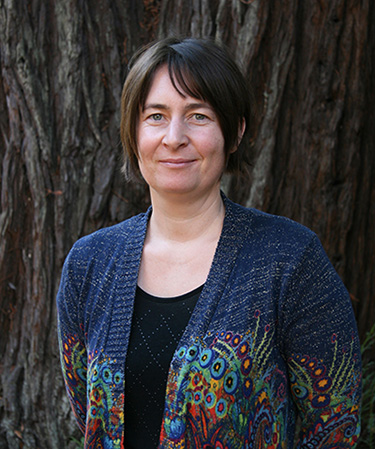
Astronomer Alexie Leauthaud wins DOE Early Career Award
The award from DOE’s Early Career Research Program supports Leauthaud’s research on dark energy.
-

Climate scientist Nicole Feldl wins NSF CAREER Award
NSF grant includes funding for climate research and for a cross-disciplinary environmental game project for students to develop a learning game about climate science.
-
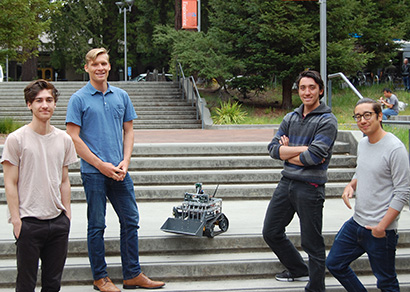
Corporate-sponsored projects give engineering students valuable experience
UC Santa Cruz engineering students presented their senior design projects to mentors and faculty on Tuesday, June 5.
-

Biomolecular engineer Angela Brooks named Pew Scholar in the Biomedical Sciences
Brooks will receive a $300,000 award over four years to support her research on how mutations associated with cancer cause changes in gene expression.
-
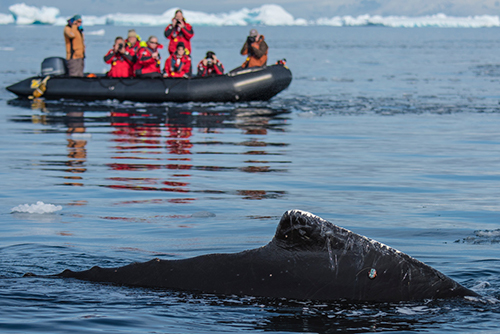
Help from the wizarding world
A gift from a Harry Potter–themed virtual running club enables a UC Santa Cruz professor to observe whales in Antarctica
-

Biologist Beth Shapiro selected as Howard Hughes Medical Institute investigator
Shapiro’s Paleogenomics Lab at UC Santa Cruz uses ancient DNA to study evolutionary history and the effects of environmental change on species and ecosystems.
-

Transfer RNA research addresses a blind spot in understanding of human genes
Biomolecular engineer Todd Lowe has received a $2.7 million grant from the National Institutes of Health to support his lab’s international leadership in transfer RNA research.
-

NIH grant supports development of a novel drug for stroke treatment
A drug discovery grant is funding the quest by UCSC chemistry professor Ted Holman to bring a new drug treatment for stroke to clinical trials.
-
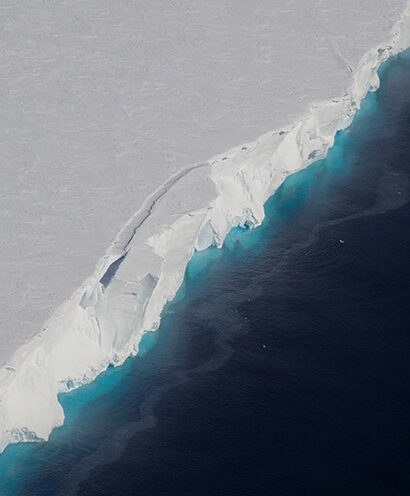
UC Santa Cruz glaciologist leads project to study Antarctica’s Thwaites Glacier
Earth sciences professor Slawek Tulaczyk will lead one of eight projects in a joint U.S.-U.K. research program to understand how quickly the massive Antarctic glacier could collapse.
-
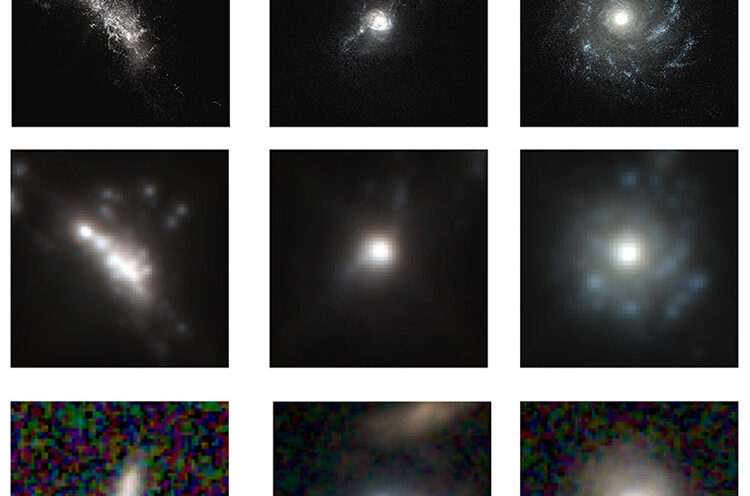
Face recognition for galaxies: Artificial intelligence brings new tools to astronomy
A ‘deep learning’ algorithm trained on images from cosmological simulations has been surprisingly successful at classifying real galaxies in Hubble images.
-

UC Santa Cruz Genomics Institute receives funding for Human Cell Atlas projects
The Chan Zuckerberg Initiative is funding 85 projects, including three at UC Santa Cruz, to support efforts to develop a comprehensive reference atlas of all cells in the human body.