Donor News
-

The UCSC Arts Division presents Los Mejicas annual Spring show ‘Grupo Folklorico’
As one of the oldest organizations on campus, Los Mejicas has over half a century of bringing people together to celebrate their Mexican heritage. Their upcoming annual spring show, which marks the 52nd anniversary of the groups existence, celebrates traditional dance forms from six different regions in Mexico.
-

Ukraine blackouts caused by malware attacks warn against evolving cybersecurity threats to the physical world
A new paper presents the first study of how two major malware attacks in Ukraine operated and interacted with the physical power system equipment to cause blackouts.
-

Sea otters use tools when feeding to survive a changing world
Sea otters are one of the few animals that use rocks and other objects to access their food, and a new study has found that individual sea otters that use tools—most of whom are female—can eat larger prey and reduce tooth damage when their preferred prey becomes depleted.
-
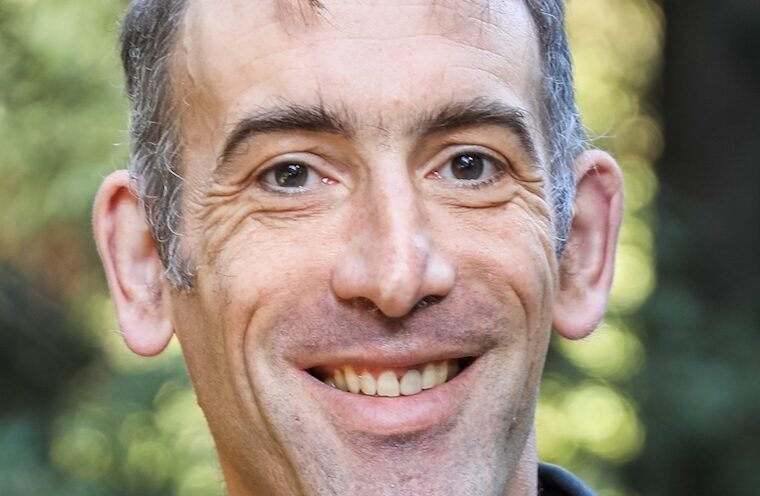
Francis Nimmo elected to prestigious fellowship of UK’s Royal Society
Francis Nimmo, professor of earth and planetary sciences, has been named a fellow of the Royal Society, the UK’s national academy of sciences. The society announced today the election of 90 researchers from around the world as new fellows, citing their “invaluable contributions to science.”
-

Student Kristi Truong finds home in UCSC’s soccer program
Kristi Truong (Stevenson ’26, global community health) played soccer since she was seven years old. When choosing where to attend college, she overcame pressures to attend a school with a D1 program, and chose UC Santa Cruz.
-

Stem cell study reveals distinct population of ‘troublemaker’ platelet cells that appear with aging and lead to blood clotting, disease
Professor of Biomolecular Engineering Camilla Forsberg and her research group have discovered a distinct, secondary population of platelets that appears with aging and have hyperreactive behavior and unique molecular properties, which could make them easier to target with medication.
-
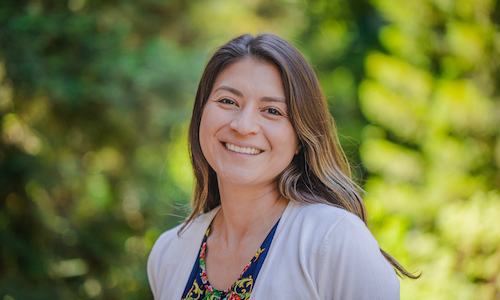
Baskin Engineering will lead regional hub of NSF Engineering PLUS Alliance to serve underrepresented students, faculty, and staff
The Baskin School of Engineering at UC Santa Cruz has been selected to lead the inaugural Western regional hub for the Engineering PLUS Alliance to serve underrepresented academics in engineering.
-
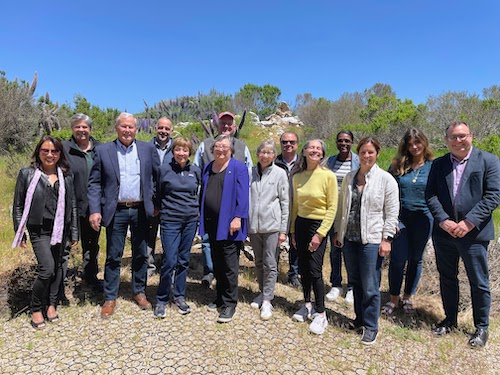
California State Board of Food and Agriculture visits campus
On April 30, California Department of Food and Agriculture (CDFA) Secretary Karen Ross and members of the California State Board of Food and Agriculture held their April Board meeting at the Hay Barn on the University of California, Santa Cruz campus.
-

UC Santa Cruz continues to pursue ambitious housing plan
Including the Delaware apartments, UC Santa Cruz has an ambitious plan to increase student housing by more than 40 percent by 2030, predominantly on the residential campus.
-

Improved nutrition, sanitation linked to beneficial changes in child stress and epigenetic programming
A new study led by a global-health researcher at UC Santa Cruz provides some of the clearest and most comprehensive evidence to date on what is known about stress physiology and “epigenetic programming.”
