Braingeneers
-
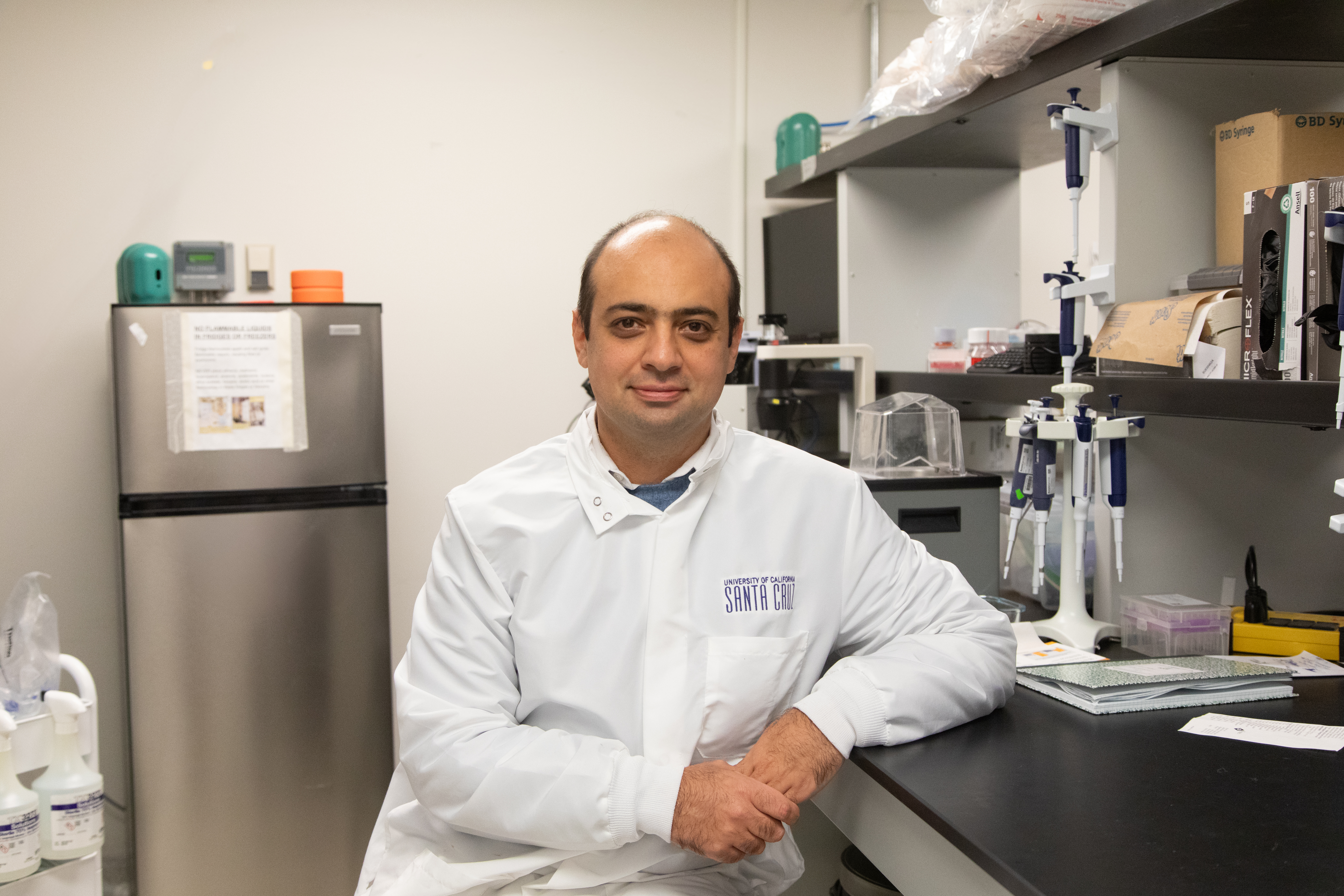
Grant funds research to identify drug targets for autism and schizophrenia using human stem cell models
The research aims to uncover the molecular and cellular mechanisms underlying autism and schizophrenia and to identify drug targets for both conditions.
-
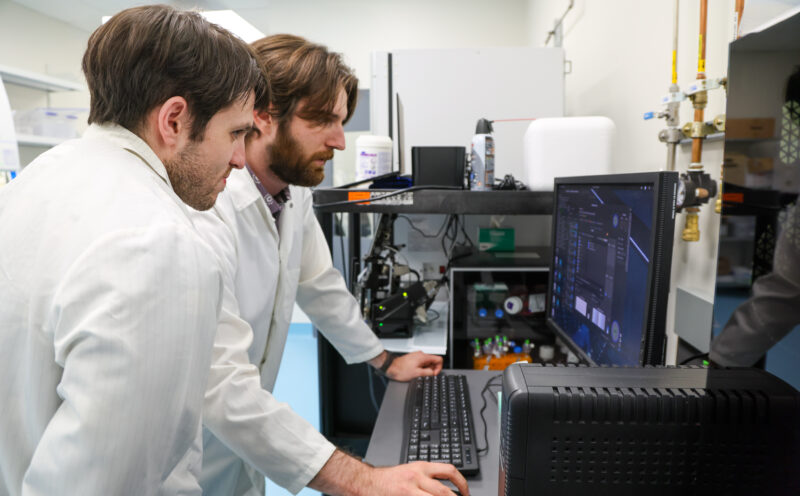
Brain organoids can be trained to solve a goal-directed task
UC Santa Cruz researchers are exploring how brains learn, adapt, and improve, which could help us better understand and address neurological conditions.
-
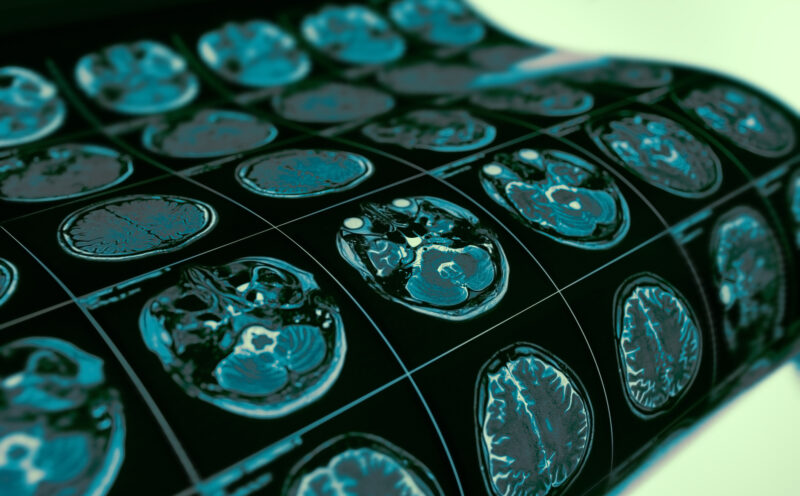
Revealing the secrets of the human brain
UC Santa Cruz research innovations and academic programs advance brain and mental health.
-
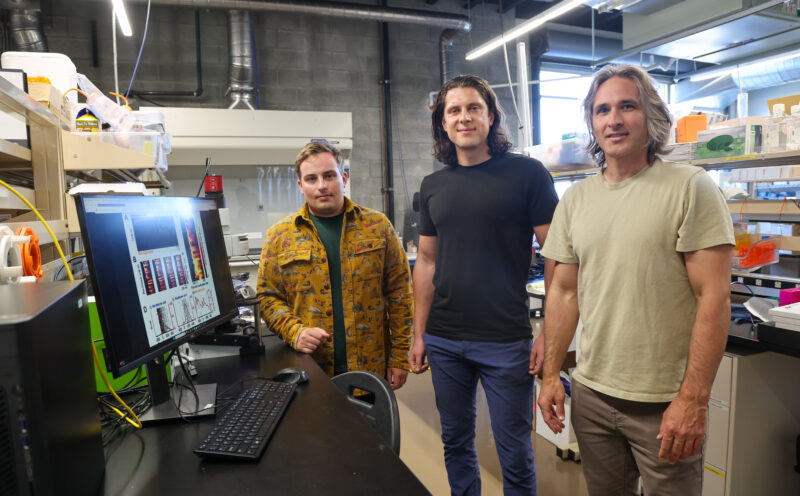
Evidence suggests early developing human brains are preconfigured with instructions for understanding the world
Assistant Professor of Biomolecular Engineering Tal Sharf’s lab used organoids to make fundamental discoveries about human brain development.
-
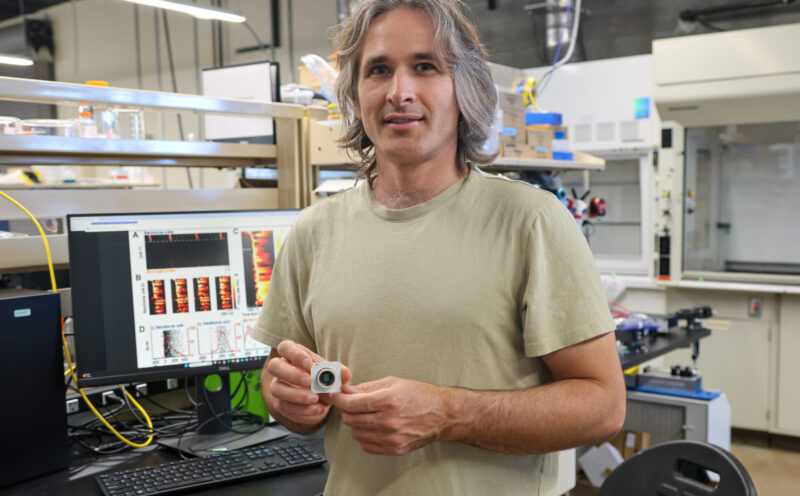
Effort aims to uncover the learning and reasoning potential of brain organoids
The Braingeneers team will test the ability of brain organoids to solve tasks in real time
-
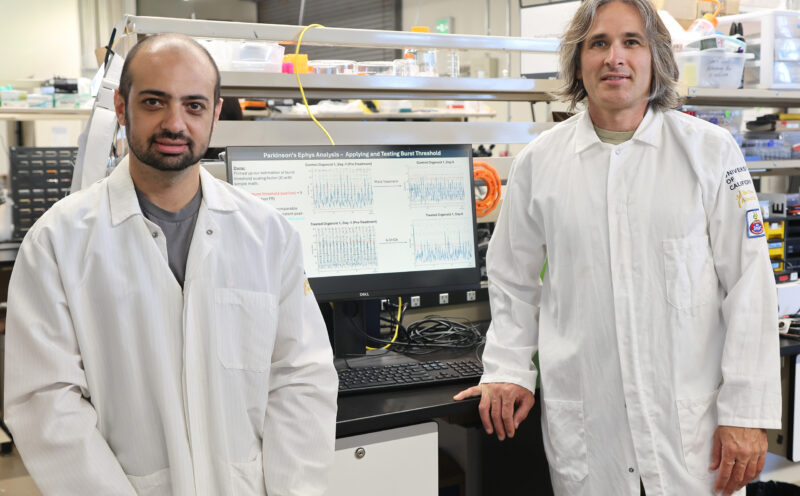
Grants to support brain organoid research on neuropsychiatric and developmental conditions
Two researchers received two-year grants from The Brain & Behavior Research Foundation.
-
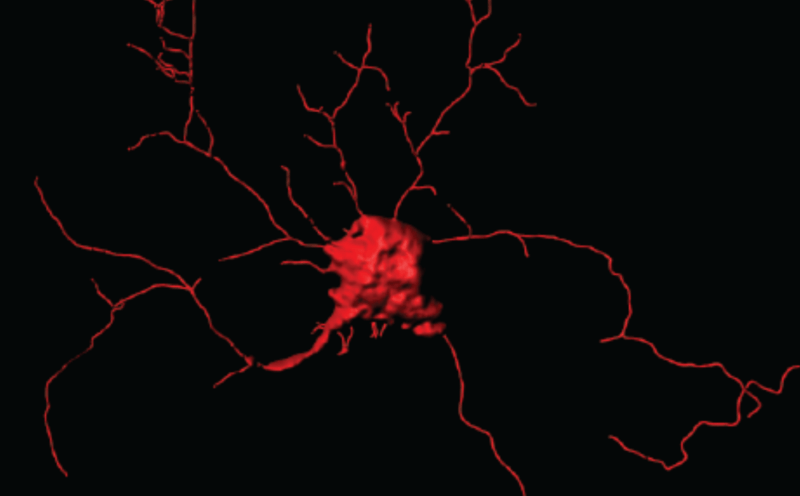
Brain cells are more plastic than previously thought, study shows
Using in-vitro models of a specific type of brain cell, scientists show that neurons are capable of changing from one type to another
-
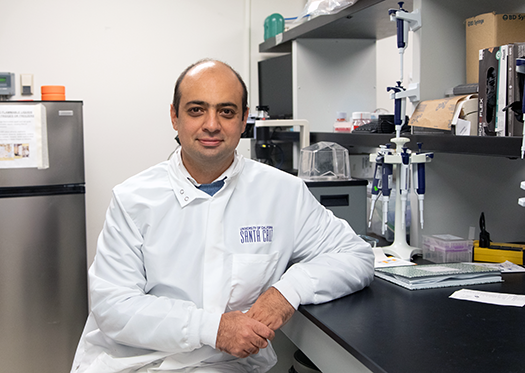
New grant funds effort to uncover therapeutic targets for neuropsychiatric disorders
A $10.3 million grant from the California Institute for Regenerative Medicine (CIRM), the state’s stem cell agency, will fund a multi-UC effort to better understand neuropsychiatric disorders.
-
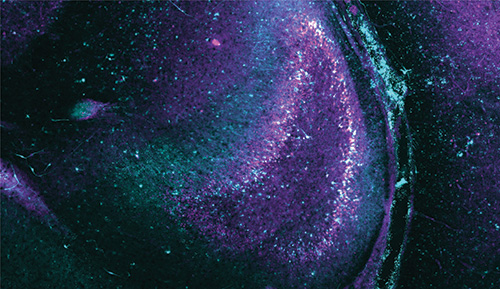
How optogenetics can put the brakes on epilepsy seizures
In what could one day become a new treatment for epilepsy, researchers at UC San Francisco, UC Santa Cruz and UC Berkeley have used pulses of light to prevent seizure-like activity in neurons.
-
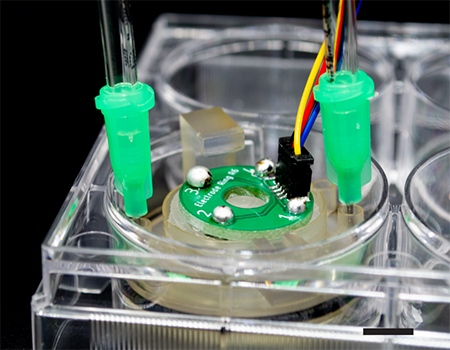
Bioelectronics enable precise control of organoids for better understanding of neuro diseases, neuron circuits
UC Santa Cruz researchers have developed a new plug-and-play bioelectronics system that enables researchers to precisely control neuronal activity in cortical organoids, which will help unlock new discoveries on how brains form neural circuits and the underpinnings of neurodevelopmental and degenerative diseases.
-

Cloud technologies bring organoids into undergraduate classrooms for the first time
For the first time, remote education tools have allowed undergraduate students to gain direct experience experimenting with cortical organoids grown at UC Santa Cruz.
-

Brain-inspired AI code library passes major milestone, new paper offers perspective on future of field
UCSC Assistant Professor of Electrical and Computer Engineering Jason Eshraghian’s open source code library for brain-inspired deep learning, called “snnTorch,” has surpassed 100,000 downloads and is used in a wide variety of projects. A new paper details the code and offers a perspective on the future of the field.