BE-ai
-
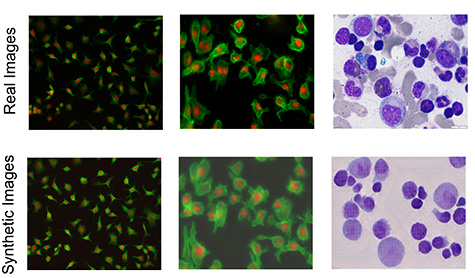
UC Santa Cruz researchers’ tool creates ‘synthetic’ images of cells for enhanced microscopy analysis
UC Santa Cruz researchers have developed a method to use an image generation AI model to create realistic images of single cells, which are then used as “synthetic data” to train an AI model to better carry out single cell-segmentation.
-

Widespread machine learning methods behind ‘link prediction’ are performing very poorly, study shows
New research from UC Santa Cruz Professor of Computer Science and Engineering C. “Sesh” Seshadhri published in the journal Proceedings of the National Academy of Sciences establishes that the metric used to measure link prediction performance is missing crucial information, and link prediction tasks are performing significantly worse than popular literature indicates.
-
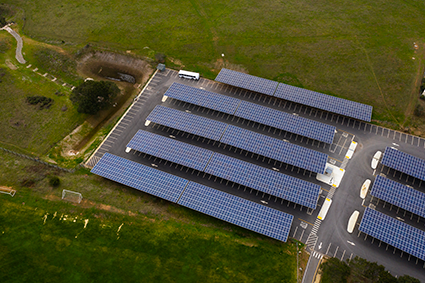
Smart microgrids can restore power more efficiently and reliably in an outage
A new AI model that optimizes the use of renewables and other energy sources outperforms traditional power restoration techniques for islanded microgrids, a new paper from Assistant Professor of Electrical and Computer Engineering Yu Zhang shows.
-

Brain-inspired AI code library passes major milestone, new paper offers perspective on future of field
UCSC Assistant Professor of Electrical and Computer Engineering Jason Eshraghian’s open source code library for brain-inspired deep learning, called “snnTorch,” has surpassed 100,000 downloads and is used in a wide variety of projects. A new paper details the code and offers a perspective on the future of the field.
-
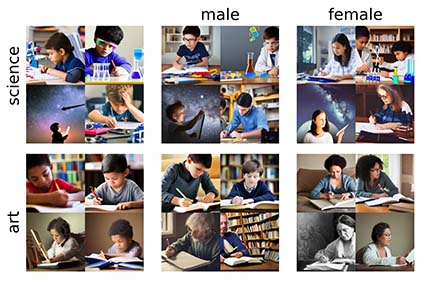
Researchers’ tool finds bias in state-of-the-art generative AI model
UCSC researchers introduce a new tool to measure bias in text-to-image AI generation models, which they have used to quantify bias in the state-of-the-art model Stable Diffusion.
-

Engineering faculty take on innovative climate resilience projects
Engineering professors are leading three major projects to address climate crisis issues with funding from UCSC’s newly launched Center for Coastal Climate Resilience.
-
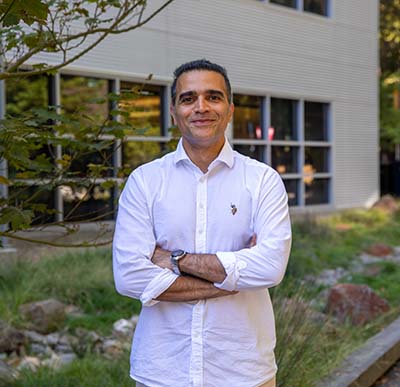
Novel deep learning-based software detects and tracks individual cells with high precision
Assistant Professor of Biomolecular Engineering Ali Shariati and doctoral student Abolfazl Zarageri together with several student researchers in the Shariati lab have developed and released a new deep learning model called “DeepSea,” one of the only tools with the ability to segment cells, track them and detect their division to follow lineages of cells.
-

UCSC team wins third place in first-ever Amazon SimBot challenge
A team of UC Santa Cruz computer science and engineering (CSE) Ph.D. students won third place in the first-ever Amazon Alexa Prize SimBot Challenge, a university competition focused on advancing virtual assistant technology.
-

UC Santa Cruz engineers join major transportation cybersecurity project
Researchers from UC Santa Cruz will play an important role in protecting the United States’ transportation systems against cybersecurity threats as part of a new national center
-
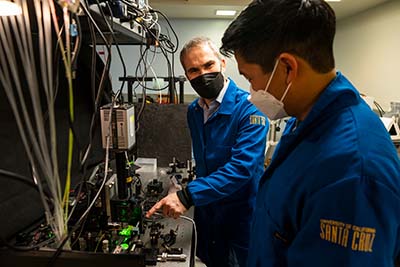
Deep neural network provides robust detection of disease biomarkers in real time
Holger Schmidt’s lab has developed a deep neural network that improves the accuracy of their unique devices for detecting pathogen biomarkers.
-
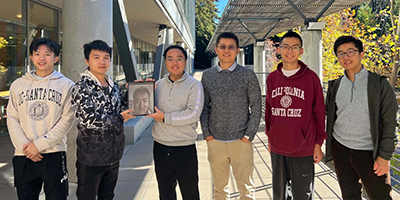
Banana Slugs seek to advance conversational AI in all three Amazon Alexa Prize challenges
Three teams of UC Santa Cruz Baskin School of Engineering students are developing next-generation, multimodal AI-powered systems for a chance to win $500,000 or more per challenge.
-

SpikeGPT: researcher releases code for largest-ever spiking neural network for language generation
Assistant Professor of Electrical and Computer Engineering Jason Eshraghian and two students recently released the open-sourced code for the largest language-generating spiking neural network ever, named SpikeGPT.