BE-ai
-

UC Santa Cruz research will harness advanced AI to better measure, predict climate-change impacts
Two UC Santa Cruz research projects designed to leverage advanced forms of artificial intelligence to improve how scientists measure and predict the effects of climate change have won funding from a $20 million investment by the National Science Foundation.
-

Scientists find that small regions of the brain can take micro-naps while the rest of the brain is awake and vice versa
For the first time, scientists have found that sleep can be detected by patterns of neuronal activity just milliseconds long
-
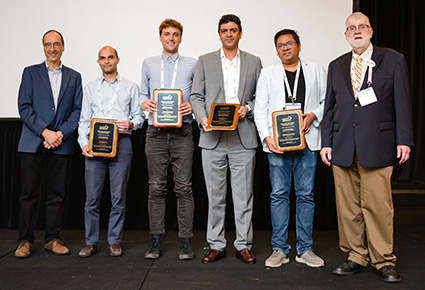
Researchers win best paper award for introducing new AI method for minimum-effort materials engineering
UC Santa Cruz researchers devised a new method for materials engineering that incorporates novel mathematical and deep learning techniques which won them the prestigious 2024 O. Hugo Schuck Best Application Paper Award from the American Automatic Control Council.
-

A Greener Solution for Artificial Intelligence
A new large language model developed at UCSC removes math from the equation, giving artificial intelligence a more sustainable, greener future.
-

Researchers run high-performing large language model on the energy needed to power a lightbulb
UC Santa Cruz researchers show that it is possible to eliminate the most computationally expensive element of running large language models, called matrix multiplication, while maintaining performance.
-
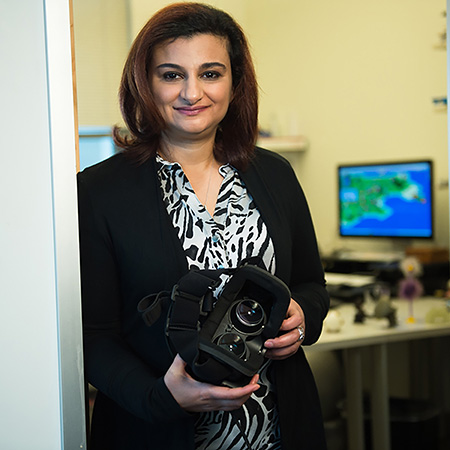
Magy Seif El-Nasr appointed the UCSC Presidential Chair
Department Chair and Professor of Computational Media Magy Seif El-Nasr as the University’s next Presidential Chair to lead three initiatives related to AI and education.
-
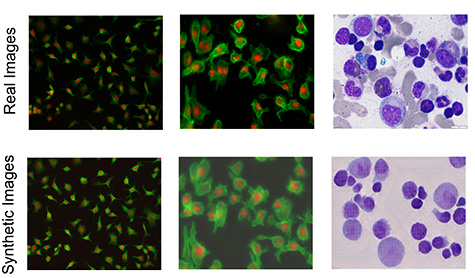
UC Santa Cruz researchers’ tool creates ‘synthetic’ images of cells for enhanced microscopy analysis
UC Santa Cruz researchers have developed a method to use an image generation AI model to create realistic images of single cells, which are then used as “synthetic data” to train an AI model to better carry out single cell-segmentation.
-

Widespread machine learning methods behind ‘link prediction’ are performing very poorly, study shows
New research from UC Santa Cruz Professor of Computer Science and Engineering C. “Sesh” Seshadhri published in the journal Proceedings of the National Academy of Sciences establishes that the metric used to measure link prediction performance is missing crucial information, and link prediction tasks are performing significantly worse than popular literature indicates.
-
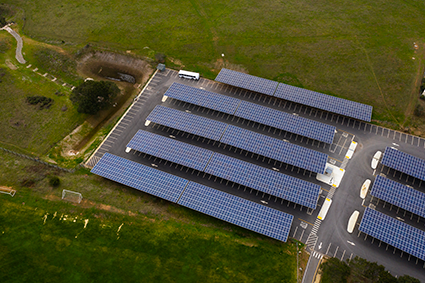
Smart microgrids can restore power more efficiently and reliably in an outage
A new AI model that optimizes the use of renewables and other energy sources outperforms traditional power restoration techniques for islanded microgrids, a new paper from Assistant Professor of Electrical and Computer Engineering Yu Zhang shows.
-

Brain-inspired AI code library passes major milestone, new paper offers perspective on future of field
UCSC Assistant Professor of Electrical and Computer Engineering Jason Eshraghian’s open source code library for brain-inspired deep learning, called “snnTorch,” has surpassed 100,000 downloads and is used in a wide variety of projects. A new paper details the code and offers a perspective on the future of the field.
-
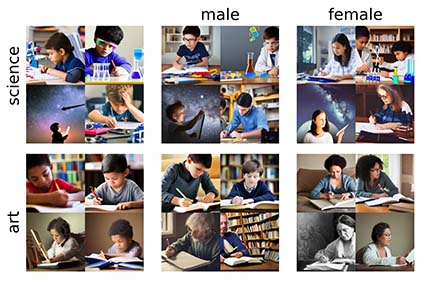
Researchers’ tool finds bias in state-of-the-art generative AI model
UCSC researchers introduce a new tool to measure bias in text-to-image AI generation models, which they have used to quantify bias in the state-of-the-art model Stable Diffusion.