lfehrens
-

Were Neanderthal men the Romeos of the prehistoric world?
Lars Fehren-Schmitz, an anthropology professor at the University of California, Santa Cruz, who was not involved in the study, says he’s not surprised to see potential evidence of mate preference in Neanderthals, given its prevalence in human history.
-

Ancient bacterium’s genome could rewrite the history of syphilis
The discovery of the microorganism’s DNA in the man’s bones was made “totally by chance,” says Lars Fehren-Schmitz, one of the study’s co-authors and an anthropologist at the University of California, Santa Cruz.
-

Research by UC Santa Cruz professor, others yields gruesome discovery
New research by an anthropology professor at UC Santa Cruz and other experts revealed a startling twist on the human sacrifice traditions of an ancient people of Peru.“Most of what we know about human sacrifices with the Moche relates to very public and gruesome forms of human sacrifice,” said Lars Fehren-Schmitz, an archaeogeneticist at UC…
-

Famed Polynesian island did not succumb to ‘ecological suicide,’ new evidence reveals
Anthropology Professor Lars Fehren-Schmitz, an anthropological geneticist, commented on a new first-of-its-kind study of the genomes of ancient Rapanui, which demonstrates that Rapa Nui, or "Easter Island," did not experience a population crash caused by overexploitation of natural resources. The new results “deliver solid data that the ‘ecocide’ hypothesis is not supported,” said Fehren-Schmitz.
-

Top 10 Discoveries of 2023
Research by Anthropology Professor Lars Fehren-Schmitz on the inhabitants of Machu Picchu was selected as one of the top 10 discoveries of the year by Archaeology Magazine.
-
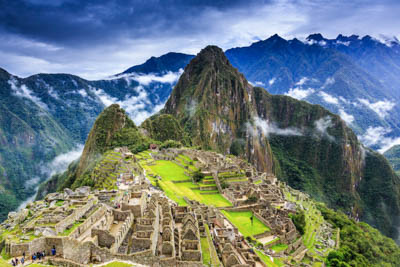
First DNA analysis of Machu Picchu residents offers insight into Inca society
DNA analysis, conducted largely at UC Santa Cruz’s Paleogenomics Lab and led by Anthropology Professor Lars Fehren-Schmitz, suggests that servants at Machu Picchu were a uniquely diverse group, and the geographic extent of ancestral origins may even challenge historical narratives about how and when the Inca Empire expanded.
-
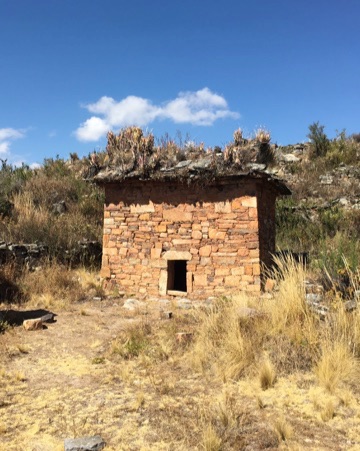
Team reveals genomic history of ancient civilizations in the Andes
An international research team has conducted the first in-depth, wide-scale study of the genomic history of ancient civilizations in the central Andes mountains and coast before European contact.
-

Using isotopes to reconstruct life histories within the transatlantic slave trade
Four hundred years after the displacement of millions of Africans began, anthropologist Vicky Oelze wants to use isotope biogeochemistry to trace back and identify the origins of individuals who were abducted and perished in the Americas.
-

Human genetic diversity of South America reveals complex history of Amazonia
Lars Fehren-Schmitz, associate professor of anthropology, was quoted in an article in Phys.org about new research that reveals details of history, ecology, and cultural diversity in the genetic makeup of South America's living rural populations.
-

Ancient DNA Analysis Yields Unexpected Insights About Peoples of Central, South America
Research by Lars Fehren-Schmitz of anthropology was featured in Before It's News.
-

Ancient DNA evidence reveals genetic exchanges between the Americas
Unprecedented details about the story of the peopling of Central and South America have been revealed in a new study published in the journal Cell.
-
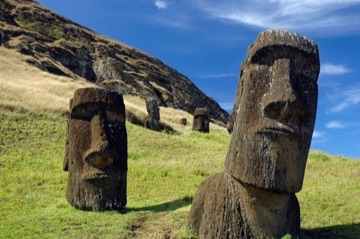
Paleogenomic analysis sheds light on Easter Island mysteries
New paleogenomic research conducted by an international team led by UC Santa Cruz sheds light on the early inhabitants of Easter Island.