epalkova
-

Salmon survival: Betting on the right fish
“Just like you don’t want all your stocks in one company … you also don’t want all your individuals to be represented by exactly the same genetic type” or the same age, said Eric Palkovacs, UC Santa Cruz Fisheries Collaborative Program director.
-
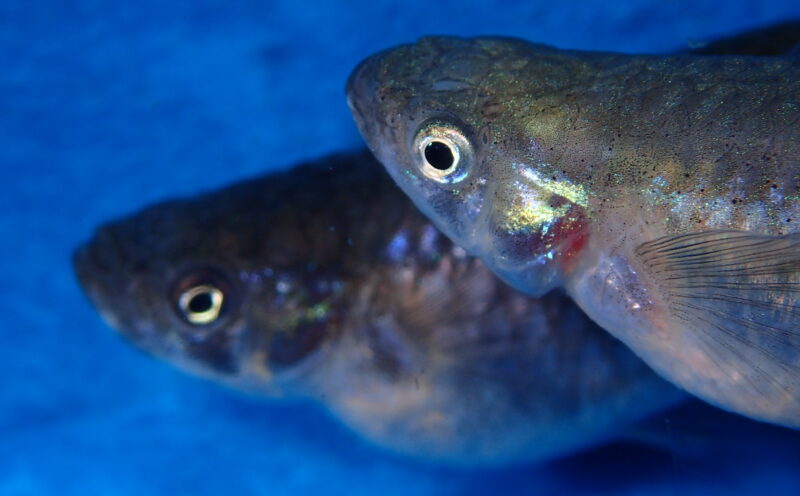
Does sexual harassment behavior matter for ecosystems?
Intense harassment of females by male mosquitofish increases the ecosystem consequences of this highly invasive fish
-
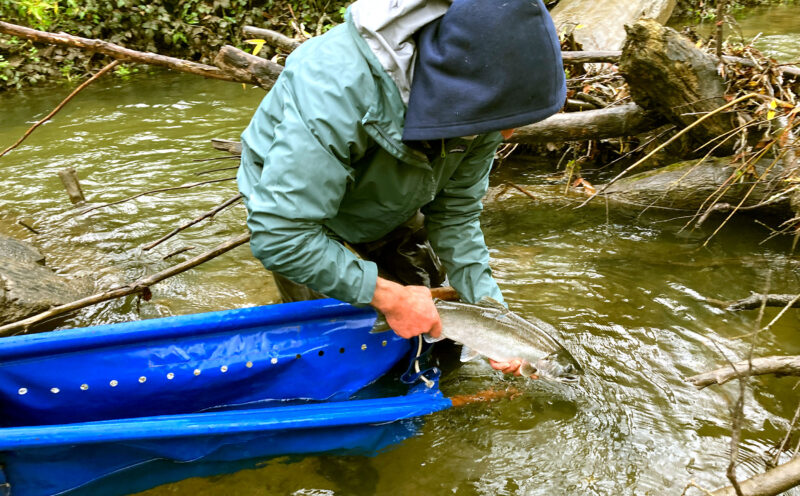
A Lifeline for Salmon: UCSC and NOAA Join Forces to Secure a Future for California’s Most Iconic Fish
A decades-long collaboration is giving Central California’s dwindling coho salmon population a fighting chance.
-

Five Astounding Ways Humans Are Driving Animal Evolution, Including Causing Lizards to Grow Longer Legs and Leading Moth Populations to Become Darker
Eric Palkovacs, an ecologist and evolutionary biologist from the University of California, Santa Cruz, says that fishermen often have a financial incentive to target and catch the largest fish.“That’s a direct selective pressure against large size,” he says, “and because fish get larger when they get older it’s also a selection against old age.”
-

Eric Palkovacs appointed new director of Institute of Marine Sciences
The professor of ecology and evolutionary biology is also UC Santa Cruz’s associate vice chancellor for research and director of the Fisheries Collaborative Program
-
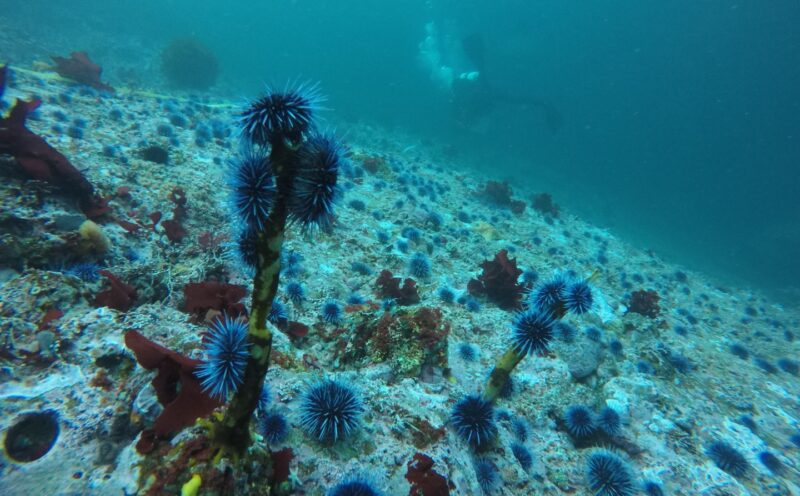
A data-driven model to help avoid ecosystem collapse
New study gives conservationists a simpler, general approach for predicting an ecosystem’s tipping point and what comes next
-

Surprise atmospheric rivers, toxic seafood: How NOAA cuts could impact California
“Collaborations between universities and NOAA are powerful partnerships,” said Eric Palkovacs, professor and director of the Fisheries Collaborative Program at UC Santa Cruz. “They leverage the expertise and resources on both sides to do cutting-edge research.”