asharia1
-

Cell Segmentation Method From Fred Hutch Team May Improve Spatial Biology Accuracy
Assistant Professor of Biomolecular Engineering Ali Shariati, an expert in cell segmentation, commented on the potential of new technology for advancing the spatial transcriptomics field.
-

Scientists program stem cells to mimic first days of embryonic development
Their “programmable” embryo-like structures, also known as embryoids, can be used to study the role of certain genes in early development
-
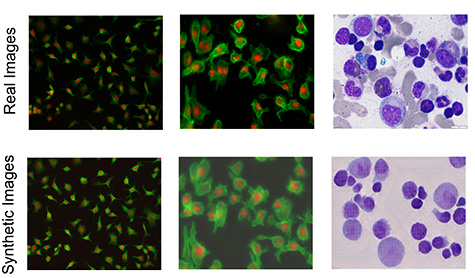
UC Santa Cruz researchers’ tool creates ‘synthetic’ images of cells for enhanced microscopy analysis
UC Santa Cruz researchers have developed a method to use an image generation AI model to create realistic images of single cells, which are then used as “synthetic data” to train an AI model to better carry out single cell-segmentation.
-
Novel deep learning-based software detects and tracks individual cells with high precision
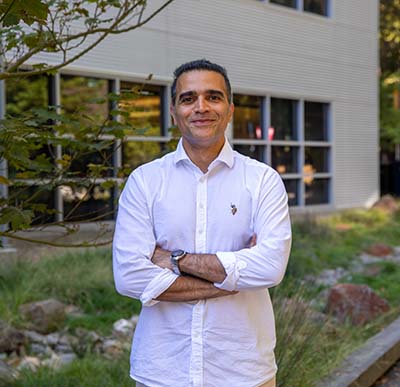
Assistant Professor of Biomolecular Engineering Ali Shariati and doctoral student Abolfazl Zarageri together with several student researchers in the Shariati lab have developed and released a new deep learning model called “DeepSea,” one of the only tools with the ability to segment cells, track them and detect their division to follow lineages of cells.
-

Biomolecular engineering professor awarded $1.9M grant to understand and engineer pluripotent stem cells
UC Santa Cruz Assistant Professor Ali Shariati and his lab will investigate the molecular feedback mechanisms responsible for the coordination of embryonic stem cell division and differentiation to develop novel strategies for their use in regenerative medicine.