Research
-
Children in India exhibit religious tolerance, study finds
A new investigation of how children reason about religious rules reveals a remarkable level of acceptance of different religions’ rules and practices.
-
The new queer teenager
Queer youth today are in a paradoxical situation, coming out earlier and becoming leaders even as they cope with the significant challenges of adolescence, Psychology Professor Phil Hammack told a panel convened by the National Academies of Science, Engineering, and Medicine.
-
Researchers discuss educational needs of Latino, immigrant, and disadvantaged youth
A recent informal interdisciplinary workshop focused on the educational needs and experiences of Latino and immigrant youth.
-

Global experts attend academic summit on solitary confinement
Forty-five of the world’s experts on the psychological and physical effects of solitary confinement gathered in Santa Cruz recently for a two-day academic summit.
-
Speakers challenge audience to rethink modern incarceration
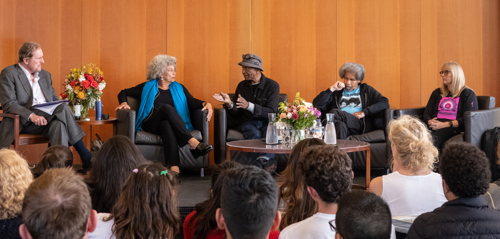
Angela Davis returns to UC Santa Cruz with the two surviving members of the ‘Angola 3’ to discuss solitary confinement and call on society to transform itself to no longer rely on prison repression.
-
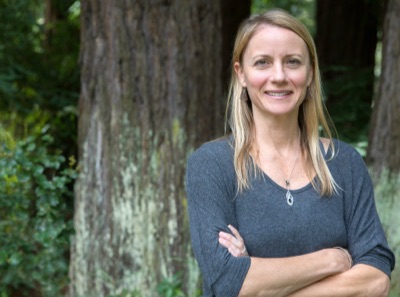
Building a feminist psychology of resistance
On a fateful trip to Nicaragua in 2005, Shelly Grabe, now an associate professor of psychology, met women who were organizing to fight domestic violence, and she saw what real and lasting social change looked like.
-
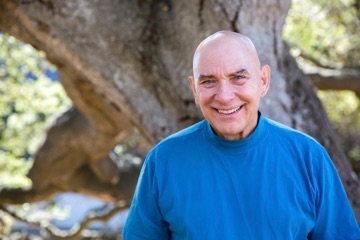
New neurocognitive theory of dreaming links dreams to mind-wandering
In his new book, Distinguished Professor Emeritus of Psychology Bill Domhoff presents an integrated neurocognitive theory of dreams that is grounded in the similarities between dreaming and drifting waking thought.
-

Checking in or checking out? Millennials go online to build their offline lives
As the most tech-savvy and connected generation begins college this year, Assistant Professor of Psychology Adriana Manago says they are technological trailblazers rather than passive consumers.
-
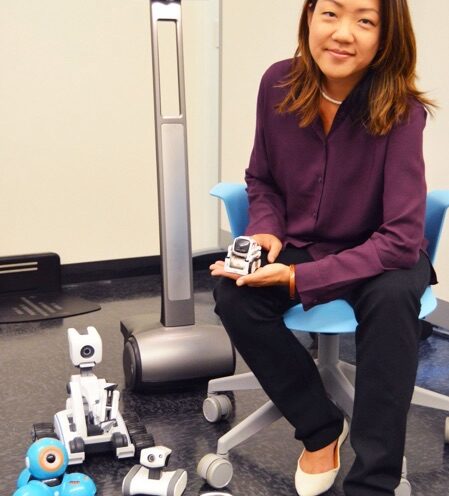
Love ’em or hate ’em, robots are here to stay so let’s make them better, says psychology prof
Leila Takayama’s work focuses on improving the design and function of personal robots to make them more appealing to humans, expanding what they can do for us.
-
Social psychology sheds light on Trump’s appeal
The surprising election of Donald Trump prompted a widespread desire to understand the factors at play in his unexpected victory. A recent analysis suggests that five social-psychological phenomena helped power Trump to victory: authoritarianism, social dominance orientation, prejudice, relative deprivation, and intergroup contact.
-
Psychology research featured in NSF video showcase
A new video about Barbara Rogoff’s research is featured this week in the National Science Foundation 2017 “STEM for All” Video Showcase.
-
Technology doesn’t have to be a headache
Psychology Professor Steve Whittaker is working to improve the way we interface with technology–and harnessing it to improve our well-being.