Research
-

Large-scale biodiversity is vital to maintain ecosystem health
New analysis by ecologists at UC Santa Cruz demonstrates that high levels of biological diversity are necessary to maintain ecosystem health in larger landscapes over long periods of time.
-
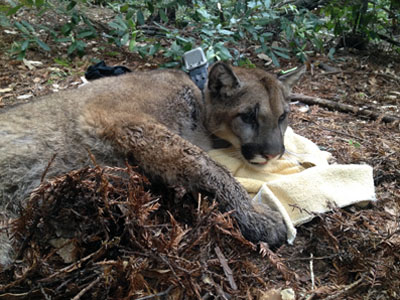
Puma capture demonstrates success of non-lethal intervention
The capture in downtown Santa Cruz and resettlement of a young male mountain lion is one of the first tests of a new state policy that calls for using non-lethal methods when mountain lions are discovered in populated areas.
-

Puma tracking in Santa Cruz Mountains reveals impact of habitat fragmentation
In the first published results of more than three years of tracking mountain lions in the Santa Cruz Mountains, UC Santa Cruz researchers document how human development affects the predators’ habits.
-

Tracking pumas
UCSC students get first-hand scientific experience while monitoring the elusive big cats as part of the Puma Project.
-

UCSC study shows how urchin-loving otters can help fight global warming
A new study by two UC Santa Cruz researchers suggest that a thriving sea otter population that keeps sea urchins in check will in turn allow kelp forests to prosper and help reverse a principal cause of global warming.
-

Apple’s software brings attention to mountain lion research
Apple’s release of its “Mountain Lion” operating system is drawing attention to the real thing prowling just a few miles from the company’s headquarters. Since 2008, UCSC researchers have captured 36 mountain lions as part of the UCSC Puma Project to better understand the cats’ physiology, behavior, and ecology.
-

Researchers find increase in Lyme disease mirrors drop in red fox numbers
A continued increase of Lyme disease in the United States, once linked to a recovering deer population, may instead be explained by a decline of the red fox, UC Santa Cruz researchers suggest in a new study.
-

Why letting salmon escape could benefit bears and humans
Researchers at UC Santa Cruz and in Canada suggest that allowing more Pacific salmon to spawn in coastal streams would mean a long term win-win for ecosystems and humans.
-
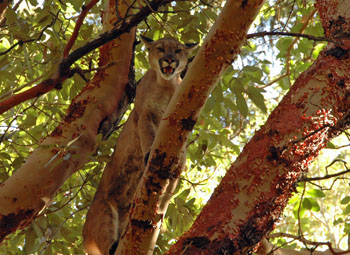
Big cats on campus: mountain lion sightings prompt UCSC expert forum
Excited by two recent mountain lion spottings on and near campus, a large crowd attended a UCSC forum on these powerful but shy and elusive predators.
-

UCSC wins $2.6 million grant for organic farming research
UC Santa Cruz will continue and expand its leading role in sustainable agriculture research with a $2.6 million federal grant to strengthen collaboration with Central Coast farmers to promote organic production in the region.
-

UCSC scientist uses storm-chasing weather radar to track bats
Storm chasers have become bat counters. A UC Santa Cruz scientist, working with meteorologists at the University of Oklahoma, is using mobile storm-chasing radars to follow swarms of bats as they emerge from their caves each night to forage on insects.
-

Limiting salmon fishing may help ecosystems and economies
A group of conservation biologists led by a researcher from UC Santa Cruz and Canada’s Raincoast Conservation Foundation has proposed limiting the fishing of Pacific salmon off British Columbia in order to improve the ecosystems of protected coastal areas where spawning occurs and help coastal economies.