Author: Tim Stephens
-
Fossil finger bone yields genome of a previously unknown human relative
DNA extracted from a fossil finger bone has yielded the genome of a previously unknown group of human relatives.
-
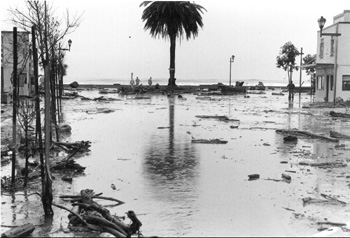
UCSC scientists help California coastal communities prepare for sea level rise
Sea level is rising, and California’s coastal communities will need to prepare for the gradual inundation of low-lying areas, as well as increased erosion rates and damage from storms.
-
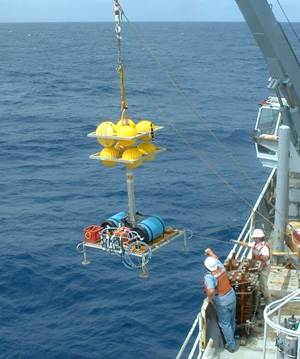
Life thrives in porous rock deep beneath the seafloor, scientists say
Researchers have found compelling evidence for an extensive biological community living in porous rock deep beneath the seafloor.
-
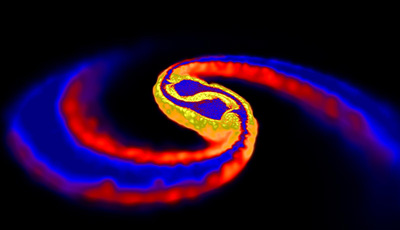
Study predicts distribution of gravitational wave sources
A study led by a UCSC undergraduate predicts for the first time where detectable sources of gravitational waves are likely to occur in the local galactic neighborhood.
-
Genome 10K Project announces first 101 species for genome sequencing
The Genome 10K Community of Scientists and BGI (formerly the Beijing Genomics Institute) of Shenzhen, China, have announced a plan to sequence the genomes of 101 vertebrate species within the next two years.
-

New analysis explains formation of bulge on farside of moon
A bulge of elevated topography on the farside of the moon may be the result of tidal forces acting early in the moon’s history.
-
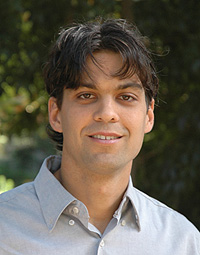
Astronomer Enrico Ramirez-Ruiz named to Mexican Academy of Sciences
Enrico Ramirez-Ruiz, associate professor of astronomy and astrophysics, has been elected a corresponding member of the Mexican Academy of Sciences.
-
Iron stimulates blooms of toxin-producing algae in open ocean, study finds
The new findings, reported this week in the Proceedings of the National Academy of Sciences, add to concerns about proposals to use iron fertilization of the oceans as a way to combat global warming.
-
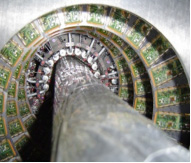
UCSC leads work on first major upgrade for LHC
U.S. physicists have begun work on a new particle detector that will be the first major upgrade for the Large Hadron Collider (LHC), the world’s most powerful particle accelerator.
-
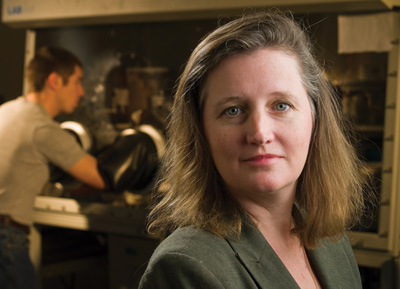
Research on thin-film solar cells heats up at UCSC
Sue Carter, a professor of physics at UCSC, is pursuing a variety of strategies to develop cheaper and more efficient solar cells.
-
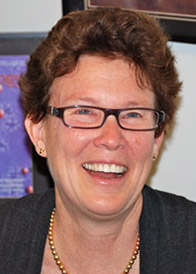
Microbiologist to discuss bacteria for bioenergy on Tuesday, November 9
Caroline Harwood, a distinguished microbiologist from the University of Wisconsin, will discuss microbial production of hydrogen gas as a biofuel in a lecture at UCSC on Tuesday, November 9.
-
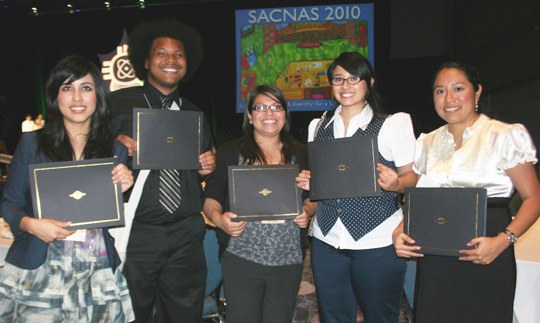
UCSC students earn awards at SACNAS national conference
Four UCSC students received awards for their research presentations at the 2010 SACNAS National Conference held in Anaheim in October.