Author: Tim Stephens
-

UCSC researchers develop 3D display with no ghosting for viewers without glasses
3D+2D TV allows viewers with stereo glasses to see 3D images, while viewers without the glasses see a normal 2D image.
-

Geothermal power facility induces earthquakes, study finds
Seismologists found a strong correlation between seismic activity and operations for production of geothermal power.
-

Lick Observatory’s ‘Saturday Stars’ program offers prime viewing opportunities
A new program at Lick Observatory offers prime viewing opportunities for amateur astronomy groups.
-
Seafloor research expedition features live online video feed
Hydrogeologist Andrew Fisher is leading an expedition to explore fluid flow and microbial habitats deep within the ocean crust.
-
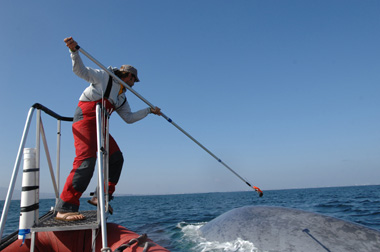
Military sonar can alter blue whale behavior
Blue whales off the coast of California changed their behavior when exposed to underwater sounds like those used in U.S. military exercises.
-
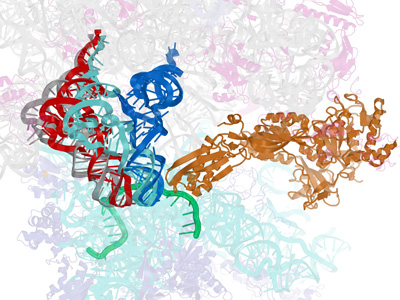
Study reveals key step in protein synthesis
Scientists show how the protein-building ribosome translates genetic code into proteins without making mistakes.
-

Scientists sequence genome of 700,000-year-old horse
An international team of scientists has sequenced the genome of an ancient horse that lived 700,000 years ago.
-
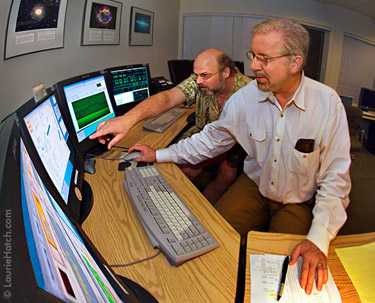
Astronomers detect three planets in habitable zone of nearby star
A new study reveals a record-breaking three super-Earths orbiting in the “habitable zone” of a nearby star.
-
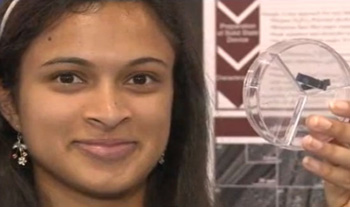
High school student’s work in UCSC lab earns Intel Science Fair prize
Eesha Khare, a student at Lynbrook High School in San Jose, won a $50,000 science fair prize for work carried out in Yat Li’s chemistry lab.
-

UCSC scientist attends White House ceremony honoring open science
David Haussler attended a White House event highlighting Open Science “Champions of Change.”
-

UCSC ham radio club takes part in annual Field Day exercise June 22-23
Faculty and students from the Baskin School of Engineering will take part in the national Emergency Communications Field Day.
-
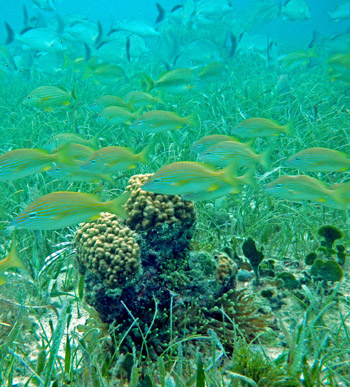
Submarine springs reveal how coral reefs respond to ocean acidification
Ocean acidification due to rising carbon dioxide levels will reduce the density of coral skeletons, making coral reefs more vulnerable to disruption and erosion.