Author: Tim Stephens
-

Tracking data reveal the secret lives of marine animals
Seals, whales, sharks, turtles, seabirds, and other marine vertebrates show similar patterns of movement in marine environments.
-

Another ‘gem’ in the string of Maitra lectures
The 16th Annual Sidhartha Maitra Memorial Lecture will begin at 7:30 p.m. Feb. 23 at the Colleges Nine/Ten Multi-purpose Room. Admission is free, with registration. The university will host a post-lecture reception to provide an opportunity for the audience to engage with Rao.
-
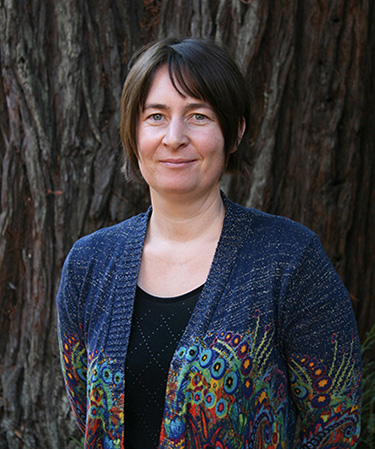
UCSC astronomer Alexie Leauthaud wins Sloan Research Fellowship
The Sloan Research Fellowships honor early-career scholars whose achievements mark them as among the very best scientific minds working today.
-
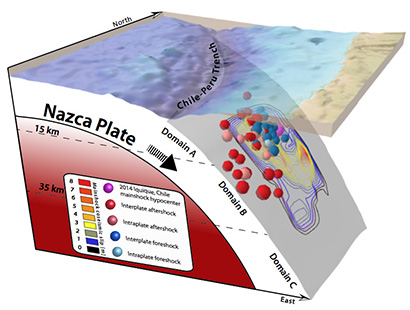
Analysis of major earthquakes supports stress reduction assumptions
After a major earthquake, the area where the fault slipped a lot is unlikely to slip again, seismologists say, but stress increases in surrounding areas.
-

Computer science grad student wins Better Scientific Software Fellowship
Ivo Jimenez was recognized by the U.S. Department of Energy’s Exascale Computing Project in its inaugural class of Better Scientific Software (BSSw) Fellows.
-
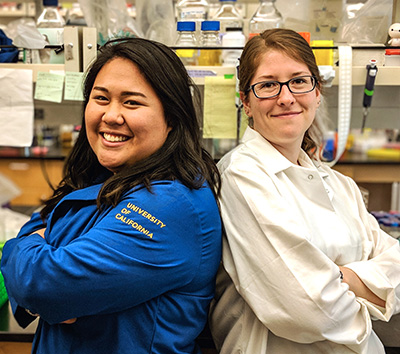
State program funds lung cancer research at UC Santa Cruz
The California Tobacco-Related Disease Research Program has awarded $1.8 million in grants and fellowships to UCSC biomedical researchers.
-
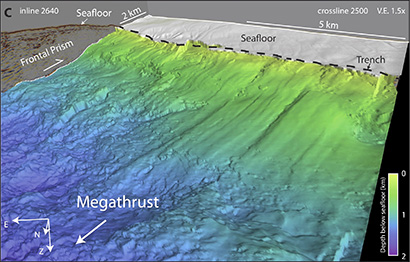
Acoustic imaging reveals hidden features of megathrust fault off Costa Rica
First detailed 3-D images of a megathrust fault show long grooves and other features in the fault surface that are likely to control how it slips in an earthquake.
-
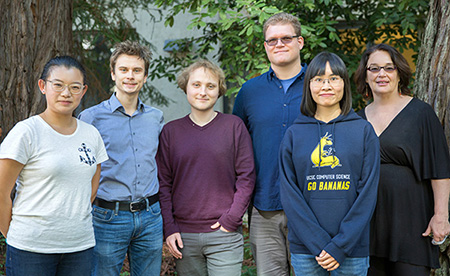
UCSC’s SlugBot team chosen again to compete in Amazon’s Alexa Prize Challenge
For the second year in a row, a team of computer science students has won sponsorship from Amazon to develop a “socialbot” that can converse with humans.
-
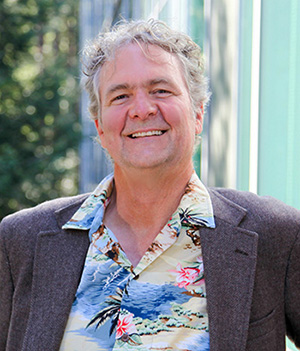
Two UCSC professors elected to National Academy of Engineering
Biomolecular engineer David Haussler and computer scientist Martín Abadi have been recognized for their pioneering achievements.
-
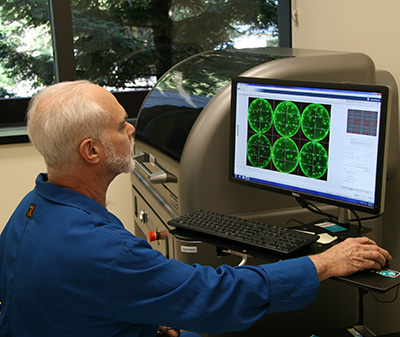
Scientists report big improvements in HIV vaccine production
Technical advances in vaccine production should shorten the time to clinical trials, breaking the logjam of promising new candidate vaccines waiting to be tested.
-

Polar bears finding it harder to catch enough seals to meet energy demands
As climate change alters their environment a growing number of polar bears are unable to catch enough fat-rich prey to meet their energy needs.
-

Breakthrough leads to sequencing of a human genome using a pocket-sized device
Nanopore sequencing technology, based on concepts pioneered at UC Santa Cruz, has revealed parts of the genome scientists had been unable to sequence before.