Author: Tim Stephens
-

Report exposes rampant illegal fishing in North Korean waters
Ground-breaking study reveals hundreds of vessels fishing illegally in one of the world’s most contested ocean regions, contravening UN sanctions and fueling overfishing.
-

New study shows retreat of East Antarctic Ice Sheet during previous warm periods
Evidence of glacial retreat in the Wilkes Basin 400,000 years ago suggests ice loss in this region could add 10 to 13 feet (3 to 4 meters) to future global sea level rise.
-

Computer scientist Luca de Alfaro wins ‘test of time’ awards for influential papers
Luca de Alfaro, professor of computer science and engineering, received 2020 Test-of-Time Awards from the IEEE Symposium on Logic in Computer Science (LICS) and the International Conference on Embedded Software (EMSOFT).
-

Is COVID-related reduction in marine traffic reducing stress in whales?
Whale researchers are taking advantage of changes in boat traffic in Monterey Bay during the pandemic to collect data on stress hormones in humpback whales.
-
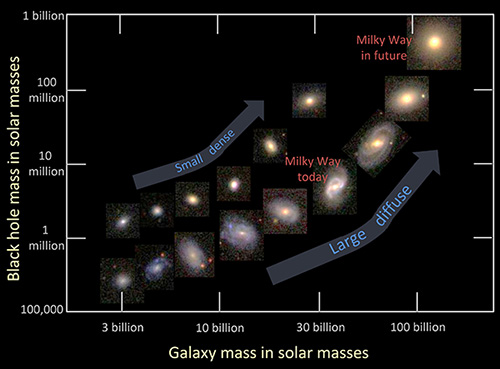
How galaxies die: New insights into the quenching of star formation
A simple model explains a wide range of observations by describing a contest between galaxy halos and their central black holes that eventually turns off star formation.
-

Astrophysics graduate student Diana Powell wins 2020 Ford Fellowship
Powell won a Ford Foundation Dissertation Fellowship to support her work as she completes her Ph.D. thesis on exoplanets.
-

Scientists achieve first complete assembly of human X chromosome
The first end-to-end (‘telomere-to-telomere’) completely gapless DNA sequence of a human chromosome is a major milestone for genomics research.
-

CITRIS UCSC funds new pandemic-related research projects
The campus seed funding program is providing $40K grants for three new projects to address the challenges of COVID-19.
-

STEM Diversity Programs honored by ‘Insight into Diversity’ magazine
‘Insight into Diversity’ magazine has recognized the STEM Diversity Programs at UC Santa Cruz with its 2020 Inspiring Programs in STEM Award.
-

UC Santa Cruz leads research center on botanical dietary supplements
A new $5 million NIH grant supports a collaborative research program to understand the cellular mechanisms by which botanical natural products may affect human health.
-
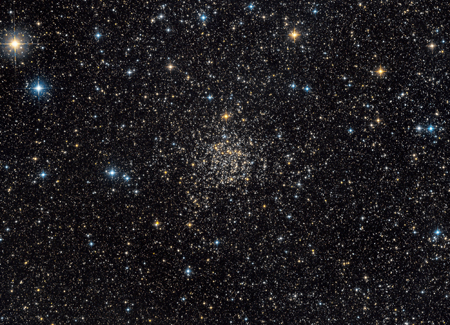
White dwarfs reveal new insights into the origin of carbon in the universe
A new analysis of white dwarf stars supports their role as a key source of carbon, an element crucial to all life, in the Milky Way and other galaxies.
-

Evidence supports ‘hot start’ scenario and early ocean formation on Pluto
A new study suggests that Pluto and other large Kuiper belt objects started out with liquid oceans which have been slowly freezing over time.