Author: Tim Stephens
-

Marine mammals’ adaptations to low oxygen offer new perspective on COVID-19
Humans are poorly adapted for oxygen deprivation, making us vulnerable to long-term effects from a disease that disrupts the body’s oxygen supply pathway.
-

AXA Chair at UC Santa Cruz funds efforts to build coastal resilience naturally
Marine scientist Michael Beck was awarded the chair to support his work on natural defenses to enhance coastal resilience to flooding, erosion, and sea level rise.
-

Direct visualization of quantum dots reveals shape of quantum wave function
UCSC researchers used a scanning tunneling microscope to visualize quantum dots in bilayer graphene, an important step toward quantum information technologies.
-

Materials theorist Yuan Ping wins grant from Air Force Young Investigator Program
Ping’s research on spin dynamics in two-dimensional materials has applications for spintronics and quantum information technologies.
-
List of most highly cited researchers features 19 UCSC scientists and engineers
A new list of the world’s most highly cited researchers includes 19 scientists and engineers at UC Santa Cruz.
-

Geologist David Rubin elected fellow of the American Geophysical Union
David Rubin, a researcher in the Department of Earth and Planetary Sciences, has been elected a fellow of the American Geophysical Union.
-

Approval of Proposition 14 boosts funding for stem cell agency
The California Institute for Regenerative Medicine (CIRM) has provided major funding for research and training at UC Santa Cruz since its creation in 2004.
-

UC Santa Cruz leads interdisciplinary consortium for astrobiology research
With funding from NASA, the UCSC-led team will lay the foundation for detecting the signatures of life in the atmospheres of other planets.
-

Computer scientist Lise Getoor receives research funding from Google
A new project on recommender dialogue systems led by Getoor and her collaborators at UC Santa Barbara and USC will receive $1 million in funding over three years.
-
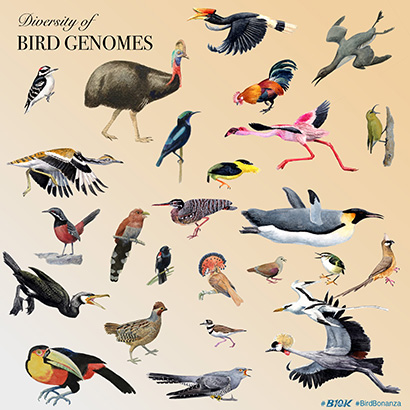
New genome alignment tool empowers large-scale studies of vertebrate evolution
Important new studies of the evolution of birds and mammals relied on Progressive Cactus, a genome alignment tool developed at the UC Santa Cruz Genomics Institute.
-

Radioactive elements may be crucial to the habitability of rocky planets
Earth-size planets can have varying amounts of radioactive elements, which generate internal heat that drives a planet’s geological activity and magnetism.
-

Computer science grad student wins LaunchPad Fellowship for startup
Fatemeh Mirzaei, a graduate student in computer science and engineering in the Baskin School of Engineering, is one of 40 student entrepreneurs selected for the Fall 2020 LaunchPad Fellowship program.