Author: Tim Stephens
-
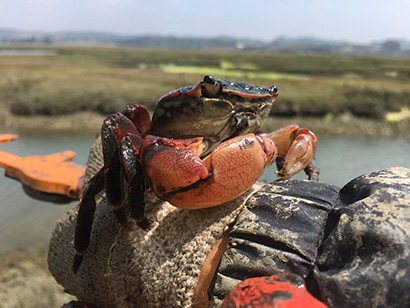
Salt marsh resilience compromised by crabs along tidal creek edges
A long-term study in Elkhorn Slough revealed the impact of superabundant crabs on salt marsh vegetation and the vulnerability of tidal creek banks to erosion.
-
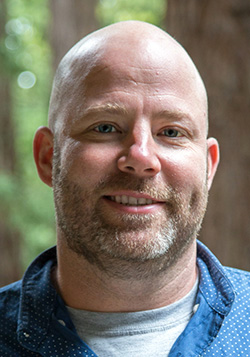
NIH grant funds collaborative research on protein-RNA interactions in cancer
Biologist Jeremy Sanford has received major funding from the National Cancer Institute for research on the role of protein-RNA interactions in cancer.
-

David Haussler ranked 6th among top scientists in computer science
Haussler, a distinguished professor of biomolecular engineering and director of the Genomics Institute, is ranked sixth in the 2021 Seventh Edition of the Top Scientists Ranking for Computer Science & Electronics.
-

Physics PhD student receives Graduate Instrumentation Research Award
Funding from the American Physical Society program supports graduate student Yuzhan Zao’s research on silicon detectors for particle physics experiments.
-

Haziness of exoplanet atmospheres depends on properties of aerosol particles
A laboratory study of haze particles produced under different conditions helps explain why some exoplanets may be obscured by hazy atmospheres.
-
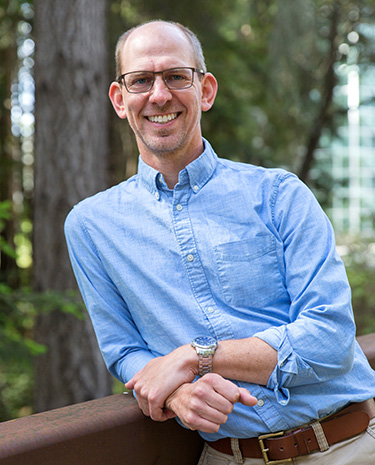
Jonathan Fortney garners Simons Investigator in Astrophysics award
The $500,000 award from the Simons Foundation will support Fortney’s research on planetary atmospheres.
-
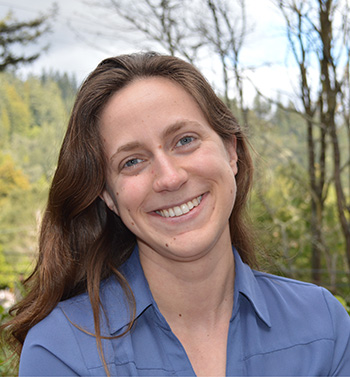
Hydrologist Margaret Zimmer wins NSF CAREER Award
Margaret Zimmer, assistant professor of Earth and planetary sciences, has received an award from the National Science Foundation to support her research on the role of Earth’s subsurface in regulating the water cycle.
-

Claire Max to retire as director of UC Observatories
Claire Max, director of the University of California Observatories (UCO) and the Bachmann professor of astronomy and astrophysics at UC Santa Cruz, will retire at the end of June.
-

Snowflake morays can feed on land, swallow prey without water
While most fish need water to feed, the unique anatomy of moray eels gives snowflake morays the ability to grab and swallow prey on land.
-

Biologist Roxanne Beltran wins funding from Beckman Young Investigator Program
New project aims to provide the first large-scale recordings of sound in the open ocean, using elephant seals as a platform for a novel acoustic recorder.
-

Dead zones formed repeatedly in North Pacific during warm climates, study finds
Over the past 1.2 million years, marine life was repeatedly extinguished in low-oxygen ‘dead zones’ in the North Pacific Ocean during warm interglacial climates.
-

Non-hallucinogenic psychedelic analog reverses effects of stress in mouse study
Free of toxic and hallucinogenic side effects, ibogaine-inspired tabernanthalog shows promise as a potential treatment for the detrimental effects of stress on the brain.