Author: Tim Stephens
-
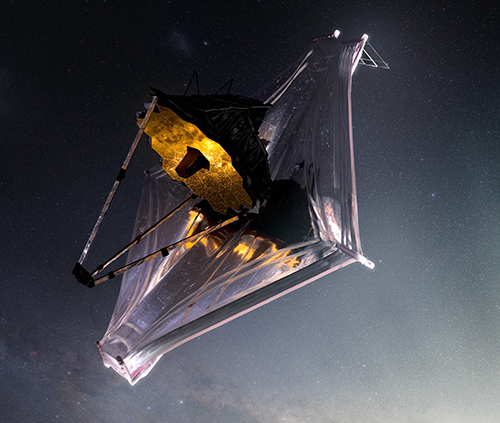
As launch of James Webb Space Telescope nears, astronomers anticipate new era of discoveries
UCSC astronomers will be among the first to use the powerful new space telescope, and have been involved in the project from the start.
-

Seagrass restoration study shows rapid recovery of ecosystem functions
Restored plots of eelgrass in Elkhorn Slough expanded rapidly, providing improved habitat for fish and invertebrates and other benefits of a healthy ecosystem.
-
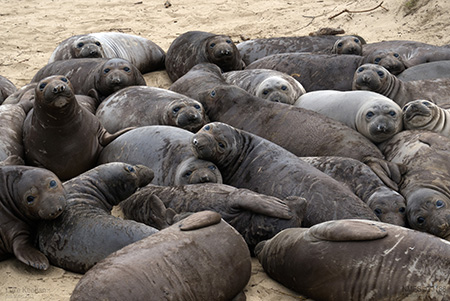
Long-term study of elephant seal reproduction shows population’s resilience
Researchers found that a female elephant seal’s age and experience were more important than ocean conditions in determining the condition of her pup at weaning.
-
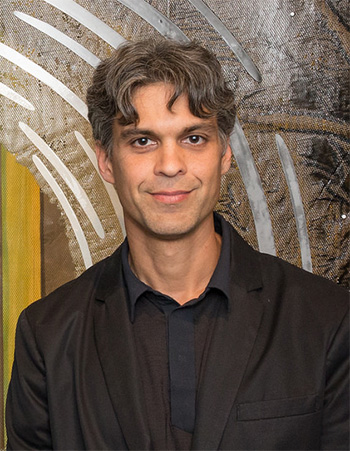
Astrophysicist Enrico Ramirez-Ruiz wins SACNAS Distinguished Mentor Award
Ramirez-Ruiz will be honored by the Society for Advancement of Chicanos/Hispanics and Native Americans in Science at the 2021 SACNAS National Diversity in STEM Conference.
-

Biologist Beth Shapiro’s new book explores how humans have shaped life on Earth
‘Life as We Made It’ explains how our species has been manipulating nature for the past 50,000 years and what the future may hold, depending on how we use new technologies.
-
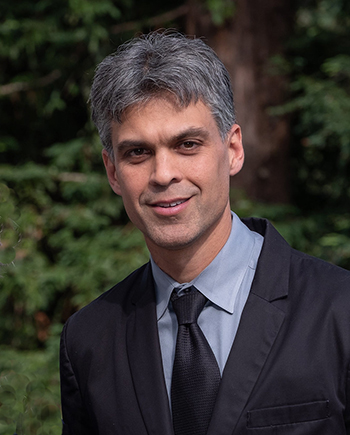
Astrophysicist Enrico Ramirez-Ruiz awarded American Physical Society’s Nicholson Medal
The American Physical Society’s 2021 Dwight Nicholson Medal for Outreach recognizes Ramirez-Ruiz for innovations in mentoring.
-

Biologist Roxanne Beltran wins prestigious Packard Fellowship
The David and Lucile Packard Foundation has awarded a Packard Fellowship for Science and Engineering to Roxanne Beltran, assistant professor of ecology and evolutionary biology at UC Santa Cruz.
-

AAUW awards fellowships to three scholars at UC Santa Cruz
The American Association of University Women (AAUW) has awarded 2021-22 American Fellowships to three scholars at UC Santa Cruz who will pursue academic work and lead innovative community projects to empower women and girls.
-
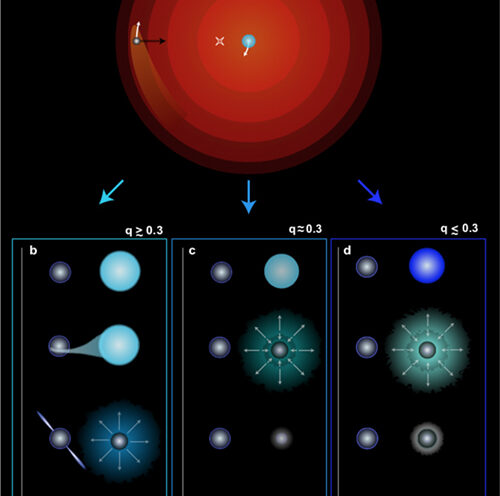
Astrophysicists explain the origin of unusually heavy neutron star binaries
Simulations of supernova explosions of massive stars paired with neutron stars can explain puzzling results from gravitational wave observatories.
-
Scientists assemble a biological clock in a test tube to study how it works
The reconstituted biological clock maintains daily cycles for days on end, allowing researchers to study the interactions of its component parts.
-
Stem cell agency funds research training program at UC Santa Cruz
A $4.9 million grant from the California Institute for Regenerative Medicine supports a pre- and postdoctoral training program in systems biology of stem cells at UCSC.
-

NIH funds Center for Live Cell Genomics at UC Santa Cruz
The NIH Centers of Excellence in Genomic Science program has awarded $13.5 million over five years for a new center to advance genomics in biomedical research.