Author: Tim Stephens
-

Baskin Engineering medical robotics expert explores the human-machine interface
Jacob Rosen is developing a wearable robotic “exoskeleton” that could enable a person to lift heavy objects with little effort.
-

Study of disease risk suggests ways to avoid slaughter of Yellowstone bison
Last winter, government agencies killed one third of Yellowstone National Park’s bison herd, but such measures may be unnecessary according to researchers who have assessed the risk of disease transmission from Yellowstone bison to cattle.
-
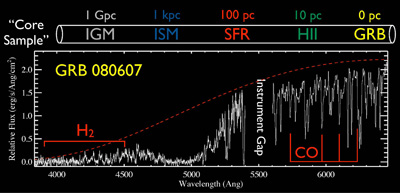
Astronomers use gamma-ray burst to probe star formation in the early universe
The brilliant afterglow of a powerful gamma-ray burst (GRB) has enabled astronomers to probe the star-forming environment of a distant galaxy, resulting in the first detection of molecular gas in a GRB host galaxy.
-

Math professor Alexander Gamburd wins Presidential Early Career Award
Alexander Gamburd, professor of mathematics at UCSC, has won a Presidential Early Career Award for Scientists and Engineers (PECASE), the White House announced today.
-
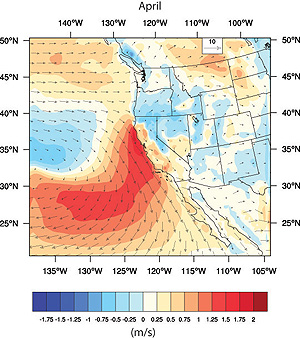
Stronger coastal winds due to climate change may have far-reaching effects
Future increases in wind strength along the California coast may have far-reaching effects, including more intense upwelling of cold water along the coast early in the season, “dead zones” in coastal waters, and increased fire danger in Southern Californi
-
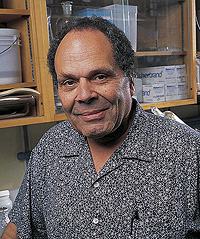
Three UCSC professors elected AAAS Fellows
Three UCSC professors have been awarded the distinction of AAAS Fellow by the American Association for the Advancement of Science.
-
Ocean acidification could have broad effects on marine ecosystems
Concern about increasing ocean acidification has often focused on its potential effects on coral reefs, but broader disruptions of biological processes in the oceans may be more significant, according to Donald Potts, professor of ecology and evolutionary
-

UCSC to host international renewable energy program
Last summer, U.S. and Danish students learned firsthand about renewable energy technologies being implemented in Denmark through a program organized by UCSC faculty. Next year, the campus will host the four-week summer program, along with NASA Ames Resear
-
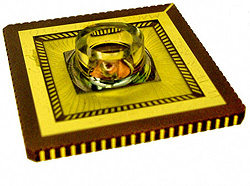
Magnetic nanotags allow sensitive detection of cancer biomarkers
A team led by researchers at UCSC and Stanford has developed a compact prototype detector that uses magnetic nanotechnology to spot cancer-associated proteins in a human blood serum sample with much higher sensitivity than current detectors.
-

Astronomy professor Douglas Lin receives Outstanding Faculty Award
The Division of Physical and Biological Sciences has given its 2007-08 Outstanding Faculty Award to Douglas Lin, professor of astronomy and astrophysics.
-
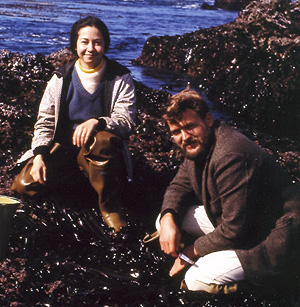
Biologists John and Vicki Pearse receive Lifetime Achievement Award
The Western Society of Naturalists has awarded its 2008 Lifetime Achievement Award to UCSC biologists John and Vicki Pearse.
-

UCSC earns top ranking for scientific impact of astronomy research
UCSC is the top-ranking university in the country for the quality of its research in astronomy and astrophysics, according to a new analysis of papers published in scientific journals and how often those papers are cited by other scientists.