Author: Tim Stephens
-

Don Chamberlin to receive 2009 Fellow Award from Computer History Museum
Computer scientist Don Chamberlin has been chosen to receive a 2009 Fellow Award from the Computer History Museum.
-
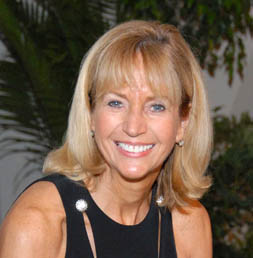
MBARI president Marcia McNutt to be nominated as director of U.S. Geological Survey
Marcia McNutt, professor of Earth and planetary sciences at UCSC, will be nominated as director of the U.S. Geological Survey.
-
UC scientists warn governor on effects of state budget cuts
More than 300 UC scientists from all 10 campuses have sent a letter to the governor warning that the proposed cuts to UC’s budget will harm the future of science and technology in California and hurt the state’s economy.
-
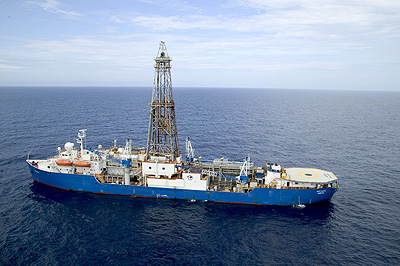
U.S. research vessel enroute to Bering Sea for climate change investigations
Preparations are under way for an international marine research expedition to investigate the role of the Bering Sea in climate change.
-
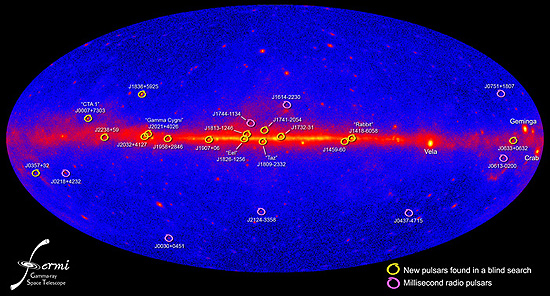
NASA’s Fermi Telescope reveals a population of radio-quiet gamma-ray pulsars
UCSC physicists have discovered a new class of pulsars using NASA’s Fermi Gamma-ray Space Telescope.
-
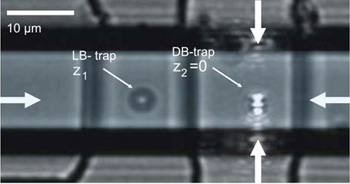
Integrated optical trap holds particles for on-chip analysis
A new type of optical particle trap can be used to manipulate bacteria, viruses and other particles on a chip as part of an integrated optofluidic platform.
-

Novel light-sensitive compounds show promise for cancer therapy
Novel compounds show promise for photodynamic cancer therapy, which uses light-activated drugs to kill tumor cells.
-

Top physicists gather at UCSC to honor Tom Banks and Willy Fischler
Top physicists will gather at UCSC on June 15 and 16 for a symposium in honor of Thomas Banks, professor of physics at UCSC, and Willy Fischler, professor of physics at the University of Texas, Austin.
-
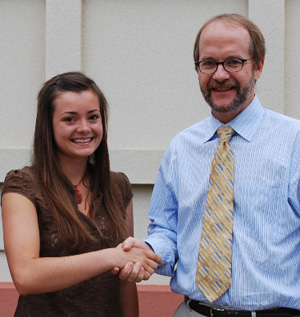
Health sciences grad awarded Sutter scholarship for medical school
Graduating senior Brittany Guest will receive a $10,000 scholarship to help pay for medical school fees and tuition.
-
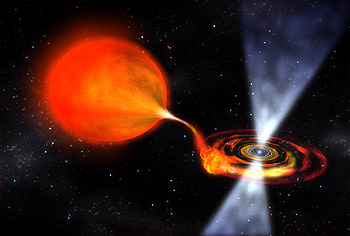
New technique improves estimates of pulsar ages
Astronomers have developed a new technique to determine the ages of millisecond pulsars, the fastest-spinning stars in the universe.
-
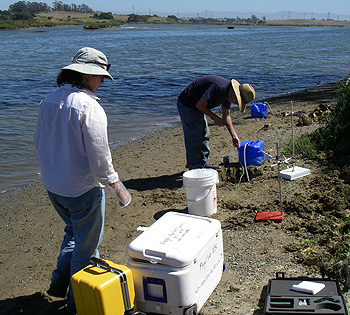
Groundwater fingered as a source of methylmercury in coastal waters
For the first time, scientists have detected a highly toxic form of mercury in groundwater flows at two coastal sites in California.