All news
-
Fostering anti-racism in ecology, evolution, and conservation biology
A UCSC team has assembled a toolkit of resources for academic departments to use in addressing issues of diversity, equity, and inclusion.

-
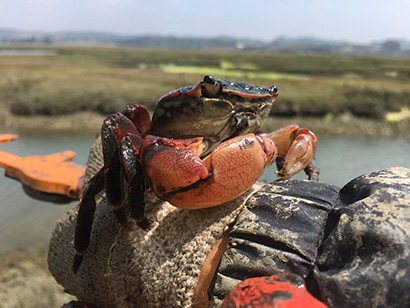
Salt marsh resilience compromised by crabs along tidal creek edges
A long-term study in Elkhorn Slough revealed the impact of superabundant crabs on salt marsh vegetation and the vulnerability of tidal creek banks to erosion.
-
Doctoral candidate’s award-winning research documents experiences of Latina girls growing up in rural California
UC Santa Cruz graduate student Roxanna Villalobos recently won a national dissertation scholarship award from Sociologists for Women in Society that will support her research with Latina girls in rural California.

-
Five-year NIH grant supports collaborative research into rejuvenating the aging brain
Scientists at UC Santa Cruz, UC Berkeley, and Stanford are working together to discover and treat the causes behind age-associated cognitive decline.
-
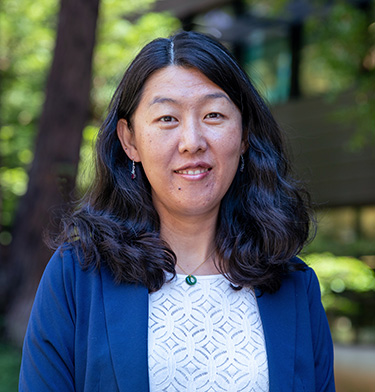
Switzer Fellowship will help graduate student engage communities in climate planning
Coastal Science and Policy Program master’s student Diana Fu won a Switzer Foundation fellowship to support her work advancing environmental justice through climate change adaptation.

-
Climate change poses threat to ‘tuna dependent’ Pacific Islands economies
Shifting distributions of key tuna species could have serious economic impacts for island nations in the Western and Central Pacific, according to a new paper coauthored by Assistant Professor of Environmental Studies Katherine Seto.

-
Oakes Founding Provost J. Herman Blake receives lifetime achievement award
Professor Emeritus of Sociology and Founding Provost of Oakes College J. Herman Blake is being recognized by the American Sociology Association for his distinguished career spent advancing access and equity in education.

-
Dickens Universe celebrates 40th anniversary with ‘A Christmas Carol’
This summer, the Dickens Project at UC Santa Cruz—the largest multi-campus consortium on Victorian studies in the world—will present the 40th year of the Dickens Universe, a week of intense study and festivities.
-
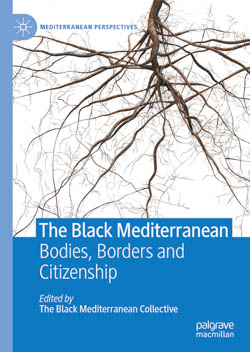
Racial and colonial histories offer insights on refugee crisis in ‘The Black Mediterranean’
Assistant Professor of Sociology and Critical Race and Ethnic Studies Camilla Hawthorne coedited a first-of-its-kind new book called “The Black Mediterranean,” which examines the African diaspora within the region.
-
Susana Ruiz awarded ACLS digital grant to develop VR documentary of 2011 Egyptian Uprising
UC Santa Cruz assistant film and digital media professor Susana Ruiz has received a 2021 Digital Extension Grant of $150,000 from The American Council of Learned Societies (ACLS) for her project, Arab Data Bodies: Social Media in Mixed Reality.

-
Blazing a Slug trail to the Olympics
Rhythmic gymnast Izzy Connor will be the first UC Santa Cruz student to compete in the Olympics—the result of years of both personal struggle and success.

-
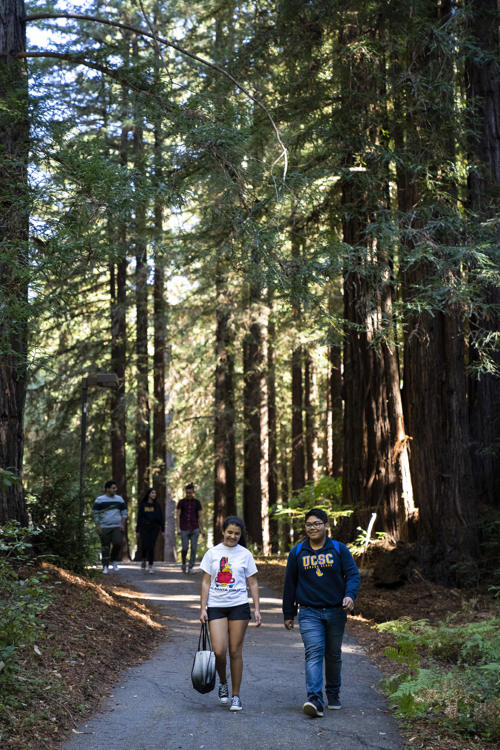
UC Santa Cruz admits fall class that reflects excellence, diversity
UC Santa Cruz anticipates welcoming about 6,100 new Banana Slugs this fall, concluding an admissions cycle that began with record applications and has yielded a new cohort that reflects the campus commitment to excellence, equity, and opportunity.
-
History professor wins prize for article on post-Civil War incarceration of African American children
Associate professor of history Catherine Jones has been honored with the 2021 Richards Prize for the best article published in The Journal of the Civil War Era in 2020. The journal explores how knowledge of the Civil War era informs our…

-
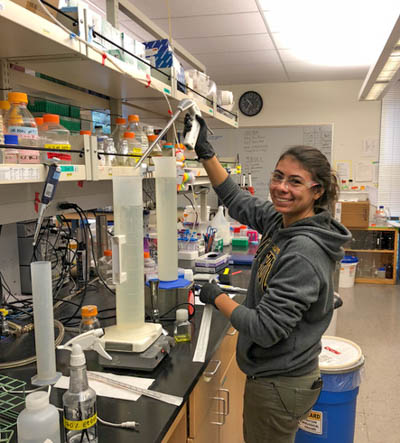
Statistical analysis quantifies how chemistry undergraduates benefit from graduate student diversity
A study of chemistry lab courses at UC Santa Cruz suggests that diversity among graduate student teaching assistants may be among the most essential factors in retaining underrepresented minority undergraduates in STEM courses.
-
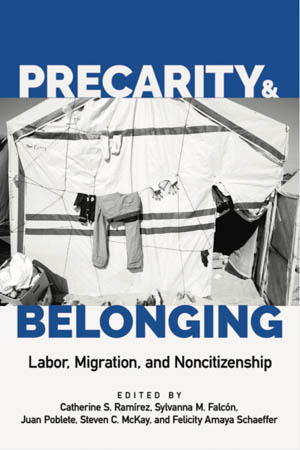
‘Precarity & Belonging’ captures insights from global discussion of citizenship, migration, socioeconomic mobility
A new book from an interdisciplinary group of UC Santa Cruz scholars culminates more than five years of collaborative research and discussion that positioned the university as a convener of global thought leaders.
-
Haziness of exoplanet atmospheres depends on properties of aerosol particles
A laboratory study of haze particles produced under different conditions helps explain why some exoplanets may be obscured by hazy atmospheres.

-
Seymour Center welcomes new executive director
After an extensive search, the UC Santa Cruz Seymour Marine Discovery Center has chosen Jonathan Andres Hicken to be its new executive director.

-
Model reveals interactions between rivers and fault lines
Researchers created a model that uses the movement at fault lines to understand river flow and vice versa.

-
Library’s new Community Archiving Program to broaden scope of Regional History Project
The University Library has announced the establishment of a new Community Archiving Program that will build on the foundation of its decades-old Regional History Project.

-
Quantitative ecologist Kai Zhu wins NSF funding for climate change research and education
Associate Professor of Environmental Studies Kai Zhu won an NSF CAREER award to support research and education focused on the interconnections between climate change and plant phenology.

-
New research on aquaculture feed will test alternative ingredients to help minimize water pollution
A new grant will support UC Santa Cruz’s ecological aquaculture lab in their efforts to increase the variety and quality of low-polluting aquaculture feed options available to fish farmers.

-
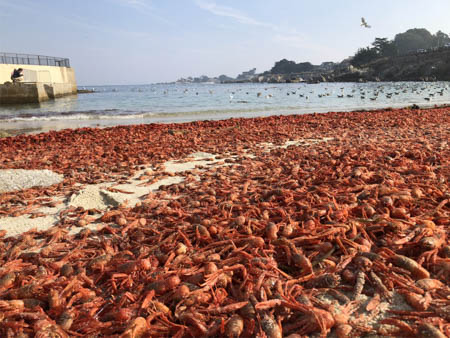
Unusual currents explain mysterious red crab strandings
New findings suggest that abnormal ocean currents cause the occasional appearance of pelagic red crabs outside their native range.
-
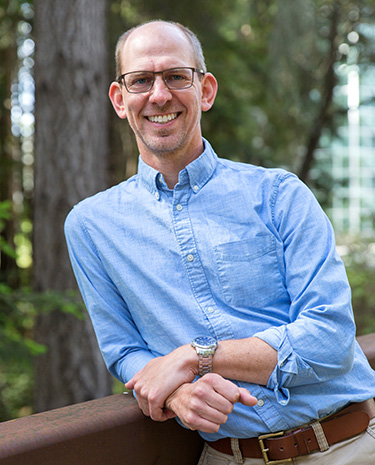
Jonathan Fortney garners Simons Investigator in Astrophysics award
The $500,000 award from the Simons Foundation will support Fortney’s research on planetary atmospheres.
-
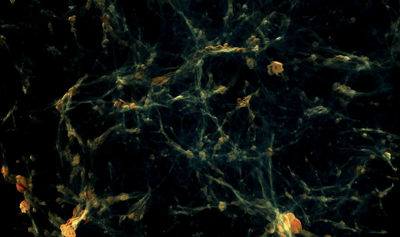
Cosmic dawn occurred 250 to 350 million years after Big Bang
Cosmic dawn, when stars formed for the first time, occurred 250 million to 350 million years after the beginning of the universe, according to a new study.
-
Tracking data show how the quiet of pandemic-era lockdowns allowed pumas to venture closer to urban areas
During regional shelter-in-place orders, declining levels of human mobility emboldened local pumas to use habitats they would normally avoid out of fear of humans.

-
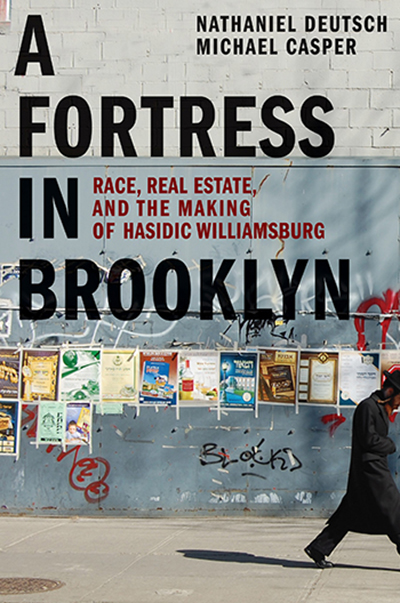
Nathaniel Deutsch’s ‘A Fortress in Brooklyn’ reveals provocative counter-history of American Jewry
A new book by UC Santa Cruz history professor Nathaniel Deutsch details how a group of determined Holocaust survivors survived in one of the roughest parts of New York City—reshaping the urban landscape of postwar Brooklyn.