All news
-
UC Santa Cruz alumna Gillian Welch wins Grammy for Best Folk Album
UC Santa Cruz alumna Gillian Welch (Porter ’90, fine arts) alongside her musical partner David Rawlings, clinched the Best Folk Album award at the 67th Annual Grammy Awards on Feb. 2 for their album Woodland.

-
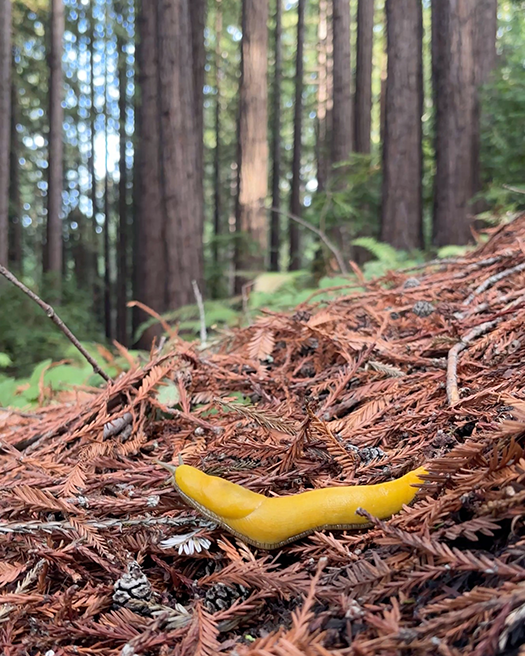
UC Santa Cruz scientists slither into the history books with first complete genome of a banana slug
Not only is the banana slug the endearing mascot for UC Santa Cruz — making the project fitting for campus researchers — but the slugs’ unique slime was a particularly challenging undertaking for UCSC’s experts in genomics.
-
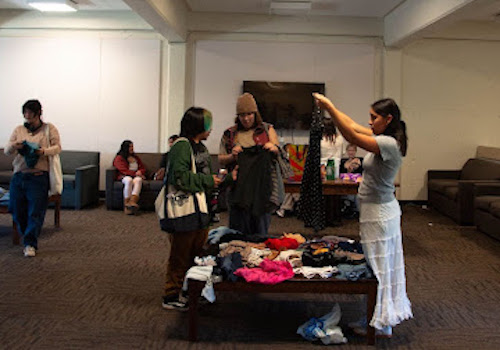
Second annual Slow Fashion Week, Feb. 10-14
Slow Fashion Week is a new tradition for the Student Sustainability Advisor team in the Sustainability Office. Started last year by Student Sustainability Advisor Khalilah Hamid, Slow Fashion week encourages reducing clothing waste and taking a step back from the…
-
Alo Slebir’s Maverick Move: UC Santa Cruz alum rides potential record-breaking 100-foot wave
UC Santa Cruz Alum Alo Slebir (College Nine ’23, legal studies) may have surfed the biggest wave ever

-
New research and art installation demonstrate the viability of using fog as a water source
In a state known for its droughts, where the southern half recently experienced devastating fires, understanding California’s natural water sources is more important than ever. Three University of California, Santa Cruz professors have teamed up to create a multipart scientific…

-
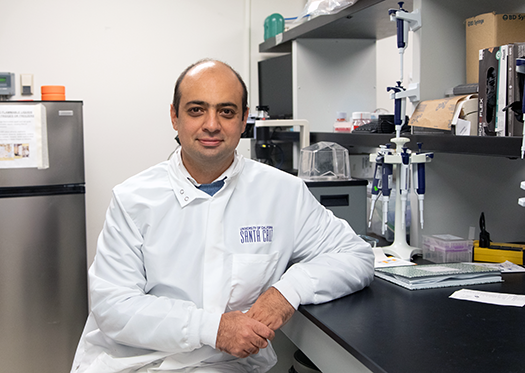
New grant funds effort to uncover therapeutic targets for neuropsychiatric disorders
A $10.3 million grant from the California Institute for Regenerative Medicine (CIRM), the state’s stem cell agency, will fund a multi-UC effort to better understand neuropsychiatric disorders.
-
Explorer society honors Roxanne Beltran for advancing scientific field research, education equity
Roxanne Beltran, assistant professor of ecology and evolutionary biology at UC Santa Cruz, is among 50 people from around the world being honored this year for “doing remarkable work to promote science and exploration.”

-
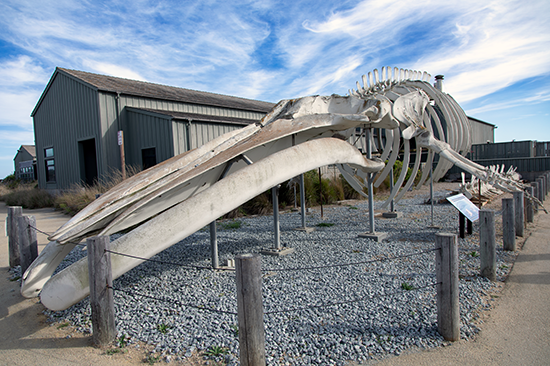
Innovative techniques aim for climate-safe restoration of Ms. Blue
A new project is underway to give Ms. Blue another life, this time enabling her to teach the community about the power of climate-safe innovation
-
The Institute of Arts and Science curates two revolutionary exhibitions
The Institute of the Arts and Sciences (IAS) is starting the new year with two imaginative and heartfelt exhibitions exploring liberation and justice. EDELO and Our Bedrock, both of which run from Jan. 31 – April 20

-
Climate change reshuffles species like a deck of cards, new study finds
A new study led by UC Santa Cruz ecology and evolutionary biologist Malin Pinsky finds that temperature changes due to climate change have a doubly detrimental impact: Not only do they destabilize animal populations, but the impacts accelerate as temperatures…

-
UC Santa Cruz AgTech Alliance launches to support interdisciplinary collaboration
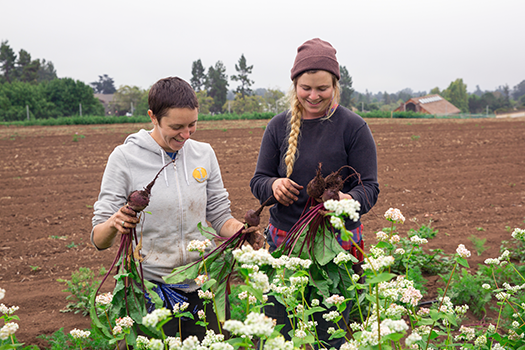
Building on the long history of innovation in agriculture at the campus, the AgTech Alliance will support research, education, events, and workforce development related to advancing agricultural technology in order to create more formalized opportunities for collaboration within the university…
-
Decarbonization & Electrification Town Hall #4
The Decarbonization & Electrification Initiative will hold its fourth town hall gathering on February 10, 2025.
-
UC Santa Cruz Innovation Catalyst Grant program propels research into real-world solutions
UC Santa Cruz has announced the Innovation Catalyst Grant proof-of-concept program awardees, showcasing the campus’s commitment to fostering transformative research with significant societal benefits.

-
Pushing the boundaries of biotechnology
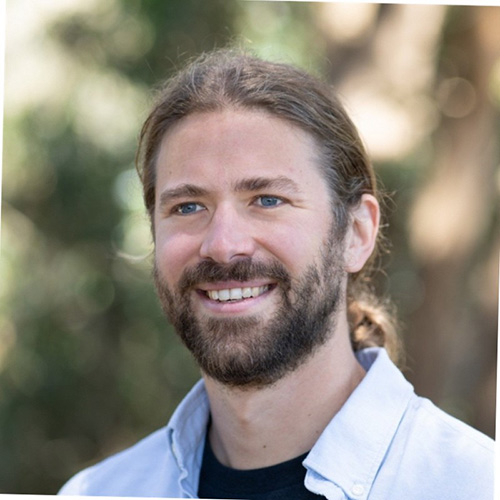
Unnatural Products, a Santa Cruz-based biotech company founded by UC Santa Cruz alumni Cameron Pye and Joshua Schwochert breaks new ground in the biotech landscape.
-
Long read sequencing reveals more genetic information while cutting time and cost of rare disease diagnoses
A new study shows that long-read sequencing has the potential to improve the rate of diagnosis while reducing the time to diagnosis from years to days — in a single test and at a much lower cost.

-
25 years of the UCSC Genome Browser
July 2025 will mark the 25th anniversary of the UC Santa Cruz Genome Browser, one of the most widely used resources for genomics worldwide. In celebration of this amazing resource, we are spotlighting alumni who worked on the Browser over…

-
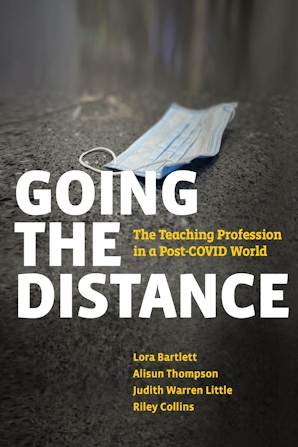
The teaching profession never really recovered from the pandemic. A new book explains why, and what we can do about it.
Education Professor Lora Bartlett and her collaborators collected detailed data on the pandemic and post-pandemic experiences of 75 teachers across the country, revealing how the pandemic era hastened a downward spiral in career satisfaction and longevity for teachers.
-
Professor Patty Gallagher reimagines Comedy of Errors in a new era
Shakespeare is coming to the University of California, Santa Cruz. The upcoming February performances of Comedy of Errors at the Theater Arts eXperimental Theater embody comedy and heartfelt performances.

-
Luca de Alfaro selected as 2024 ACM fellow
Professor of Computer Science and Engineering Luca de Alfaro has been selected a 2024 fellow of the Association for Computing Machinery (ACM), one of the most prestigious recognitions in the computing field.

-
Students make winning videos about importance of federal support for science research
Impactful scientific discovery isn’t possible without funding to support the research, and three UC Santa Cruz students have created short videos that took top prizes in a national competition held by the Science Coalition, a nonprofit, nonpartisan organization dedicated to…
-
Five student projects funded through the 2024-25 CITRIS Tech for Social Good Program
The Center for Information Technology Research in the Interest of Society (CITRIS) at UC Santa Cruz has selected five student projects for funding through the 2024-25 CITRIS Tech for Social Good Program.

-
John Jota Leaños selected as new Interim Dean of Diversity, Equity and Inclusion for the UC Santa Cruz Arts Division
The University of California, Santa Cruz brought on a new Interim Assistant Dean of Diversity Equity and Inclusion for the Arts Division. John Jota Leaños, a professor of Film and Digital Media (FDM) and Guggenheim Fellow, is a Mexican/Italian-American and…