All news
-
Disrupting harmful food systems to prevent future pandemics
Assistant Professor of Environmental Studies Maywa Montenegro de Wit is exploring how lessons from the abolition movement could help agroecology combat the agro-industrial complex to prevent future pandemics.

-
Low-temperature supercapacitors could power missions to moon and Mars
UCSC researchers developed 3D-printed porous carbon aerogels for electrodes in ultralow-temperature supercapacitors, which could reduce heating needs for future space and polar missions.

-
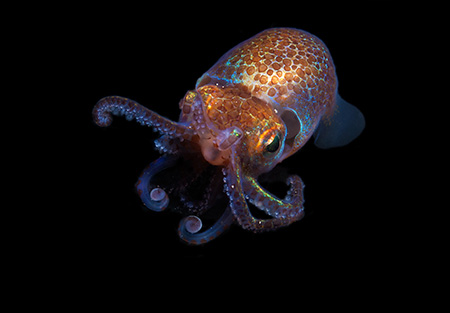
A little squid and its glowing bacteria yield new clues to symbiotic relationships
A small molecule produced by bioluminescent bacteria as they colonize the light organ of the Hawaiian bobtail squid may play a key role in establishing the symbiosis.
-
Sea otters maintain remnants of healthy kelp forest amid sea urchin barrens
While kelp forests have declined dramatically along the California coast, sea otters in Monterey Bay are maintaining patches of healthy kelp forest, according to a new study.

-
Return to Rat Island: Conservation strategy leads to ecosystem rebound
Hawadax Island’s birds and seashore ecosystem have returned to a natural balance after the removal of invasive rodents.

-
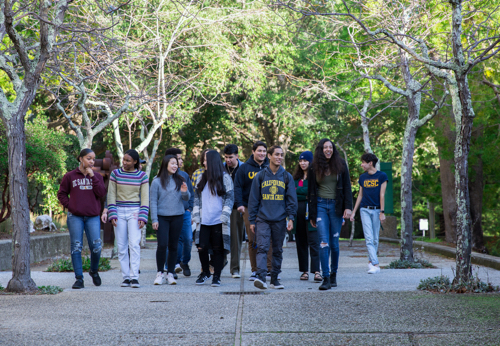
Focused on student success and equity, UC Santa Cruz seeks reapproval to build more housing and child-care facilities
In an effort to provide students with more housing security amid an unrelenting housing crisis, UC Santa Cruz will seek reapproval for a project that will significantly increase the number of current students who are able to live on campus.
-
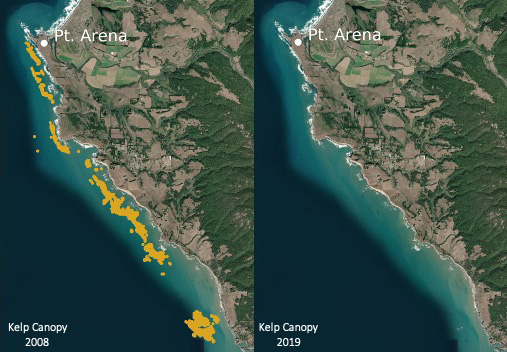
The collapse of Northern California kelp forests will be hard to reverse
Most of Northern California’s kelp forest ecosystem is gone, replaced by widespread ‘urchin barrens’ that may persist long into the future, according to a new study.
-
UCSC leads multicampus initiative on coastal resilience and climate adaptation
A UC-funded initiative will bring together researchers at the Santa Cruz, Santa Barbara, and San Diego campuses to address pressing issues for California’s coastal communities.

-
Girl activists are more visible than ever. Is this progress?
In the past decade, there’s been an explosion in media coverage of girl activists. Professor Jessica Taft, a leading expert in youth activism, sees opportunity in this visibility, but her research has also identified many troubling trends in how girl…

-
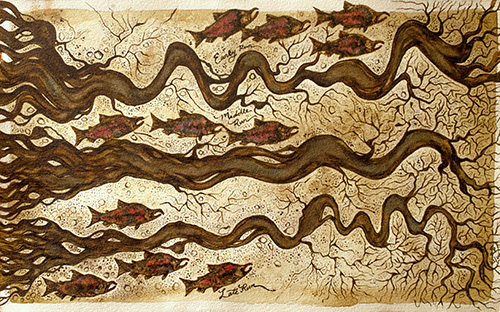
Scientists describe ‘hidden biodiversity crisis’ as variation within species is lost
Many of the benefits people receive from nature depend on diversity within species, but this intraspecific variation is poorly understood and declining rapidly.
-
Massive debris flow swamps Big Creek Reserve as heavy rains follow summer wildfire
Boulders the size of vehicles and decades-old redwoods were ripped from the banks of the Big Creek drainage when an atmospheric river inundated the Landels-Hill Big Creek Natural Reserve on the Big Sur coast in late January.

-
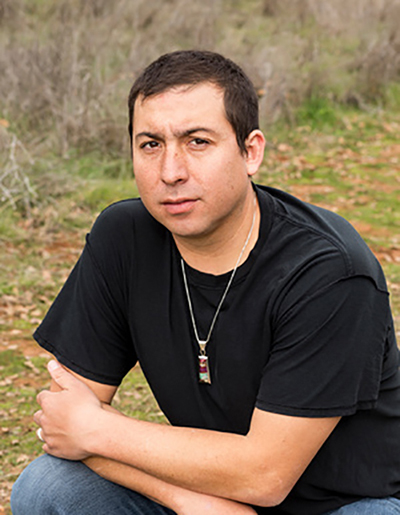
Deep Read to present Tommy Orange in conversation with literature professor Micah Perks
Award-winning novelist Tommy Orange will be featured in conversation with literature professor Micah Perks, director of UCSC’s Creative Writing Program, in a free virtual event on Wednesday, March 3, at 6:30 p.m.
-
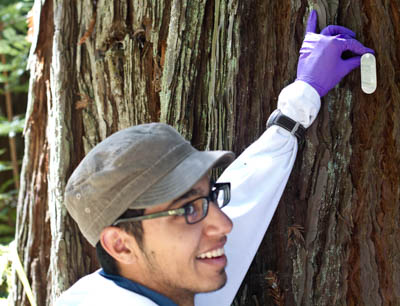
Forest monitoring efforts contribute to new understanding of climate change impacts
Data collected by student interns at UC Santa Cruz’s Forest Ecology Research Plot recently contributed to a breakthrough in understanding how climate change affects forests.
-
LASER talk to feature research by UCSC deans of the humanities and social sciences
The event will feature research presentations by Jasmine Alinder, Dean of the Humanities (“Representing Japanese American Incarceration”), and Katharyne Mitchell, Dean of the Social Sciences (“Sanctuary Space and Insurgent Memory”).

-
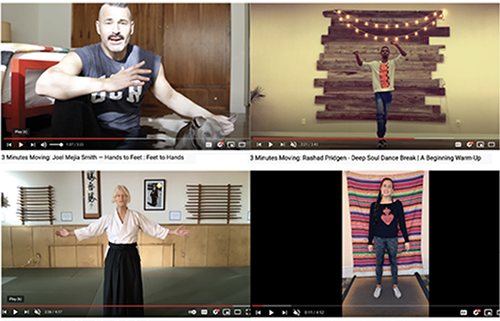
Bringing physical engagement into the online teaching and learning environment
A new series of videos is now available to UCSC students, faculty, and staff to help offset the increasingly sedentary lifestyle generated by the Covid-19 pandemic.
-
Computer scientist Yang Liu wins $1M grant for research on fairness in AI
Liu’s research aims to achieve more equitable outcomes from decision-making tools based on automated machine-learning algorithms.

-
Oldest DNA sequences reveal how mammoths evolved
Analysis of ancient DNA sequences recovered from mammoth teeth reveal North American mammoths were descended from two earlier mammoth lineages.

-
Hope, mutual aid, and abolition
Activist and organizer Mariame Kaba offers a blueprint for mutually supportive communities during the 37th annual Martin Luther King Jr. Memorial Convocation

-
Annual Jewish Studies Diller Lecture to feature award-winning author Sarah Stein
This year’s Helen Diller Distinguished Lecture in Jewish Studies will feature guest author and scholar Sarah Abrevaya Stein—in conversation with UCSC’s Neufeld-Levin Chair of Holocaust Studies, Alma Heckman—on Wednesday, February 17, at 5 p.m.

-
Genentech Foundation grants support UCSC STEM diversity programs
Three academic support and mentoring programs at UC Santa Cruz have received funding from Genentech’s 2020 Diverse Future of STEM Fund.

-
Astronomer J. Xavier Prochaska honored for top research paper in Science
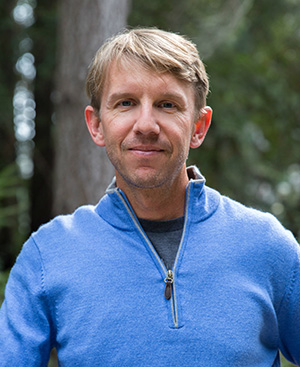
J. Xavier Prochaska, distinguished professor of astronomy and astrophysics at UC Santa Cruz, and his coauthors of a landmark paper describing a fast radio burst from a massive galaxy have been chosen to receive the prestigious AAAS Newcomb Cleveland Prize.
-
Troupe dynamic
UC Santa Cruz’s African American Theater Arts Troupe, which is celebrating its 30-year anniversary, has not only staged plays but also taken up works that deal with issues of race, injustice, and discrimination; brought its performances into the community; and…

-
Healthy oceans need healthy soundscapes, say marine scientists
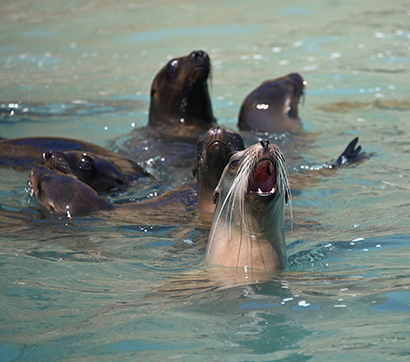
A global team of researchers has documented the pervasive impacts of noise on marine animals and ecosystems and identified actions to return to the soundtrack of the healthy ocean.
-
Three UCSC film alumni recognized by International Documentary Association
Three alumni from UCSC’s Film and Digital Media Department received nominations for this year’s prestigious International Documentary Association Awards (IDA).
-
Rob Fairlie testifies before Congress on inequality in pandemic economic impacts
Rob Fairlie testified before the House Committee on Small Business to share his latest research on the economic impacts of the coronavirus pandemic, including the disproportionate hardships faced by minority-owned businesses.

-
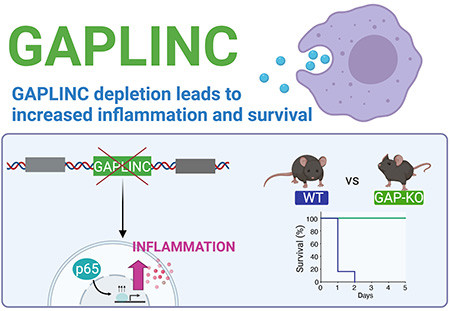
Noncoding RNA has surprising effects on immune response and sepsis, study finds
A long noncoding RNA regulates the expression of inflammatory genes and has a surprising effect on vulnerability to septic shock in mice.